
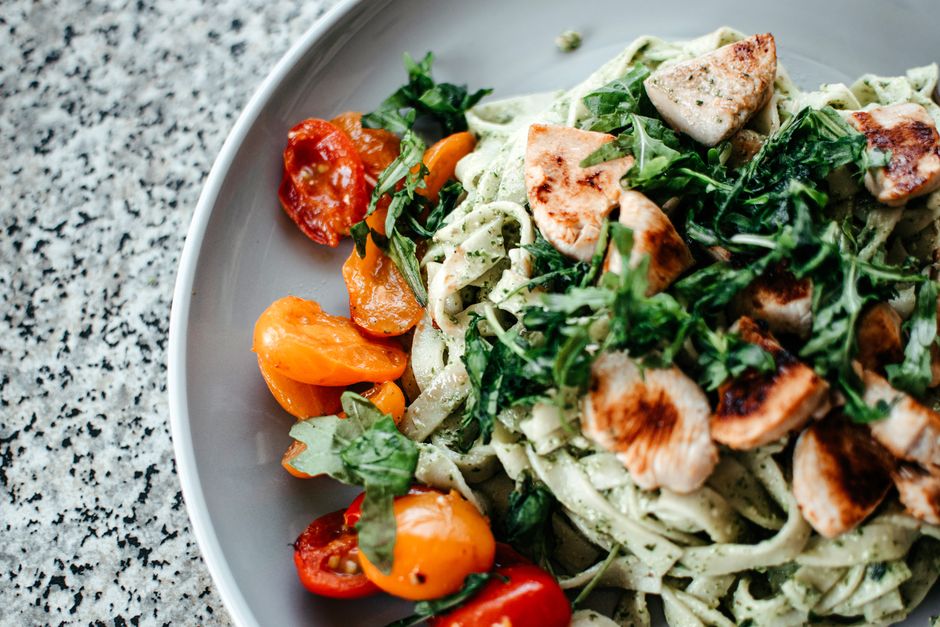
Savory is the taste of cooked meat, mushrooms, aged cheese, and soy sauce. It is a distinct basic taste, not a flavor combination or a seasoning style. The scientific name for it is umami, a Japanese word that roughly translates to “pleasant savory taste.”
Your tongue detects savory through specific receptors that respond to glutamate, an amino acid found naturally in many foods. When you bite into a seared steak or sip a bowl of miso soup, those receptors fire and send a signal to your brain that says: protein, nourishment, depth. That signal is what we call savory.
What Does Savory Taste Like In Food And Cooking?
Savory tastes like richness without sweetness. It has a mouth-filling quality that feels almost like a broth or a concentrated stock. People often describe it as meaty, brothy, or deeply satisfying.
Unlike sweet, sour, salty, or bitter, savory does not hit one specific zone of your tongue. It unfolds slowly. You might notice it a second or two after you start chewing. It lingers and builds, which is why a good soup or a slow-cooked stew feels more satisfying with each spoonful.
The taste itself is not salty, but it often appears alongside salt. It is not bitter, though some savory foods like dark mushrooms carry a slight bitterness. Savory is its own category. The closest everyday comparison might be the flavor of pan drippings or the deep taste of a well-made bone broth.
Is Savory The Same As Umami?
Yes. Savory and umami describe the same basic taste. Umami is the scientific term, and savory is the common English word used in everyday cooking and eating.
The story of how umami was identified is worth knowing. In 1908, a Japanese chemist named Kikunae Ikeda was studying kombu, a type of seaweed used in Japanese cooking. He isolated glutamate as the compound responsible for a taste that did not fit into the four known categories of sweet, sour, salty, and bitter. He named it umami.
For most of the 20th century, Western science did not formally recognize umami as a basic taste. That changed in 2000 when researchers identified specific taste receptors on the tongue that respond to glutamate. Since then, umami has been widely accepted as the fifth basic taste.
So when a recipe says “add soy sauce for umami” or a cooking show host says “this needs more savory depth,” they are talking about the same thing.
What Foods Have A Savory Taste?
Savory taste comes from foods rich in glutamate and certain other compounds called nucleotides. These two groups of molecules work together, and when they combine, the savory taste becomes much stronger than either one alone.
Foods high in glutamate include:
- Aged cheeses like Parmesan and Roquefort
- Soy sauce and fish sauce
- Miso paste
- Mushrooms, especially dried shiitake
- Tomatoes, particularly cooked or sun-dried
- Seaweed such as kombu
- Anchovies and sardines
- Worcestershire sauce
Foods high in nucleotides include:
- Meat, especially beef and pork
- Poultry, particularly chicken broth
- Fish and shellfish
- Dried bonito flakes
When you combine a glutamate-rich food with a nucleotide-rich food, the savory impact multiplies. This is why a beef stew with tomatoes and mushrooms tastes so deep, or why adding a splash of fish sauce to a meat dish makes it taste more meaty. It is also why dashi, the Japanese stock made from kombu and bonito flakes, has such a powerful savory quality.
How Does Savory Differ From Saltiness?
Savory and salty are separate tastes that often get confused because they frequently appear in the same foods. Soy sauce is both salty and savory. Bacon is both salty and savory. Parmesan is both salty and savory.
But they are distinct. Salt is a mineral taste detected by dedicated salt receptors. Savory is triggered by glutamate and nucleotides activating a different set of receptors. You can taste one without the other.
A plain boiled potato with no salt has almost no taste at all. Add a pinch of salt and it becomes salty. Add a mushroom broth and it becomes savory. The two sensations feel different in your mouth. Salt hits fast and sharp. Savory builds slowly and fills your whole mouth.
This distinction matters in cooking. If a dish tastes flat, adding salt may help. But if a dish tastes thin or lacks depth, salt will not fix it. You need something savory, like a dash of soy sauce, a spoonful of tomato paste, or a piece of Parmesan rind simmered in the pot.
Why Does Savory Taste So Satisfying?
Savory signals protein. Throughout human evolution, foods that tasted savory were likely to contain amino acids, the building blocks of protein. Your brain learned to associate that taste with nourishment.
Some researchers have proposed that umami taste receptors evolved specifically to help humans identify protein-rich foods. This is consistent with what we know about taste biology, though the full evolutionary picture is still being studied.
There is also a practical reason savory feels satisfying. Foods that carry savory taste often take longer to prepare. Slow-cooked meats, aged cheeses, fermented sauces. These are not quick foods. The taste itself has come to represent meals that took time and care.
Savory also makes other tastes feel more complete. A dish that is only sweet tastes one-dimensional. Add a savory element and suddenly the sweetness has something to push against. This is why caramel with sea salt works, and why a chocolate dessert with a pinch of miso can taste more interesting than chocolate alone.
How Is Savory Taste Used In Cooking?
Cooks have been layering savory taste into food for centuries, long before anyone knew what glutamate was. The techniques vary by culture, but the principle is the same: build depth.
In French cooking, the foundation is often a long-simmered stock made from bones, vegetables, and herbs. In Italian cooking, it might be a slow-cooked tomato sauce with Parmesan rind. In Japanese cooking, it is dashi. In Korean cooking, it is fermented soybean paste. In West African cooking, it is dried fish powder and ground crayfish.
Modern cooks have a few reliable tools for adding savory taste:
- Soy sauce adds savory depth and salt at the same time
- Fish sauce brings a concentrated savory punch without tasting fishy in small amounts
- Tomato paste cooked until it darkens develops deeper savory notes
- Mushroom powder made from dried mushrooms can be stirred into almost anything
- Parmesan rind simmered in soup or sauce releases savory compounds
- Miso whisked into dressings, marinades, or soups adds complexity
One thing to keep in mind: these ingredients are also high in sodium. If you are watching your salt intake, they still work, but you may need to reduce added salt elsewhere in the recipe.
Does Savory Taste Exist In Sweet Foods?
Yes, and it shows up more often than most people realize. Chocolate contains glutamate and has a mild savory quality, especially dark chocolate. Green tea carries a subtle savory note from its amino acid content. Some ripe fruits, like certain tomatoes and melons, have both sweetness and a faint savory edge.
Roasted nuts are another example. The browning that happens during roasting creates compounds that add savory depth to what is otherwise a mild, slightly sweet food. This is part of why toasted sesame oil tastes so different from plain sesame oil.
When cooks combine sweet and savory intentionally, they create contrast. A glaze made with soy sauce and honey works because the savory element keeps the sweetness from becoming cloying. The same principle applies to bacon-wrapped dates or prosciutto with melon.
Is Savory Taste The Same As Flavor?
No. Taste and flavor are different things, and this distinction matters for understanding savory.
Taste is what your taste buds detect: sweet, sour, salty, bitter, and savory. Flavor is a broader experience that combines taste with smell, texture, temperature, and even the sound of food. When you bite into a roasted chicken, the savory taste is just one part. The aroma of herbs, the crispness of the skin, and the warmth of the meat all contribute to the overall flavor.
Most of what we call “taste” is actually smell. Your nose detects hundreds of volatile compounds that your tongue cannot. This is why food tastes bland when you have a cold. The savory receptors still work, but the aroma is gone, and the experience feels incomplete.
So savory is a taste. But when someone says a dish is “savory,” they usually mean the whole experience: the taste, the aroma, the richness, the satisfaction. That is flavor, and it is bigger than any single taste.
Frequently Asked Questions
What does savory taste like?
Savory tastes meaty, brothy, and rich without being sweet. It builds slowly in your mouth and lingers, often described as deeply satisfying.
Is savory the same as umami?
Yes, savory and umami are the same basic taste. Umami is the scientific term, and savory is the everyday English word for it.
What foods taste savory?
Foods high in glutamate or nucleotides taste savory, including aged cheese, soy sauce, mushrooms, tomatoes, meat, fish, and fermented products like miso.
Why does savory food feel so satisfying?
Savory taste signals the presence of protein, which your brain associates with nourishment. Foods that taste savory often take longer to prepare, which may add to the sense of satisfaction.
