
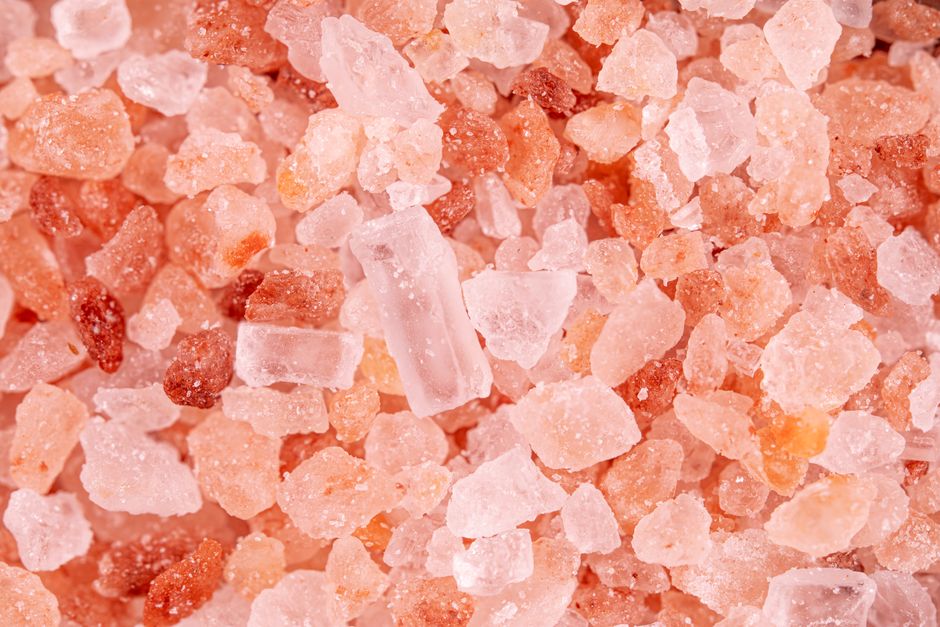
Mixing salt with Vaseline is a popular home remedy often used as a DIY exfoliating scrub. The granules of salt physically remove dead skin cells while the petroleum jelly locks in moisture. There is no strong medical evidence that this mixture treats any skin disease, but many people use it for dry, rough skin on the hands, feet, or elbows.
What Is the Purpose of Mixing Salt and Vaseline?
The main purpose is to create a cheap, simple scrub that exfoliates and moisturizes at the same time. Salt acts as a physical abrasive to slough off dry, flaky skin. Vaseline (petroleum jelly) coats the skin afterward, reducing moisture loss and leaving a protective layer. People commonly use it on feet, knees, elbows, and lips.
Some also add a few drops of essential oil or lemon juice, but the base combination is just salt and Vaseline. This mixture is not a replacement for medical treatments for conditions like eczema or psoriasis.
How Does Salt and Vaseline Work for Skin Exfoliation?
Salt crystals are irregularly shaped and have sharp edges. When you rub them against the skin, they physically scrape off loose, dead cells from the surface. This is the same principle as a store-bought body scrub that uses sugar or ground walnut shells.
Vaseline does not exfoliate. It is an occlusive agent, meaning it forms a barrier on the skin that prevents water from evaporating. After the salt has done the scrubbing, the Vaseline keeps the underlying new skin hydrated. This can make the skin feel softer and smoother temporarily.
The combination is not scientifically tested for long-term benefits, but the short-term cosmetic effect is real.
Is Salt and Vaseline Safe for Skin?
For most people, using this mixture on intact skin is generally safe. But there are important caveats. Salt can sting if you have any cuts, scrapes, or active acne. The abrasiveness can also irritate sensitive skin if you scrub too hard.
Petroleum jelly is generally well-tolerated and non-comedogenic for most people, but it can trap bacteria if applied over unclean skin. This raises the risk of folliculitis or minor infections, especially if you scrub hard and break the skin barrier.
Dermatologists advise avoiding this mixture on the face, where the skin is thinner and more prone to irritation. A washcloth or a gentle granular scrub is safer for facial exfoliation.
There is no safety data specific to combining salt and Vaseline. The individual ingredients are safe in typical cosmetic use, but the combination has not been studied in clinical trials.





Does Salt and Vaseline Have Any Other Uses?
Beyond exfoliation, some people use salt and Vaseline for other home remedies, though evidence is limited. A common claim is that it can help soften cracked heels or calloused hands. The mechanical scrubbing can remove some callus, and the Vaseline may help soften it. For deep cracks, this is not a substitute for medical care, especially in people with diabetes or poor circulation.
Another use is as a lip scrub to remove dry, peeling lip skin. Salt is coarser than sugar, so it can be harsh on lips. A gentler sugar-based scrub is usually recommended.
Some online sources claim the mixture can treat fungal infections or warts. No clinical evidence supports these claims. Treating fungal infections requires antifungal medication, not household products.
In summary, the only well-supported use is temporary physical exfoliation combined with moisture locking. Any other claimed therapeutic benefits lack reliable evidence.
What Do Dermatologists Say About Salt and Vaseline?
Dermatologists generally recommend avoiding homemade scrubs with large, irregular crystals like salt. The jagged edges can create micro-tears in the skin, leading to irritation and a compromised skin barrier. Store-bought scrubs often use more rounded particles like jojoba beads or ground rice, which are less damaging.
Vaseline itself is highly regarded by dermatologists for protecting and moisturizing extremely dry skin. But when mixed with salt, the benefit of the Vaseline is partly negated by the abrasive action that can strip the skin’s natural oils.
For people with normal to dry skin, a better approach is to exfoliate gently using a mild chemical exfoliant (like lactic acid or salicylic acid) and then apply an occlusive moisturizer like Vaseline separately. This avoids the physical irritation of salt.
The American Academy of Dermatology does not list salt and Vaseline among recommended home remedies for dry skin or exfoliation.
Frequently Asked Questions
Can salt and Vaseline remove dead skin from feet?
Yes, the salt provides physical abrasion that can rub off dead, flaky skin on the feet, and the Vaseline seals in moisture afterward. This is a temporary cosmetic improvement, not a treatment for thick calluses or foot conditions.
Is it safe to use salt and Vaseline on your face?
Most dermatologists advise against it because facial skin is thinner and more sensitive, and salt crystals can cause micro-tears and irritation. A gentle, non-abrasive exfoliant is a safer choice for the face.
Can salt and Vaseline treat eczema or psoriasis?
No clinical evidence supports this. Salt can sting and irritate eczema patches, and Vaseline alone is sometimes used to moisturize, but the combination is not a treatment for these chronic skin conditions.
How often should you use a salt and Vaseline scrub?
If you choose to use it, limit exfoliation to once or twice per week at most. Over-scrubbing can damage the skin barrier and lead to redness, dryness, or infection.
