
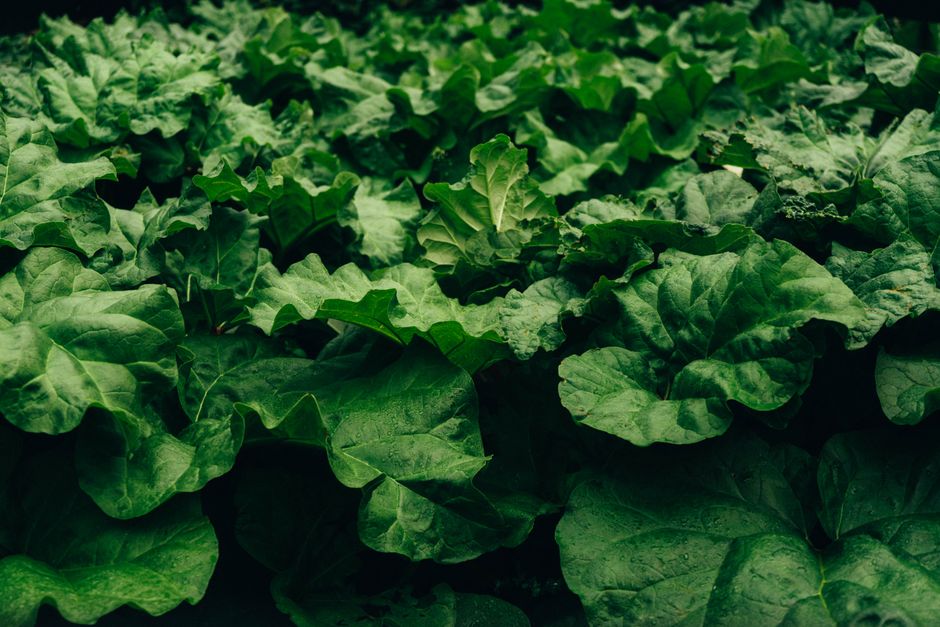
Rhubarb tastes sharply tart and sour, with a clean, slightly bitter edge that most people compare to an unripe green apple crossed with a lemon. The stalks themselves are crisp and juicy, and their flavor is so acidic that they are almost never eaten raw in any quantity. The leaves are a different story entirely, and we will get to that. For most people, rhubarb is a cooking ingredient first and a snack never.
That sourness is not a flaw. It is the whole point. Rhubarb’s high acid content is what makes it pair so well with sugar, strawberries, custard, and cream. Once cooked with a sweetener, the sharpness softens into something bright and jammy, closer to a sour fruit preserve than to a vegetable.
What Does Rhubarb Taste Like?
Raw rhubarb tastes intensely sour and astringent, with a texture like crisp celery and a flavor that sits somewhere between green apple, lemon, and sorrel.
The sourness comes from organic acids in the stalk, mainly oxalic and malic acid. These are the same types of compounds that give lemons and green apples their bite. In rhubarb the concentration is high enough that the tartness dominates almost everything else.
There is also a faint bitterness and an earthy, vegetal note underneath. Some people describe a slightly grassy or even musty quality, especially in older or thicker stalks. The red varieties tend to taste a little sweeter and more floral than the green ones, though the difference is subtle and largely about appearance.
Raw, the stalks are fibrous and crunchy. Cooked, they collapse quickly into a soft, stringy, sauce-like texture. That transformation is one of the more interesting things about rhubarb, and it happens fast.
Is Rhubarb Sweet or Sour?
Rhubarb is sour, not sweet. The stalk contains very little natural sugar, so the sourness is not balanced by sweetness the way it is in a ripe peach or a berry.
This is why nearly every rhubarb recipe calls for a significant amount of sugar. The sugar does not just mask the tartness. It rounds it out and lets the fruity, floral notes come forward. Without it, most people find rhubarb too sharp to enjoy in more than a bite or two.
How much sugar you need depends on the stalk. Younger, thinner stalks harvested in spring are milder. Older stalks, and those harvested later in the season, tend to be tougher and more intensely sour. If you are cooking with late-season rhubarb, expect to use more sweetener than a spring recipe suggests.
Why Is Rhubarb So Sour?
The sourness is chemistry. Rhubarb stalks accumulate organic acids, primarily oxalic acid and malic acid, as they grow. These acids are what your tongue reads as tart.
Oxalic acid is worth knowing about for a second reason. It is the same compound found in spinach, beet greens, and almonds, and it binds to minerals like calcium. In rhubarb stalks the amount is generally not a concern for healthy adults eating normal portions. But it matters for the leaves, and it matters for some people with specific health conditions. More on both below.
Malic acid is the compound that gives green apples their sharpness. Its presence in rhubarb is part of why the two flavors get compared so often.




How Does Cooking Change the Taste?
Cooking softens rhubarb’s bite and turns its texture from crunchy to soft and jammy. The acids are still there, but heat breaks down the cell structure, releasing juices and mellowing the overall impression.
What cooking does not do is remove the sourness. You still need sugar. Baked into a pie, stewed into a compote, or folded into a crumble, rhubarb keeps its bright, tart character. It just becomes pleasant rather than punishing.
Cooking also changes the color. Red stalks fade toward a duller pink or olive tone, and green stalks stay green. This is cosmetic and has no bearing on flavor.
A quick note on the leaves. Rhubarb leaves contain much higher levels of oxalic acid than the stalks, and they are not considered safe to eat. Standard food safety guidance is to discard the leaves and use only the stalks. This is not a flavor issue. It is a safety one, and it is well established.
What Does Rhubarb Taste Like in Different Dishes?
Rhubarb’s flavor shifts depending on what it is cooked with, which is part of why it shows up in so many different preparations.
- With strawberries: The classic pairing. Strawberries add sweetness and soften the tartness, and the two fruits share a similar jammy texture when cooked.
- In pies and crumbles: The sourness cuts through buttery pastry and sweet fillings, keeping the dessert from tasting flat.
- Stewed or as a compote: Sugar and a little water turn the stalks into a bright, spoonable sauce that works on yogurt, oatmeal, or toast.
- With custard or cream: The contrast between sharp fruit and rich dairy is the reason rhubarb and custard is a traditional pairing in the UK.
- In savory dishes: Less common in the US, but rhubarb’s acidity works like a chutney or a tart fruit sauce alongside rich meats.
In every case, the underlying flavor is the same. What changes is how much sweetness and fat are there to balance it.
How Does Rhubarb Compare to Other Tart Fruits?
Rhubarb sits at the sharp end of the spectrum, more sour than most fruits people eat raw and comparable in acidity to a lemon or a sour cooking apple.
| Ingredient | Typical taste | Usually eaten raw? |
|---|---|---|
| Rhubarb stalk | Very sour, slightly bitter, vegetal | Rarely, and only in small amounts |
| Lemon | Very sour, bright, citrusy | Yes, in small amounts |
| Green apple | Sour with some sweetness | Yes |
| Cranberry | Very sour and astringent | Rarely |
| Strawberry | Sweet with mild tartness | Yes |
The closest comparison is probably a cross between a green apple and a lemon, with a vegetal note that neither of those has. Cranberries share the intense sourness but not the flavor.
Is Rhubarb Safe to Eat Raw?
Small amounts of raw rhubarb stalk are generally considered safe for healthy adults, though most people find the taste too sour to eat much of it.
The stalks contain oxalic acid, and in large quantities oxalic acid can contribute to kidney stones in people who are prone to them. For most healthy adults eating normal food portions, this is not a practical concern. But it is worth knowing if you have a history of kidney stones or a condition that affects oxalate handling. In those cases, it makes sense to talk with a doctor about how much oxalate is appropriate for you.
The leaves are a different matter. They contain substantially more oxalic acid than the stalks and are not considered safe to eat. Discard them. Do not add them to salads, smoothies, or stock.
If you are pregnant, breastfeeding, or cooking for young children, there are no specific clinical guidelines for rhubarb consumption beyond general food safety. Normal culinary amounts, cooked and sweetened, are the standard way it is eaten.
How to Pick Rhubarb That Tastes Best
Thin, firm, glossy stalks tend to be more tender and slightly milder than thick, fibrous ones. Look for stalks that snap cleanly rather than bend.
Color is not a reliable guide to flavor. Red stalks look prettier in a pie, but green varieties can taste just as good, sometimes sweeter. The color tells you more about the variety than about the taste.
Spring rhubarb is generally more tender and less aggressively sour than late-season rhubarb. If you are buying in midsummer or later, plan on using more sugar and cooking it a little longer.
Store stalks in the refrigerator and use them within about a week. They soften and lose their snap over time, and soft rhubarb cooks down faster than you expect.
Frequently Asked Questions
What does rhubarb taste like?
Rhubarb tastes sharply sour and tart, similar to a cross between a green apple and a lemon, with a slightly bitter, vegetal edge. It is almost always cooked with sugar because the raw stalk is too sour to eat on its own.
Is rhubarb sweet or sour?
Rhubarb is sour. It contains very little natural sugar, which is why nearly every recipe pairs it with a significant amount of sweetener.
Can you eat rhubarb raw?
Small amounts of raw rhubarb stalk are generally considered safe for healthy adults, though the taste is very sour. The leaves should never be eaten because they contain much higher levels of oxalic acid.
Why is rhubarb always cooked with sugar?
Rhubarb’s high acid content makes it too tart to enjoy plain, so sugar balances the sourness and lets its fruity notes come through. Without sweetener, most people find it too sharp to eat in quantity.
