
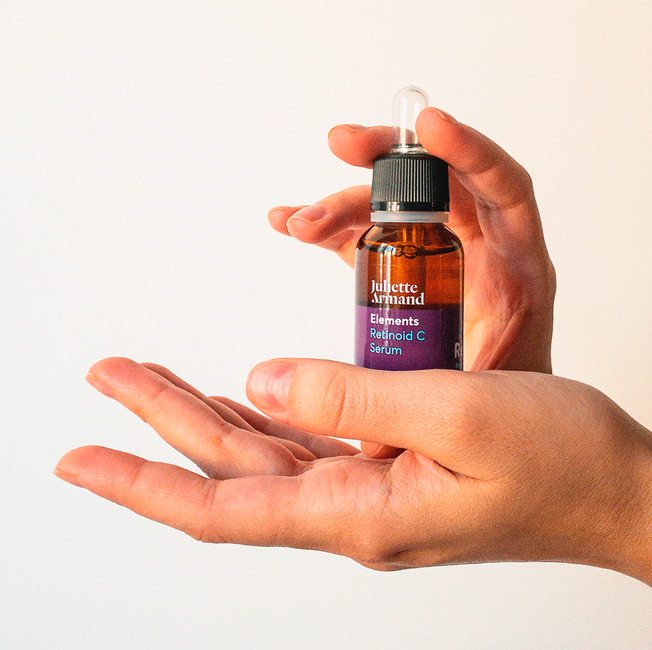
Retinoids are vitamin A derivatives that change how skin cells behave. They speed up the turnover of surface cells, prompt the skin to build more collagen, and help keep pores from clogging. That combination is why dermatologists have prescribed them for acne and aging for decades.
The word “retinoid” covers a whole family. Prescription tretinoin is the most studied. Over-the-counter retinol is weaker and works more slowly. They share the same basic mechanism but differ in strength and how much evidence backs them.
What Does Retinoid Do How It Works On Your Skin?
Retinoids work by binding to specific receptors inside skin cells and changing which genes those cells switch on. The result is a coordinated shift in how skin grows, sheds, and repairs itself.
Your skin constantly renews. New cells form at the base of the epidermis and move upward over roughly a month, flattening and eventually flaking off. With age and sun damage, this process slows and becomes uneven. Dead cells pile up, the surface looks dull, and pores can block.
Retinoids speed this up. They push cells to mature and shed on a faster, more orderly schedule. That single effect explains much of what people see: smoother texture, fewer clogged pores, and a brighter surface.
Deeper in the skin, retinoids do something else. They encourage fibroblasts — the cells that make collagen — to produce more of it. Collagen is the structural protein that keeps skin firm. Levels fall naturally with age and drop faster with sun exposure. Retinoids appear to partly counter this, though the effect takes months to show and is modest, not dramatic.
There is a detail worth knowing. Retinol, the common over-the-counter form, does not act directly. Skin enzymes must convert it to retinaldehyde and then to retinoic acid, the form that actually binds receptors. That conversion is inefficient, which is why retinol is gentler but slower than prescription tretinoin, which is already retinoic acid.
What Does Retinoid Do for Acne?
Retinoids are among the most established topical treatments for acne. They address the root of the problem rather than just the surface.
Acne forms when dead skin cells block a hair follicle, oil builds up behind the plug, and bacteria multiply. Retinoids help by normalizing how skin cells shed inside the pore, so plugs form less easily. They also have some anti-inflammatory effect.
This is why retinoids are often used alongside other acne treatments rather than alone. They prevent new clogged pores from forming, while other products handle existing inflammation and bacteria. The American Academy of Dermatology has long listed topical retinoids as a first-line acne treatment.
Expect a timeline measured in weeks, not days. Early on, some people see a temporary worsening before things improve. That is a known pattern, not a sign the product is failing. Improvement typically builds over two to three months of consistent use.
What Does Retinoid Do for Fine Lines and Sun Damage?
Retinoids are the most evidence-backed topical ingredient for photoaging — the changes caused by years of sun exposure. That includes fine lines, rough texture, and uneven pigmentation.
Tretinoin was first approved for treating sun-damaged skin decades ago, and the research behind it is substantial. Studies have found measurable improvements in fine wrinkling and surface texture with regular use over months. The effects are real but gradual, and they are not a substitute for sun protection.
One honest caveat: most of the strongest evidence is for prescription tretinoin. Over-the-counter retinol has support too, but it is generally weaker and slower. Marketing often implies all retinoids are interchangeable. They are not.
Retinoids can also help fade dark spots by speeding cell turnover, but they are not the most reliable option for pigmentation. Sun protection matters more here. Without it, sun exposure will keep generating new discoloration faster than any cream can fade it.





How Should You Start Using a Retinoid?
Start low and slow. Most irritation comes from using too much, too often, too soon — not from the ingredient itself.
A common approach is to begin with a pea-sized amount two or three nights a week and build up as your skin adjusts. Apply it to dry skin, since damp skin absorbs more and can sting. A moisturizer on top can reduce dryness without blocking the retinoid’s effect.
- Use it at night. Retinoids break down in sunlight, and skin becomes more sun-sensitive while adjusting.
- Use sunscreen daily. This is not optional. Retinoids make skin more vulnerable to UV damage during the adjustment period.
- Skip harsh extras. Strong acids, scrubs, and other irritating products can compound dryness when you are starting out.
- Be patient. Visible change takes months. Stopping after two weeks means you never reach the payoff.
A pea-sized amount covers the whole face. More product does not mean faster results — it means more peeling and redness. This is one of the most common mistakes people make.
What Are the Common Side Effects?
Dryness, flaking, redness, and stinging are the usual complaints, especially in the first weeks. These are expected and usually settle as skin adapts. The adjustment period is often called “retinization.”
Some people get more than mild irritation. If burning, significant peeling, or a rash develops, that is a signal to pull back — use less often or stop and let skin recover. Persistent irritation is not something to push through.
Retinoids can also make skin more sensitive to sun. This is well documented and is the main reason daily sunscreen matters so much during use. It is not a reason to avoid retinoids, but it is a reason to be consistent with protection.
People with certain skin conditions, such as eczema or rosacea, may find retinoids harder to tolerate. Some clinicians recommend starting with a lower-strength product or a gentler formulation for these groups, but tolerance varies widely from person to person.
Which Retinoid Is Right for You?
There is no single best retinoid. The right choice depends on your goal, your skin’s tolerance, and whether you want prescription strength.
| Type | Availability | Relative Strength | Typical Use |
|---|---|---|---|
| Tretinoin | Prescription | Strongest, most studied | Acne, photoaging |
| Tazarotene | Prescription | Strong | Acne, psoriasis |
| Adapalene | OTC and prescription | Moderate | Acne |
| Retinaldehyde | Over-the-counter | Moderate | General use |
| Retinol | Over-the-counter | Gentler, slower | General use, beginners |
Adapalene is notable because it is available over the counter in the US and has solid evidence for acne. It tends to be better tolerated than tretinoin, which makes it a reasonable starting point for many people.
Prescription tretinoin carries the most research behind it, particularly for sun damage and fine lines. If your main concern is photoaging and over-the-counter products have not delivered, that is worth discussing with a clinician.
Retinol is the most common starting point for beginners. It is widely available and gentler, but results come more slowly and vary by formulation. Concentration, packaging, and stability all affect how well a retinol product performs, and those details are not always clear on a label.
What Retinoids Cannot Do
Retinoids are not a cure-all, and some claims around them are overstated. They will not replace sun protection, and they will not reverse deep wrinkles or sagging that comes from structural changes in the skin.
They also do not work overnight, and no product will. Skin turnover and collagen building are slow processes. Anyone promising fast, dramatic results is overselling.
Pregnancy is a firm exception. Prescription retinoids are not recommended during pregnancy because of known risks from systemic vitamin A exposure, and topical use is generally avoided as a precaution. If you are pregnant or planning to become pregnant, talk to your clinician before using any retinoid, including over-the-counter retinol.
Frequently Asked Questions
How long does it take for a retinoid to work?
Most people see early changes in texture within a few weeks, but meaningful improvement in fine lines and pigmentation typically takes several months of consistent use. Acne improvement usually builds over two to three months.
Can I use retinol every day?
Many people can once their skin has adjusted, but it is best to start two or three nights a week and increase gradually. Daily use from the start raises the risk of irritation.
Is retinol the same as tretinoin?
No. Retinol is an over-the-counter form that skin must convert to the active acid, while tretinoin is already that active form and is available by prescription. Tretinoin is stronger and more studied.
Can I use a retinoid while pregnant?
Prescription retinoids are not recommended during pregnancy, and topical retinol is generally avoided as a precaution. Talk to your clinician before using any retinoid if you are pregnant or planning to be.
