
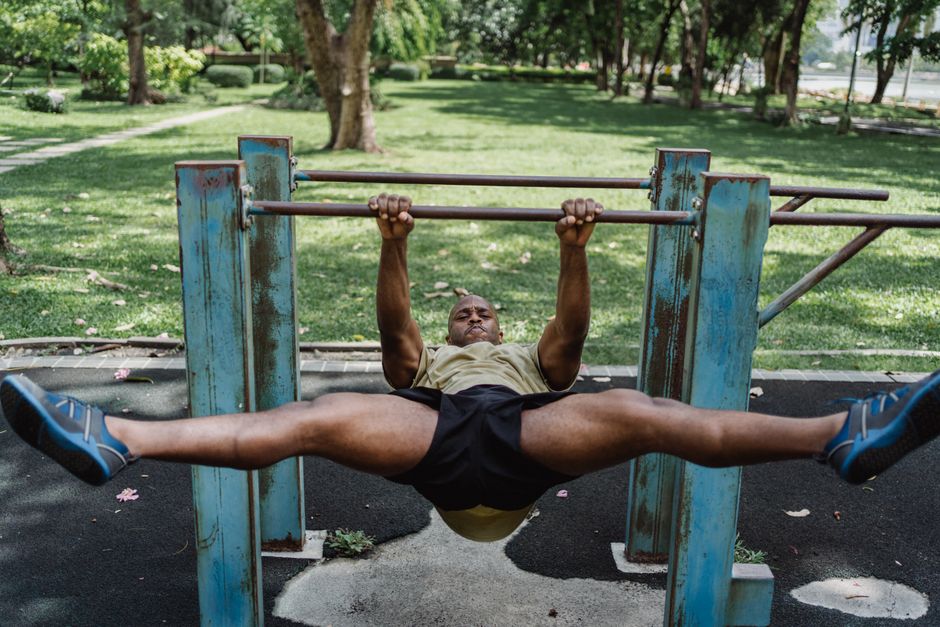
A pulled groin usually feels like a sudden sharp pain in the inner thigh, close to where the leg meets the pelvis. Many people describe a tearing or popping sensation at the moment of injury, followed by soreness, tightness, and pain that gets worse when you squeeze your legs together or lift your knee. The discomfort can range from a mild ache you notice only during certain movements to a sharp, limiting pain that makes walking difficult.
What Does a Pulled Groin Actually Feel Like?
The sensation depends on how badly the muscle or tendon is injured. A mild strain often feels like a dull, achy tightness in the inner thigh. You notice it when you move in certain ways, but it fades when you rest.
A more significant strain brings sharper pain. People often report feeling something give way at the moment of injury. That “pop” is a real sensation, though it does not always mean a severe tear. After the initial injury, the area may feel tender to touch, and the muscle can feel tight or even slightly swollen.
Where exactly is the pain? The groin muscles — called the adductors — run along the inner thigh from the pelvis down toward the knee. Most groin strains cause pain in the upper inner thigh, near the pubic bone. Some people feel it more toward the middle of the inner thigh.
One detail worth knowing: a pulled groin and a hernia can feel surprisingly similar. Both cause groin pain that worsens with activity. But they are different problems with different treatments. If you feel a bulge or have pain that does not improve with rest, that points away from a simple muscle strain.
What Causes a Groin Pull?
Groin strains happen when the adductor muscles are stretched beyond what they can handle. This typically occurs during movements that force the leg outward while the muscle is trying to contract.
Common situations include:
- Sudden direction changes while running or playing sports
- Kicking a ball with force
- Sliding or losing footing on a slippery surface
- Lifting something heavy with legs spread apart
- Overstriding during sprinting
Sports with high rates of groin strains include soccer, hockey, tennis, and football. These activities involve quick lateral movements and explosive leg action.
But you do not have to be an athlete to pull a groin. Everyday movements can do it too. Slipping on ice, catching yourself awkwardly, or even getting out of a car in an unusual way can overstretch the adductors.
Some factors increase risk. Previous groin injury is one of the strongest. Once you have strained an adductor, the muscle may not return to full strength and flexibility without proper rehabilitation. Weak hip muscles, poor warm-up, and fatigue also play a role.
How Do You Know If It Is a Pulled Groin or Something Else?
Groin pain has several possible sources, and they do not all come from muscles. Knowing the difference matters because the treatment can be very different.
A pulled groin muscle typically causes pain that:
- Worsens when you squeeze your legs together against resistance
- Increases when you lift your knee toward your chest against resistance
- Eases with rest
- Is localized to the inner thigh
Other conditions can mimic a groin strain. A hip joint problem, such as osteoarthritis or a labral tear, often causes pain in the groin area too. But hip joint pain tends to feel deeper and may come with stiffness or a catching sensation in the joint. A sports hernia — despite the name, not a true hernia — involves soft tissue disruption in the lower abdominal wall and groin. It causes pain that is more toward the lower belly and rarely improves with rest.
An inguinal hernia produces a visible or palpable bulge in the groin. It may feel like a heavy or dragging sensation. Sometimes the bulge is only noticeable when standing or coughing.
Nerve irritation, stress fractures of the pubic bone, and even referred pain from the lower back can all show up as groin discomfort. This is why persistent groin pain that does not improve deserves a proper evaluation.
A physical exam is usually the first step. A clinician can test the adductor muscles directly by asking you to squeeze your legs together while they apply resistance. Imaging like MRI is sometimes used when the diagnosis is unclear or when symptoms do not follow the expected recovery pattern.





How Long Does a Pulled Groin Take to Heal?
Recovery time depends on the severity of the strain. Clinicians typically grade muscle strains from mild to severe.
A mild strain — where you feel tightness but can still move normally — often improves within one to two weeks. A moderate strain with sharper pain and some loss of strength may take several weeks. A severe strain, where the muscle is significantly torn, can take months to heal and may require physical therapy.
These timelines are general. Individual healing varies based on age, overall health, how quickly you rest the injury, and whether you follow a proper rehabilitation program.
Returning to activity too soon is a common mistake. The pain may fade before the muscle has fully healed. Going back to full effort too early raises the risk of re-injury, and repeat strains tend to be worse than the first one.
A useful rule: you should be able to squeeze your legs together without pain and have full range of motion before returning to demanding activity. Pain during the activity itself is a clear signal to back off.
What Helps a Pulled Groin Heal?
The first step is to stop the activity that caused the injury. Continuing to push through the pain usually makes things worse.
For the first day or two, relative rest helps. This does not mean complete bed rest. Gentle movement that does not provoke pain is generally better than total immobility. Ice may help with pain in the early hours after injury, though the evidence for icing speeding up healing is not strong. It is mainly a comfort measure.
Over-the-counter pain relievers can help manage discomfort. Acetaminophen is one option. Nonsteroidal anti-inflammatory drugs like ibuprofen are commonly used, though some research suggests that heavy use of these medications in the early phase of muscle healing might interfere with the repair process. The evidence on this is not settled, and short-term use for pain control is still common practice.
As pain improves, gentle stretching and strengthening of the adductor muscles become important. A physical therapist can guide this progression. Exercises often start with light isometric contractions — squeezing the legs together without movement — and gradually advance to more dynamic movements.
Heat is sometimes used before activity to relax tight muscles. It does not heal the strain, but it can make movement more comfortable.
What about compression and elevation? These are standard for ankle sprains and similar injuries. For groin strains, compression shorts may provide some support and comfort, but there is no strong evidence that they speed healing. Elevation is not practical for the groin area.
When Should You See a Doctor for Groin Pain?
Most mild groin strains improve on their own with rest and gradual return to activity. But some situations need medical attention.
See a doctor if:
- The pain is severe or getting worse instead of better
- You cannot bear weight on the affected leg
- You notice a bulge in the groin
- There is significant swelling, bruising, or discoloration
- The pain has not improved after a week or two of rest
- You heard or felt a distinct pop and cannot contract the muscle
- You have numbness or tingling in the leg
A complete tear — where the muscle or tendon is fully separated — is uncommon but serious. It usually requires imaging and may need surgical repair. This is rare in the adductor muscles compared to other muscle groups.
Sudden, severe groin pain with a bulge that cannot be pushed back is a potential emergency. That could indicate a strangulated hernia, where blood supply to trapped tissue is cut off. This requires immediate medical care.
Can You Prevent a Groin Pull?
Not all groin strains are preventable, but some steps can lower the risk.
Strengthening the adductor muscles is one of the most studied approaches. A program called the Copenhagen Adduction exercise — where one partner holds the other’s ankle while they lower their leg — has been shown in some studies to reduce groin injury rates in athletes. The evidence is strongest for soccer players, but the principle likely applies more broadly.
Warming up before activity helps prepare muscles for the demands ahead. A proper warm-up increases blood flow and muscle temperature, which may reduce injury risk.
Gradual increases in training intensity give the muscles time to adapt. Sudden spikes in activity — like going from little exercise to a full sprint session — are a common trigger for strains.
Finally, paying attention to early warning signs matters. A mild tightness or ache in the groin during activity is a signal to ease off, not push through. Many significant strains start as minor ones that were ignored.
Frequently Asked Questions
How do I know if I pulled my groin or just sore?
A pulled groin causes pain that is worse when you squeeze your legs together or lift your knee against resistance. General soreness usually feels more spread out and improves with light movement rather than getting sharper with specific actions.
Should I walk with a pulled groin?
Walking is usually fine if it does not increase your pain. If walking makes the pain worse or causes limping, rest and avoid aggravating movements until it improves.
Can a pulled groin heal on its own?
Mild groin strains often heal on their own within one to two weeks with rest and gradual return to activity. More severe strains may need physical therapy and can take several weeks or longer.
What is the fastest way to heal a pulled groin?
There is no proven way to speed up healing beyond giving the muscle time to repair. Relative rest, avoiding painful activities, and gradually strengthening the muscle as pain allows is the standard approach.
