
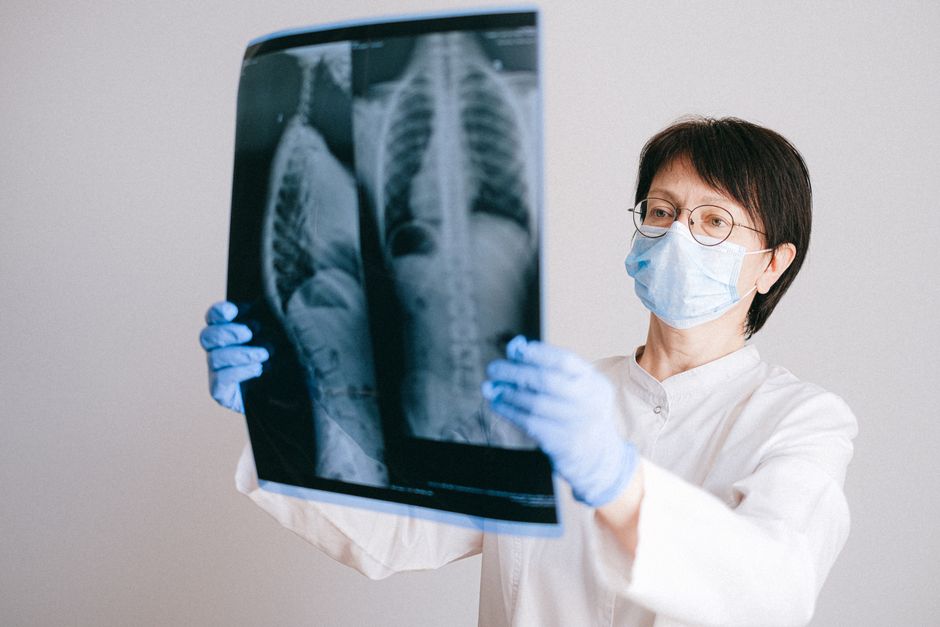
Popcorn lung looks like a lung that has been scarred from the inside out — but you cannot see it from the outside. The damage happens in the smallest airways, the bronchioles, which are too deep in the lungs to see on a person or an X-ray. There is no rash, no swelling, no visible mark. The only way it “looks” like anything is through a CT scan, where it shows up as small areas of patchy haze and trapped air, and through the symptoms a person feels: a dry cough and shortness of breath that slowly get worse.
The condition’s medical name is bronchiolitis obliterans. It is rare, it is permanent, and it is often confused with asthma or COPD because the early symptoms overlap. Knowing what it actually looks like — on imaging and in daily life — helps separate it from the conditions it mimics.
What Does Popcorn Lung Look Like on a CT Scan?
On a high-resolution CT scan, popcorn lung typically shows a pattern doctors call mosaic attenuation — patches of lung that look lighter and darker, like a checkerboard. The darker patches are areas where air is trapped because the small airways are narrowed or blocked. The lighter patches are healthier tissue.
This pattern is not unique to popcorn lung. Mosaic attenuation also appears in other airway and blood vessel conditions, which is one reason diagnosis is difficult. Radiologists look at the overall pattern, the person’s history, and lung function tests together rather than relying on the scan alone.
In more advanced disease, the scan may also show airway thickening and, in severe cases, bronchiectasis — widened, damaged airways. A plain chest X-ray often looks normal in early popcorn lung, which is a key reason the condition can go undetected for months or years.
What Are the First Symptoms People Notice?
The earliest symptom is usually a dry cough that does not produce mucus and does not go away. It often starts after a respiratory infection or a period of exposure and then simply persists, sometimes for weeks or months.
Shortness of breath comes next, especially with exertion. People notice it climbing stairs, walking uphill, or doing activities that used to feel easy. Some describe a tightness in the chest or wheezing. Fatigue often follows because the body is working harder to move air.
What makes this pattern distinctive is its direction. Asthma and COPD typically respond to bronchodilator inhalers; popcorn lung generally does not. If a dry cough and breathlessness keep worsening despite standard inhaler treatment, that poor response is itself a clue worth raising with a doctor.
Why Is It Called Popcorn Lung?
The name comes from a cluster of cases in the early 2000s among workers at microwave popcorn factories. They inhaled diacetyl, a butter-flavoring chemical used in the production process, and developed bronchiolitis obliterans. The nickname stuck even though the disease itself is not limited to popcorn workers.
Diacetyl is a naturally occurring compound also found in butter, beer, and coffee in small amounts. The concern was never about eating these foods. It was about inhaling concentrated vapors in occupational settings, where exposure levels were far higher than anything in a kitchen.
The same injury has been documented in other workplaces where flavoring chemicals are heated and vaporized. That history shaped modern occupational safety rules in flavoring and food production facilities. It also raised a separate question — whether vaping flavorings could cause similar harm — which the next section addresses honestly.




Can Vaping Cause Popcorn Lung?
No confirmed cases of classic diacetyl-induced popcorn lung from vaping have been documented in the medical literature. That is an important and often-misstated point. The widely circulated claim that vaping causes popcorn lung is not supported by confirmed case reports.
That does not mean vaping is safe for the lungs. Some e-liquids have been found to contain diacetyl and related flavoring chemicals, and inhaling them is a real exposure that has not been well studied over the long term. Separately, a distinct and serious lung injury called EVALI (e-cigarette or vaping product use-associated lung injury) was linked mainly to vitamin E acetate in THC-containing products. EVALI is not popcorn lung — it is a different disease with different causes and outcomes.
The honest position is this: the specific link between vaping and popcorn lung remains unproven, but the absence of confirmed cases is not evidence of safety. Long-term lung effects of vaping are still being studied.
How Is Popcorn Lung Diagnosed?
Diagnosis is a process of elimination and pattern recognition, not a single test. There is no blood test or simple screen that confirms bronchiolitis obliterans. Doctors combine several pieces of information:
- Exposure history — work with flavoring chemicals, certain industrial fumes, or other known triggers
- Lung function tests (spirometry) — often showing airflow obstruction that does not improve much with bronchodilators
- High-resolution CT scan — looking for the mosaic pattern and air trapping
- Ruling out other conditions — asthma, COPD, and other lung diseases that look similar
In some cases a lung biopsy is used to confirm the diagnosis, though it is not always necessary. Because the condition is rare, it is often missed at first. Many people are treated for asthma for months before the correct diagnosis is considered.
Is Popcorn Lung Reversible?
The scarring in bronchiolitis obliterans is generally permanent. Unlike some lung injuries that heal over time, the fibrous tissue that narrows the small airways does not typically reverse. The goal of treatment is to slow progression and manage symptoms, not to cure the disease.
Some people stabilize, especially if the exposure stops early. Others continue to decline. Outcomes vary widely depending on how much damage occurred before diagnosis and whether ongoing exposure was removed. In severe cases, lung transplant may be considered.
Treatment options are limited and not strongly supported by large trials, largely because the disease is rare. Some clinicians use inhaled or oral corticosteroids and other immune-suppressing medications, but evidence for their effectiveness in this specific condition is limited. This is a case where common clinical practice and strong trial evidence are not the same thing.
Who Is at Risk?
The clearest risk is occupational exposure to flavoring chemicals, particularly diacetyl and related compounds, in food and flavoring manufacturing. Workers who heat and vaporize these chemicals face the highest documented risk. Workplace safety measures have reduced exposure in many facilities, but the risk has not disappeared everywhere.
Other documented triggers of bronchiolitis obliterans include certain industrial fumes, some cleaning agents in high-exposure settings, and complications after lung or stem cell transplants. Rheumatoid arthritis and certain autoimmune conditions are also associated with a form of the disease.
The average person eating microwave popcorn or cooking with butter is not in the risk group. The disease is tied to inhaling concentrated vapors, not to eating flavored foods.
The Bottom Line
Popcorn lung is invisible from the outside and easy to mistake for asthma. What it looks like on a scan is a patchy, mosaic pattern of trapped air. What it looks like in daily life is a dry cough and breathlessness that slowly worsen and do not respond well to standard inhalers.
If you have a persistent dry cough and shortness of breath that are getting worse, especially with a relevant exposure history, that combination deserves a medical evaluation. It may well turn out to be something common and treatable. But the pattern is worth naming to a doctor rather than waiting it out.
Frequently Asked Questions
Can popcorn lung be seen on a chest X-ray?
Usually not in the early stages, because a plain chest X-ray often looks normal. A high-resolution CT scan is the imaging test that better shows the airway changes and air trapping.
What does popcorn lung cough feel like?
It is typically a dry cough that produces little or no mucus and does not go away. It tends to persist and worsen over time rather than come and go like a cold cough.
Is popcorn lung the same as COPD?
No, they are different diseases, though symptoms overlap and both involve airflow obstruction. Popcorn lung affects the small airways specifically, while COPD involves broader damage including to the air sacs.
Can you get popcorn lung from eating microwave popcorn?
No documented cases come from eating popcorn. The disease has been linked to inhaling concentrated flavoring vapors in workplace settings, not to eating flavored foods.
