
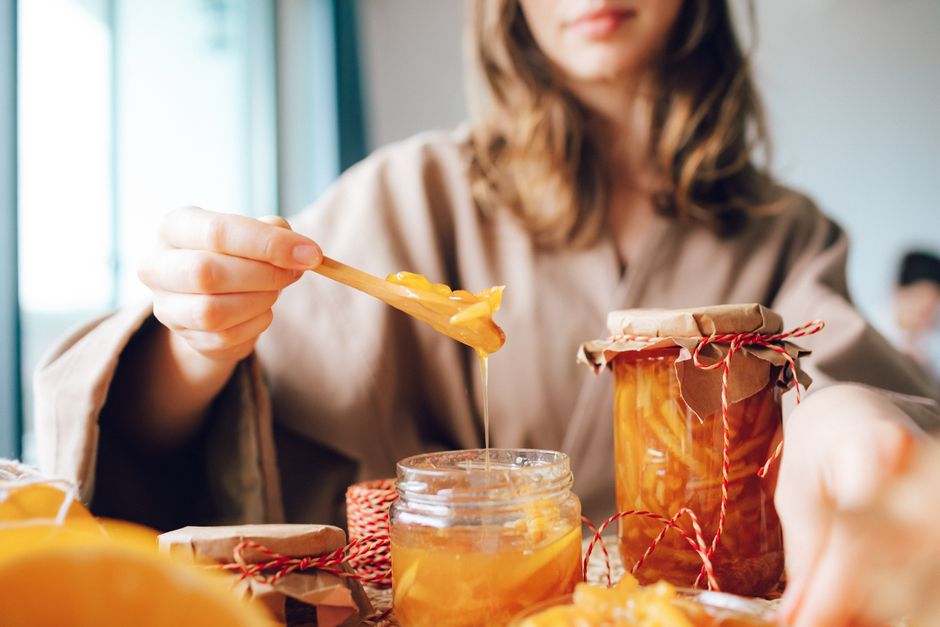
Pectin is the natural substance in fruit that makes jam set into a gel. It works by trapping liquid in a web of fibers, but it only does this under the right conditions of sugar, acid, and heat. Without pectin, your jam would stay a runny fruit syrup no matter how long you boil it.
What Exactly Is Pectin?
Pectin is a type of carbohydrate found in the cell walls of plants. It acts like a natural glue that holds plant cells together. Apples, citrus peels, and plums are especially rich in pectin. Strawberries, cherries, and peaches have much less.
When fruit ripens, enzymes break down pectin into shorter chains. That is why underripe fruit makes better jam than fully ripe fruit. The firmer, greener fruit still has long pectin chains that are ready to form a gel.
Commercial pectin is usually extracted from citrus peels or apple pomace. It is sold as a powder or liquid and is standardized so you get consistent results every batch.
How Does Pectin Create a Gel in Jam?
The gelling process depends on three things working together: pectin, sugar, and acid. Remove any one of them and the jam will not set.
Here is what happens at the chemical level. Pectin molecules are long chains that carry a slight negative charge. In water, they repel each other and stay spread out. When you add sugar, it pulls water away from the pectin chains. This concentrates the pectin and reduces the repulsion between chains.
Acid, usually lemon juice, lowers the pH of the mixture. This neutralizes the negative charges on the pectin chains. With the charges gone, the chains can now come close together and bond.
Heat is the final trigger. Boiling the mixture drives off water and concentrates everything further. As the jam cools, the pectin chains link up into a three-dimensional network. This network traps the liquid, sugar, and fruit pieces in a semi-solid structure. That structure is the gel you spread on toast.
Different types of pectin require different conditions. High-methoxyl pectin, the most common type, needs high sugar and high acid to gel. Low-methoxyl pectin can gel with calcium instead of sugar, which is why it is used in reduced-sugar jams.
What Happens When the Balance Is Wrong?
If your jam does not set, one of the three ingredients is out of balance. Too little sugar means the pectin cannot concentrate enough to form bonds. Too little acid means the pectin chains keep repelling each other. Too little pectin means there are not enough chains to build the network.
Overcooking is a common mistake. Boiling too long breaks down the pectin chains into pieces too short to form a gel. The jam may get thicker from evaporation, but it will never truly set. It will stay soft or syrupy.
Undercooking has the opposite problem. There is too much water left in the mixture. The pectin is too diluted to form a firm network, so you get a loose, runny result.
High altitude also matters. Water boils at a lower temperature at altitude, so you need to boil longer to reach the same concentration. Many jam recipes include altitude adjustments for this reason.




How Much Pectin Does Different Fruit Have?
Fruit falls into three rough categories based on natural pectin content. This matters because it tells you whether to add pectin or rely on the fruit alone.
| Pectin Level | Examples | What It Means for Jam |
|---|---|---|
| High | Apples, crabapples, citrus peels, currants, plums | Sets easily with added sugar and acid |
| Medium | Blackberries, raspberries, apricots | May need a little added pectin or underripe fruit |
| Low | Strawberries, cherries, peaches, pears | Almost always needs added pectin or a high-pectin fruit mixed in |
You can test pectin levels at home with a simple method. Mix one tablespoon of jam with one tablespoon of rubbing alcohol in a small jar. Wait a minute. If the mixture forms a solid clump, you have enough pectin. If it stays liquid, you need more. This test works because alcohol precipitates pectin out of solution. Do not eat the test sample.
Does Pectin Have Any Health Effects?
Pectin is a soluble fiber. Your body does not digest it, but it does feed the bacteria in your colon. This is why pectin has been studied for gut health and cholesterol management.
Some research suggests that pectin can help lower LDL cholesterol by binding to it in the digestive tract and carrying it out of the body. The evidence for this is reasonably consistent, though the effect size is modest. The amounts used in studies are often higher than what you would get from eating jam.
Pectin is also used in some anti-diarrhea products because it absorbs water and adds bulk to stool. This is an established use in clinical practice.
There is no evidence that the pectin in jam provides meaningful health benefits on its own. Jam is high in sugar, and the amount of pectin per serving is small. If you want the fiber benefits, whole fruits and vegetables are a far better source.
Some people claim pectin can help with heavy metal detoxification or cancer treatment. No large human trials have confirmed these uses. Treat such claims with skepticism.
What Is the Difference Between Liquid and Powdered Pectin?
Liquid and powdered pectin are not interchangeable in recipes. They are activated differently and you cannot simply swap one for the other without adjusting the recipe.
Powdered pectin is mixed into the cold fruit before heating. It needs to dissolve fully before the sugar is added. Liquid pectin is added at the end of the boiling process, after the sugar has dissolved and the mixture is at a rolling boil.
Liquid pectin is usually made from apple pectin. Powdered pectin is usually made from citrus pectin. They gel under slightly different conditions, which is why recipes specify one or the other.
Using the wrong type at the wrong time usually results in jam that does not set. Follow the recipe instructions for the specific pectin product you bought.
How Do You Fix Jam That Did Not Set?
Runny jam is fixable. The simplest fix is to reboil it with additional pectin. Pour the jam back into a pot, add a small amount of commercial pectin, and bring it back to a rolling boil for one minute. Test the set on a cold plate before jarring.
Another method is to add a high-pectin ingredient. Grated green apple or a few tablespoons of lemon juice can provide the missing pectin or acid. This works best if the jam is only slightly runny.
Some cooks recommend reboiling with chia seeds as a thickener. Chia seeds absorb water and create a gel, but this changes the texture and flavor of the jam. It is a workaround, not a traditional fix.
If you prefer not to reboil, use the runny jam as a syrup. It works well over pancakes, yogurt, or ice cream. There is no safety issue with runny jam as long as it was canned properly.
Does Pectin Expire or Lose Strength?
Yes. Pectin loses its gelling power over time, especially once the package is opened. Old pectin may still look fine but will produce jam that does not set.
Check the expiration date on the package. If you cannot remember how long you have had it, replace it. Properly stored pectin in an unopened package lasts about two to three years. Once opened, use it within six months.
Store pectin in a cool, dry place. Humidity can cause the powder to clump and degrade. Do not freeze liquid pectin; it can separate and lose effectiveness.
Frequently Asked Questions
Can you make jam without added pectin?
Yes, if the fruit naturally contains enough pectin or you combine it with high-pectin fruit. Apples, plums, and citrus work well without added pectin.
Why does my jam not set even with pectin?
The most common causes are too little sugar, too little acid, or not boiling long enough. Old pectin is another frequent culprit.
Does pectin need acid to gel?
Yes, for traditional high-methoxyl pectin. Acid lowers the pH so the pectin chains can bond instead of repelling each other.
Is pectin safe to eat every day?
Yes, pectin is a normal part of fruit and is recognized as safe for consumption. Large supplemental doses may cause digestive discomfort in some people.
