
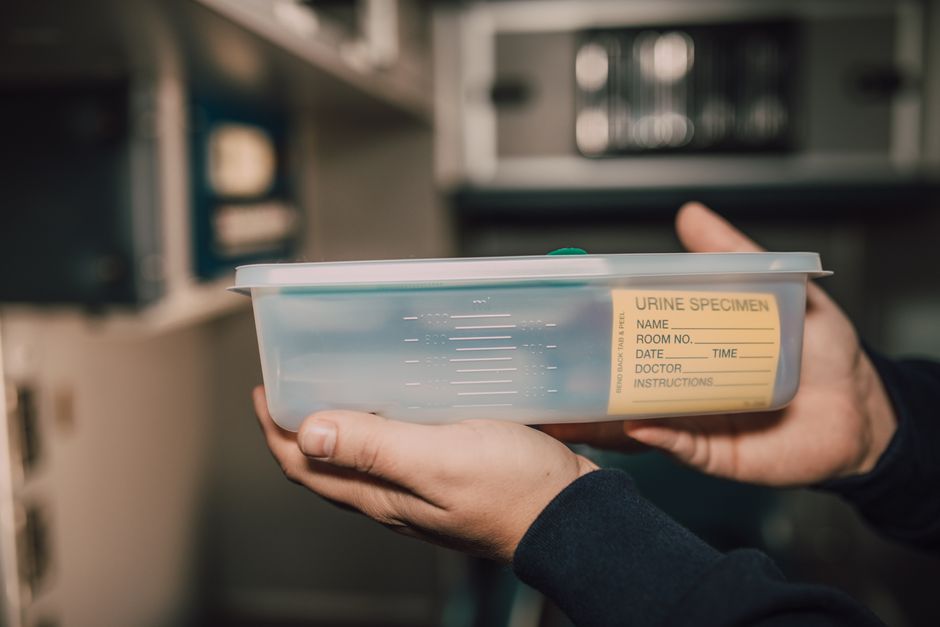
Finding blood on a urine test when you can’t see any blood in the toilet is more common than most people realize. Occult blood in a urinalysis means the test detected hemoglobin or red blood cells in your urine that were not visible to the naked eye. It is a laboratory finding, not a diagnosis. It can reflect something as minor as intense exercise the day before, or it can be an early signal of a urinary tract problem, kidney condition, or other issue that needs medical attention.
What Does Occult Blood In A Urinalysis Mean?
Occult blood means the test strip or microscope found red blood cells or their breakdown products in your urine when you could not see them yourself.
Visible blood in urine is called gross hematuria. Invisible blood is called microscopic hematuria. The word “occult” simply means hidden. Labs use two main methods to find it. A chemical dipstick detects peroxidase activity, which is a sign of hemoglobin. A microscope exam counts actual red blood cells per high-power field.
These two methods do not always agree. A dipstick can turn positive from hemoglobin released by red blood cells that broke apart in the urine, or from other sources. A microscope can miss cells if the sample sat too long. This is one reason a single positive result is rarely enough to draw conclusions. Clinicians usually confirm with a repeat test or a microscopic exam before investigating further.
The key point: occult blood tells you blood is present. It does not tell you why. That requires more information.
What Causes Blood In Urine That You Cannot See?
The causes range from harmless and temporary to serious. Context matters enormously here.
Common causes include:
- Urinary tract infection — bacteria inflame the bladder lining, which can leak small amounts of blood
- Kidney stones — even small stones can scratch the ureter or kidney tissue as they pass
- Intense exercise — strenuous activity, especially running, can cause temporary blood in urine
- Menstruation — menstrual blood can contaminate a urine sample and produce a false positive
- Medications — some blood thinners and certain other drugs increase bleeding risk
- Enlarged prostate — common in older men and can cause minor bleeding
- Kidney disease — conditions affecting the glomeruli, the tiny filters in the kidney, can leak blood into urine
- Urinary tract tumors — cancer of the bladder, kidney, or ureter can present with occult blood alone
In many cases, no cause is ever found. Research suggests that a meaningful portion of people with microscopic hematuria have no identifiable source even after evaluation. That does not mean the finding should be ignored. It means the workup sometimes comes back clear.
One non-obvious point: the amount of blood on the dipstick does not reliably indicate how serious the cause is. A trace result and a large result can both come from a bladder infection. A trace result can also come from an early tumor. The number on the strip does not rank the danger.
When Should Occult Blood Be Taken Seriously?
Certain features raise the level of concern. These are well established in clinical guidelines.
You should take occult blood more seriously if you have:
- Visible blood in your urine at any point
- Blood in urine along with pain, burning, or frequent urination
- Blood in urine with fever, chills, or flank pain
- A history of smoking
- Occupational exposure to certain industrial chemicals, such as those used in dye, rubber, or leather work
- Age over 60
- A family history of kidney or bladder cancer
- Blood in urine while taking a blood thinner
- Recurrent episodes of occult blood on multiple tests
Age and smoking status carry particular weight. Bladder cancer is uncommon in people under 40 who have never smoked. The risk rises with age and with tobacco exposure. This is why guidelines often recommend a more thorough evaluation for older adults and current or former smokers who have microscopic hematuria.
Some clinicians recommend a full urologic workup for any adult with confirmed microscopic hematuria, regardless of risk factors. Others take a more targeted approach based on risk. The evidence on the best strategy is still evolving. What is not debated: confirmed blood in urine in a high-risk person deserves prompt evaluation.





How Is Occult Blood Confirmed And Evaluated?
A single positive dipstick is a starting point, not a conclusion. The first step is usually to confirm the finding.
Confirmation typically involves:
- Repeating the urinalysis, sometimes with a fresh sample
- A microscopic exam to count red blood cells directly
- Checking for other findings in the urine, such as protein, white blood cells, or bacteria
- Reviewing medications, recent exercise, and menstrual status
If blood is confirmed on repeat testing, the next steps depend on your age, risk factors, and symptoms. A typical evaluation may include:
- Blood tests — to check kidney function and look for other clues
- Imaging — ultrasound or CT scan to look at the kidneys and urinary tract
- Cystoscopy — a thin scope inserted through the urethra to examine the bladder lining directly
- Urine cytology — examining urine cells under a microscope for abnormal cells
Not everyone needs every test. A young person with a clear infection and no risk factors may need only treatment and a repeat test. An older smoker with persistent occult blood may need the full workup. The decision rests on clinical judgment and established risk assessment.
What Does It Mean If No Cause Is Found?
Sometimes the evaluation comes back clear. No infection, no stones, no tumor, no kidney disease. This is common and it is called persistent unexplained microscopic hematuria.
In these cases, doctors often recommend monitoring rather than immediate further testing. That usually means repeat urinalysis at intervals to see if the blood persists or resolves. Some people have occasional blood in urine for years with no identifiable cause and no progression to serious disease.
However, “no cause found” does not mean “no cause exists.” It means the available tests did not detect one. Some conditions, particularly early-stage tumors or mild kidney disease, can be missed on initial evaluation. This is why follow-up matters even when the first round of tests is clear.
If you are in this category, ask your doctor what follow-up schedule makes sense for you. The answer depends on your risk factors and whether the blood persists.
What Should You Do If Your Test Shows Occult Blood?
Do not panic. Do not ignore it either.
The right response is to talk to your doctor. Bring the test result. Mention any symptoms you have had, even mild ones. Mention recent exercise, menstrual timing, and all medications you take. These details help your doctor interpret the result correctly.
Ask what the next step is. For many people, it is a repeat test. For others, it is imaging or a referral to a urologist. The path depends on your individual situation.
One practical point: if you are asked to give another urine sample, try to provide a clean-catch midstream sample. This reduces contamination and improves accuracy. If you are menstruating, tell the lab. The sample may need to be postponed.
Occult blood is a clue, not a verdict. It is worth taking seriously, and it is worth following up. But it is also common, and many causes are minor or temporary. The goal is to find out which category you fall into.
Frequently Asked Questions
Can occult blood in urine go away on its own?
Yes, it can. Temporary causes like intense exercise, mild infection, or menstrual contamination often resolve without treatment. If it persists on repeat testing, further evaluation is needed.
Does occult blood always mean cancer?
No. Most cases are not cancer. However, bladder and kidney cancers can present with occult blood alone, which is why persistent or unexplained blood in urine needs evaluation, especially in older adults and smokers.
How accurate is a urine dipstick for blood?
Dipsticks are sensitive but not perfectly specific. They can be positive from hemoglobin without intact red blood cells, and they can be falsely positive from certain substances. A microscopic exam or repeat test helps confirm the finding.
Should I worry about trace occult blood?
A trace result still means blood was detected, though the amount is small. The amount on the strip does not reliably indicate the seriousness of the cause. Any confirmed blood in urine should be discussed with your doctor.
