
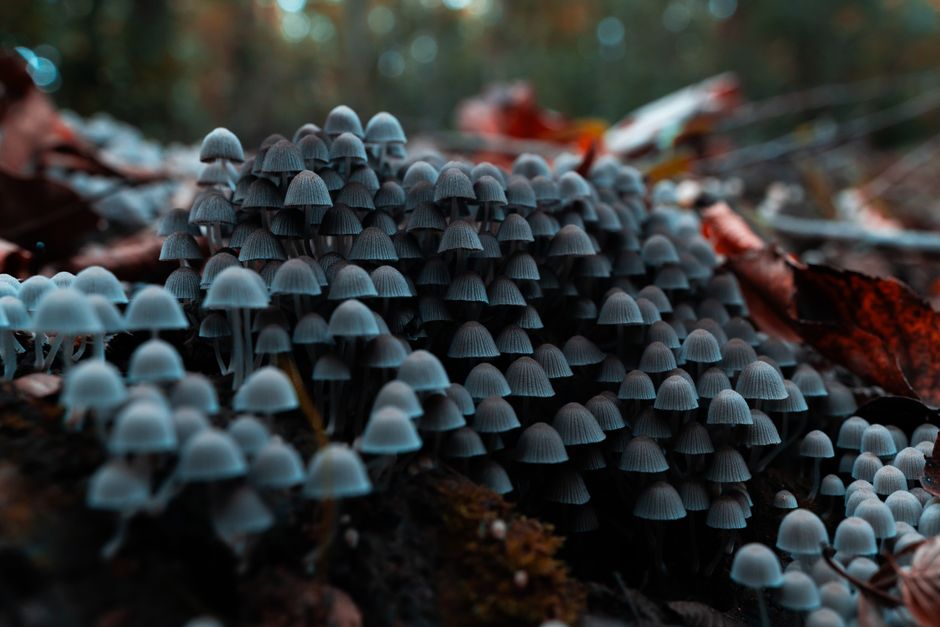
Mold on shrooms usually looks like a fuzzy patch of green, black, gray, or pink growth sitting on top of the surface. Mycelium, by contrast, is the white, thread-like network that mushrooms grow from — it looks like fine roots or a cottony web spreading through the growing material. The two are easy to confuse because both can appear white and fuzzy, but mold tends to look powdery, patchy, and off-color, while healthy mycelium is bright white and spreads evenly.
If you are growing mushrooms at home, telling these apart matters. One is the organism you are trying to cultivate. The other is a contaminant that can ruin a grow and, in some cases, pose health risks if you handle or consume it. This guide breaks down the visual differences, why confusion happens, and what to do when you are not sure.
What Does Mold On Shrooms Look Like Vs Mycelium?
The clearest difference is color and texture. Mycelium is almost always white. It looks like a network of fine threads, similar to cobwebs or the roots of a plant, and it spreads outward in a fairly even way across the surface of the growing medium.
Mold shows up in colors mycelium does not. Green, black, blue-green, gray, and pink are all common mold colors. It often looks powdery or dusty rather than stringy. Instead of spreading evenly, mold tends to appear in isolated patches that grow quickly and sometimes sit on top of the surface rather than threading into it.
There is one important exception. Some molds start out white before they produce spores and change color. This is why a white fuzzy patch is not automatically good news. The color a patch shows after a day or two is often the real answer.
Quick visual comparison
| Feature | Mycelium | Mold |
|---|---|---|
| Color | Bright white | Green, black, gray, pink, or blue-green |
| Texture | Thread-like, stringy, cottony | Powdery, dusty, fuzzy |
| Pattern | Even, spreading, radial | Patchy, isolated, fast-growing |
| Smell | Earthy, mushroom-like | Sour, musty, or foul |
| Location | Threads into the medium | Often sits on top of the surface |
Smell is a useful backup signal. Healthy mycelium has an earthy, mushroomy scent. Mold often smells sour, musty, or plainly foul. If something smells wrong, treat that as a warning even if the color looks acceptable.
Why Do Mold And Mycelium Get Confused?
Both are fungi, and both grow as networks of fine filaments. Early-stage mold and early-stage mycelium can look nearly identical — white, fuzzy, and spreading. That overlap is the whole reason this question comes up so often.
The confusion also runs the other way. Some molds are white for their first day or two. A grower sees white fuzz, assumes it is healthy mycelium, and stops paying attention. By the time the patch turns green or black, the contamination has already spread.
There is a useful biological point here. Mycelium is the vegetative body of a fungus — the part that grows through a food source and absorbs nutrients. Mold is also a type of fungus, and it also grows as mycelium-like threads. The difference is not “fungus versus not fungus.” It is which fungus, and whether it is the one you want. Some contaminant molds are simply other fungal species that outcompete the mushroom you are trying to grow.
Because of that, color change over time is often the most reliable single clue. Watch a patch for a day or two. If it stays bright white and keeps threading outward, that points to mycelium. If it darkens, powders over, or spreads in a patchy way, that points to mold.
What Causes Mold To Appear On Mushroom Grows?
Mold needs the same things mushrooms do: moisture, warmth, and a food source. When those conditions are present and competing organisms get introduced, mold can take hold.
Common sources include:
- Contaminated growing medium or substrate that was not properly sterilized
- Spores already present in the air, on tools, or on your hands
- Poor airflow that traps humid, stagnant air
- Excess moisture or standing water in the growing container
- Unclean containers, jars, or equipment
Mold tends to thrive when conditions favor it over the mushroom. Stagnant, overly wet environments are a common trigger. Good airflow and clean handling reduce the odds, though no method removes the risk entirely. Spores are everywhere in the environment, and contamination is a normal part of growing.



Is Mold On Mushrooms Dangerous?
Some molds produce mycotoxins, which are compounds that can be harmful to humans. Not all molds do, and the specific risk depends on which mold is present — something you generally cannot determine by looking at it.
For that reason, the standard advice among growers is to discard any grow that shows confirmed mold contamination. Do not eat mushrooms from a contaminated grow. Do not assume that cooking destroys every mold-related toxin, because some mycotoxins are heat-stable.
Breathing in mold spores is a separate concern. Handling a moldy grow without protection can release spores into the air. People with mold allergies, asthma, or weakened immune systems may be more affected. If you must handle a contaminated container, doing so carefully and limiting spore release is reasonable, and anyone with a respiratory condition should be especially cautious.
This is also where a lot of online advice gets sloppy. Some sources claim certain molds on grows are harmless. Without lab testing, you cannot know which mold you have. Treating an unknown contaminant as safe is a guess, not a fact.
How Can You Tell The Difference For Sure?
Visual inspection gets you most of the way, but it is not a lab test. If you want certainty, there are a few practical steps.
- Wait and watch. Give a white patch a day or two. Color change and powdery texture point to mold.
- Check the smell. Sour or musty odors suggest contamination.
- Look at the pattern. Even, thread-like spread suggests mycelium. Patchy, fast, surface-level growth suggests mold.
- Isolate. If you are unsure, separate the container from healthy grows to limit spread.
- When in doubt, throw it out. A contaminated grow is not worth the risk.
No home method gives you a definitive species identification. If the stakes are high — for example, if you were considering consuming the mushrooms — the only reliable answer is to not consume anything from a grow you cannot confirm is clean.
Can You Save A Grow That Has Mold?
Once mold is visible, it has usually already spread threads through the medium, even if you only see one patch. Cutting away the visible mold rarely solves the problem, because the growth extends beyond what you can see.
Some growers try to salvage a grow by removing the affected area. This sometimes delays the outcome but rarely saves it. In most cases, the contamination returns or spreads. The more reliable move is to discard the grow, clean the area and equipment thoroughly, and start fresh with better sterilization and airflow.
Prevention is more effective than rescue. Clean tools, properly prepared substrate, good airflow, and careful handling reduce contamination risk. They do not eliminate it, because spores are present in ordinary air.
Key Takeaways
Mycelium is white, thread-like, and spreads evenly. Mold is usually green, black, gray, pink, or blue-green, looks powdery, and grows in patches. Early mold can look white, so watch for color change and smell.
When you cannot tell them apart, treat the grow as contaminated. The health risk from unknown mold is real, and no visual check confirms which mold you have. Clean conditions and good airflow are your best prevention, and discarding a suspect grow is the safest choice.
Frequently Asked Questions
Can mold on mushrooms look white at first?
Yes, some molds start out white before producing spores and changing color. Watch the patch for a day or two — if it darkens or turns powdery, it is likely mold rather than mycelium.
Is white fuzz on mushrooms always mycelium?
No, white fuzz can be either mycelium or early-stage mold. Bright white, thread-like growth that spreads evenly points to mycelium, while patchy growth that changes color points to mold.
What color is mold on shrooms?
Mold on mushroom grows is commonly green, black, blue-green, gray, or pink. These colors are a strong sign of contamination, since healthy mycelium stays white.
Should you throw away mushrooms with mold?
Yes, the standard advice is to discard any grow with confirmed mold contamination. Some molds produce toxins that can be harmful, and you cannot tell which mold you have without testing.
