
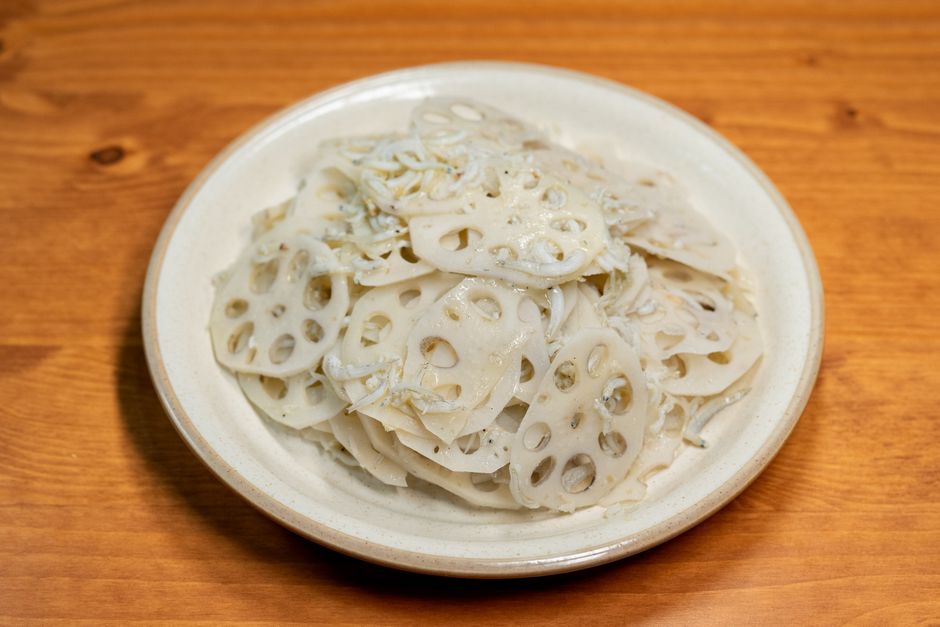
Lotus root tastes mildly sweet, slightly starchy, and very mild overall — think water chestnut crossed with a mild jicama. The most distinctive thing about it isn’t the flavor but the texture: crunchy when raw, tender but still crisp when cooked. It has a subtle earthy note that fades into the background of whatever dish it’s in.
What Does Lotus Root Taste Like Compared to Other Vegetables?
The closest comparison is water chestnut. Both are aquatic vegetables with a clean, light sweetness and a satisfying crunch. Lotus root is a bit starchier and less juicy than water chestnut. Some people also compare it to jicama, though jicama is sweeter and more refreshing.
Raw lotus root has almost no aroma. You won’t smell it before you eat it. The flavor is so subtle that it mainly takes on the seasonings around it. This makes it a versatile ingredient rather than a bold one. If you expect a strong vegetable flavor, you may find lotus root surprisingly plain on its own.
What Is the Texture of Lotus Root?
Texture is the real reason people seek out lotus root. Raw slices are crisp and snap cleanly when bitten. They hold their crunch well, which makes them popular in salads and as a crudité option.
Cooking changes the texture depending on the method. Stir-frying keeps most of the crunch. Boiling or braising softens it but not to the point of mush — it retains a firm bite even after long cooking. This dual nature is unusual. Few vegetables stay crisp when raw and still hold structure when fully cooked.
The holes in the root also affect the experience. When sliced crosswise, lotus root shows its signature pattern of round holes. These holes mean the vegetable cooks more evenly and absorbs sauces into its interior, not just on the surface.
Does Lotus Root Taste Bitter or Earthy?
Fresh lotus root is not bitter. It has a faint earthy quality, similar to the mild bitterness you might notice in celery or cucumber skin. This earthiness is more apparent in raw slices and largely disappears once cooked.
There is one exception worth knowing. Old or stored lotus root can develop a stronger, unpleasant taste. Fresh lotus root should smell clean and slightly like a raw potato. If it smells sour or musty, the flavor will match. Look for roots that feel heavy for their size and have smooth, unbruised skin.
Some cooks soak sliced lotus root in water with a little vinegar or lemon juice. This is mainly to prevent browning, but it also brightens the flavor and reduces any lingering raw starch taste.





How Do You Cook Lotus Root Without Losing Its Flavor?
Lotus root does not need much to taste good. Because the flavor is delicate, heavy sauces can completely overpower it. The most common preparations in Asian cooking use lotus root as a textural element more than a flavor one.
Stir-frying is the most direct approach. Thin slices cooked briefly over high heat with garlic, a touch of oil, and a pinch of salt preserve both the crunch and the mild sweetness. The vegetable picks up the garlic and salt without losing its own character.
Soups are a different story. In Chinese and Japanese cooking, lotus root is often simmered in broth for a long time. The slices soften and absorb the broth flavor. The lotus root contributes starch to the soup, which slightly thickens it and adds body. The flavor of the root itself becomes subtle and almost potato-like in this context.
Pickled lotus root is another common preparation. The vinegar brine transforms the vegetable completely. It becomes tangy, slightly sweet, and keeps its crunch. The pickling process masks most of the earthy notes and highlights the texture instead.
Is Lotus Root Sweet?
Lotus root contains natural sugars, but the sweetness is mild. It is not sweet like a carrot or a sweet potato. The sugar content is closer to that of a turnip or a mild apple — just enough to notice, not enough to satisfy a sweet craving.
The sweetness becomes more apparent when lotus root is cooked slowly. Braising or roasting concentrates the sugars slightly. This is why lotus root works well in dishes that combine sweet and savory flavors, such as braised pork or honey-glazed vegetable preparations.
Nutritionally, lotus root is mostly carbohydrate. A 100-gram serving contains roughly 17 grams of carbohydrates and about 1.5 grams of protein. It is low in fat. The carbohydrate content means it is more filling than leafy vegetables, closer in satiety to a root vegetable like a turnip or parsnip.
What Does Cooked Lotus Root Taste Like in Different Dishes?
The same lotus root tastes noticeably different depending on how it is cooked. This is not true of every vegetable. Understanding these differences helps you predict whether you will enjoy it in a given dish.
In stir-fries, lotus root tastes clean and lightly sweet with a dominant crunch. In soups, it tastes mild and starchy, absorbing the broth. In braised dishes, it takes on the sauce’s flavor while keeping a firm bite. In salads, it tastes fresh and almost neutral, relying on dressing for character.
Lotus root is also made into flour and used as a thickener. In this form, it has no flavor of its own. The flour is used for its thickening properties, similar to cornstarch.
One popular snack is dried or fried lotus root chips. These are similar to potato chips but slightly less fatty and with a more delicate crunch. The flavor is mostly salt and oil, with a faint underlying sweetness.
How to Pick Fresh Lotus Root at the Store
Fresh lotus root is available year-round in many Asian grocery stores. It is less common in standard supermarkets. Choose roots that are firm, unbruised, and free of soft spots. The skin should be smooth and tan to light brown in color.
Cut ends should look moist, not dried out. The flesh inside should be cream-colored or pale white. If the cut end shows browning or dark spots, the root is past its prime.
Whole lotus root can be stored in the refrigerator for up to two weeks if kept in a plastic bag. Once sliced, it browns quickly like a potato or apple. Keep cut pieces in water with a splash of lemon juice or vinegar to slow browning, and use them within a few days.
Frozen lotus root is widely available and works well for soups and braised dishes. The freezing process softens the texture, so frozen lotus root is not ideal for raw applications or stir-fries where crunch matters.
Does Lotus Root Have Any Health Benefits Worth Knowing?
Lotus root is a legitimate source of several nutrients. It provides vitamin C, copper, and potassium. A 100-gram serving supplies about 73% of the daily value for copper and roughly 45% of the daily value for vitamin C, based on USDA food composition data.
It also contains dietary fiber. The fiber content is moderate — about 3 grams per 100-gram serving. This is comparable to many other root vegetables.
Claims that lotus root “detoxifies” the body or provides extraordinary health benefits go beyond what evidence supports. It is a nutritious vegetable, not a medicinal food. Its main health contribution comes from being a whole plant food that displaces more processed options in the diet.
People with diabetes or those watching carbohydrate intake should note that lotus root is starchy. It affects blood sugar more than non-starchy vegetables. Portion control matters if you are managing blood sugar levels.
Who Should Avoid Lotus Root?
Most people can eat lotus root without issue. Food allergy to lotus root is rare but documented. If you experience itching, swelling, or digestive distress after eating it, stop and consult a doctor.
Raw lotus root carries a small risk of foodborne illness, as do most raw vegetables. People with weakened immune systems, pregnant women, and young children should stick to cooked lotus root.
Lotus root is not a common choking hazard when sliced properly. Whole or large chunks can be difficult to chew for young children or older adults with dental issues. Cut it into thin slices for these groups.
Frequently Asked Questions
Does lotus root taste like potato?
No — lotus root is crunchier and much milder than potato. Cooked lotus root has a slightly starchy quality, but it never becomes soft and fluffy like a potato.
Can you eat lotus root raw?
Yes, raw lotus root is safe to eat and commonly served in salads. Wash it thoroughly and slice it thin for the best crunch.
Why is lotus root crunchy even after cooking?
Lotus root contains a type of fiber that resists breaking down during cooking. This structural fiber keeps the cells intact, so the vegetable holds its firm bite even after simmering.
Does lotus root need to be peeled?
Yes — the outer skin is tough and should be removed before eating. Peel it like a potato, then rinse the slices to remove excess starch.
