
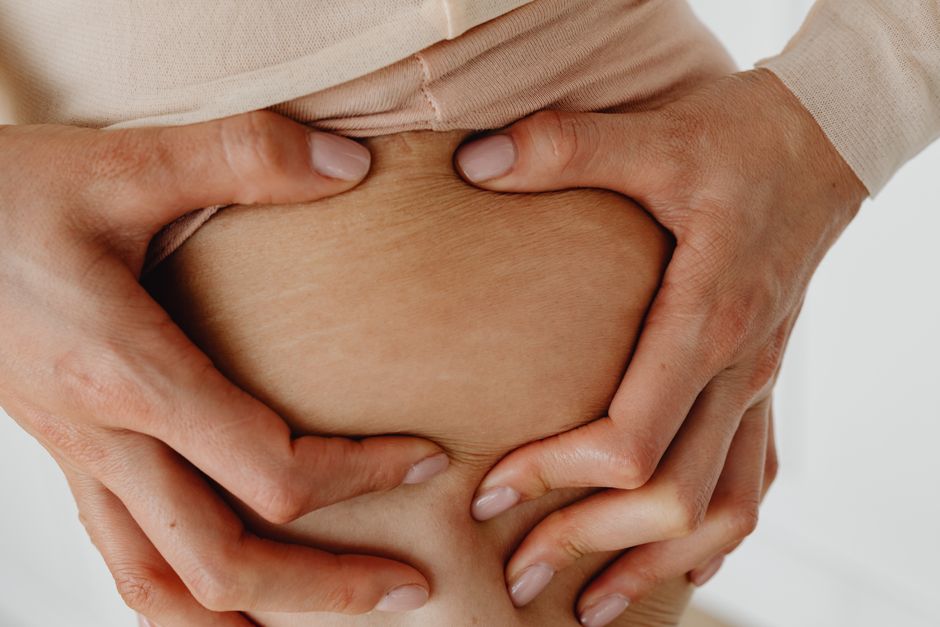
Lipedema fat looks different from normal fat in several clear ways. It usually appears on both legs symmetrically, often stopping at the ankles like a cuff. The skin may feel tender, bruise easily, and the fat itself can feel like small nodules or grains of rice under the skin. Normal fat, by contrast, is evenly distributed, painless to touch, and does not cause easy bruising.
What Is the Physical Difference Between Lipedema Fat and Normal Fat?
The most obvious difference is where the fat sits. Lipedema fat accumulates almost exclusively on the legs, hips, and buttocks. It spares the feet, creating a distinct “cuff” of tissue just above the ankles. Normal fat distributes more evenly across the body, including the arms, trunk, and face.
Another key difference is texture. Lipedema fat feels nodular or lumpy when you press on it. Many women describe it like feeling small peas or beans under the skin. Normal fat is smooth and uniform. Lipedema fat is also disproportionately large compared to the upper body. A woman might wear a size 4 on top and a size 14 on bottom.
Pain is a defining feature. Lipedema fat hurts when touched, pressed, or even when clothing rubs against it. Normal fat does not cause this kind of tenderness. The pain is real and documented in medical literature. A 2020 review in Lymphatic Research and Biology confirmed that pain and easy bruising are hallmark symptoms that distinguish lipedema from simple obesity.
How Can You Tell Lipedema Fat From Cellulite or Lymphedema?
Cellulite is common and affects most women at some point. It looks like dimpled or orange-peel skin on the thighs and buttocks. But cellulite does not cause pain, does not bruise easily, and does not make your legs feel heavy or swollen by the end of the day. Lipedema fat does all three.
Lymphedema is different in a few important ways. Lymphedema usually affects only one limb or is asymmetric. It often starts after surgery, infection, or radiation that damages lymph nodes. The swelling in lymphedema pits when you press it — meaning your finger leaves an indent. Lipedema fat does not pit. The fat is firm and the indent fills back quickly.
Lipedema also has a strong genetic component. Research published in Clinical Genetics in 2019 found that about 60% of women with lipedema report having a mother or grandmother with similar leg shape and symptoms. This family pattern is not seen with regular obesity or lymphedema.
What Does Lipedema Fat Look Like on the Arms and Upper Body?
Lipedema can affect the arms too, though this is less common. When it does, it looks the same as on the legs. The fat builds symmetrically from the shoulders to the wrists but spares the hands. The hands look normal. The arms feel heavy, bruise easily, and are tender to touch.
The torso is usually spared in lipedema. Women with lipedema often have a normal-sized waist and abdomen. This disproportionate appearance — large legs and arms with a smaller trunk — is one of the most reliable visual clues. Normal weight gain or obesity does not follow this pattern.
There is a staging system doctors use. Stage 1 has smooth skin with a thickened fat layer underneath. Stage 2 shows uneven, nodular skin like a mattress. Stage 3 has large, overhanging folds of fat. Stage 4 adds lymphedema on top of the lipedema. Each stage is progressive, but not every woman moves through all stages.




What Does the Research Say About Lipedema Fat Tissue?
Biopsy studies show that lipedema fat is structurally abnormal. A 2017 study in International Journal of Molecular Sciences found that lipedema fat cells are larger than normal fat cells. They also have more inflammation markers and more immune cells called macrophages. This explains the pain and tenderness.
The fat tissue in lipedema also has weaker blood vessels. Capillaries break more easily, which causes the easy bruising. Normal fat does not have this fragility. The lymphatic system around lipedema fat is often dysfunctional too, even before visible swelling appears.
Hormones play a role. Lipedema almost always starts or worsens during puberty, pregnancy, or menopause. This suggests estrogen is involved. A 2021 study in Hormone Molecular Biology and Clinical Investigation found that lipedema fat has more estrogen receptors than normal fat. This may explain why diet and exercise alone rarely shrink it.
| Feature | Lipedema Fat | Normal Fat |
|---|---|---|
| Location | Legs, hips, buttocks, sometimes arms | Evenly distributed |
| Feet and hands | Sparred — normal size | Proportional to body |
| Pain | Yes — tender to touch | No pain |
| Bruising | Easy and frequent | Normal |
| Texture | Nodular, like small lumps | Smooth and uniform |
| Response to diet | Minimal to none | Reduces with calorie deficit |
| Symmetry | Both sides equally affected | Usually symmetric |
Why Does Lipedema Fat Not Respond to Diet and Exercise?
This is one of the most frustrating realities for women with lipedema. They eat well, exercise, and lose weight everywhere except their legs. The fat in lipedema is metabolically different. It resists the normal signals that tell fat cells to release stored energy.
Research shows that lipedema fat has lower levels of hormone-sensitive lipase, an enzyme that breaks down fat for energy. Without it, the fat stays put even when the rest of the body is losing weight. This is not a willpower issue. It is a biological one.
Exercise still helps, but not for fat loss in the legs. It improves lymphatic flow, reduces pain, and prevents progression. Low-impact activities like swimming, cycling, and walking are best. High-impact exercise can worsen pain and bruising.
Some women report that a low-carb or anti-inflammatory diet helps reduce symptoms like pain and swelling. The evidence for this is mostly anecdotal. As of 2026, there are no large clinical trials showing that any specific diet reverses lipedema fat. Diet can help manage symptoms but will not remove the abnormal fat.
What Are the Treatment Options for Lipedema Fat?
Conservative treatments focus on managing symptoms. Compression garments help reduce pain and prevent fluid buildup. Manual lymphatic drainage massage can improve lymph flow. Both are supported by clinical experience and small studies.
Surgery is the only way to remove lipedema fat. The most common procedure is liposuction using tumescent technique. This is not the same as cosmetic liposuction for weight loss. The surgeon uses special cannulas designed to remove the fibrotic, nodular fat without damaging lymphatics.
A 2022 study in Journal of Vascular Surgery: Venous and Lymphatic Disorders followed 85 women who had liposuction for lipedema. They reported significant reductions in pain, bruising, and leg heaviness. Quality of life scores improved. The fat did not return in the treated areas after 3 years of follow-up.
Surgery is expensive and not always covered by insurance. The cost ranges from $10,000 to $50,000 depending on how many areas are treated. Some insurance plans in the US now cover it, but most still consider it cosmetic. Check with your provider and ask for a written policy.
Common Misconceptions About Lipedema Fat
The biggest myth is that lipedema is just obesity. This misconception causes years of delayed diagnosis. Many women are told to lose weight when their fat is biologically different. The average time to diagnosis is 13 years, according to the Lipedema Foundation.
Another myth is that lipedema only affects overweight women. It does not. Women at a normal weight can have lipedema. Their legs are disproportionately large but their BMI may be in the normal range. This is called “lean lipedema” and it is often missed by doctors.
A third misconception is that lipedema fat will go away with fasting or detox diets. There is no clinical evidence that any detox program removes lipedema fat. The fat is structurally abnormal and does not respond to calorie restriction. Be very skeptical of anyone selling a “cure” for lipedema.
- Lipedema is not caused by overeating or laziness
- It is not the same as lymphedema
- It does not respond to standard weight loss methods
- It is not rare — estimates suggest 11% of women may have it
- It is not a cosmetic issue — it causes real pain and disability
Frequently Asked Questions
Can lipedema fat be mistaken for regular fat?
Yes, this is very common. Many women are told they just have large legs and need to diet. The key differences are pain, easy bruising, and the fat not shrinking with weight loss.
Does lipedema fat ever go away on its own?
No, lipedema is a chronic condition. It does not resolve without treatment. Symptoms often worsen over time, especially during hormonal shifts like menopause.
What does lipedema fat feel like when you touch it?
It feels nodular or lumpy, like small peas or grains of rice under the skin. It is tender to the touch, and firm pressure can cause pain.
Is lipedema fat the same as cellulite?
No, they are different conditions. Cellulite is cosmetic and painless. Lipedema causes pain, bruising, and disproportionate fat growth that does not respond to diet.
