
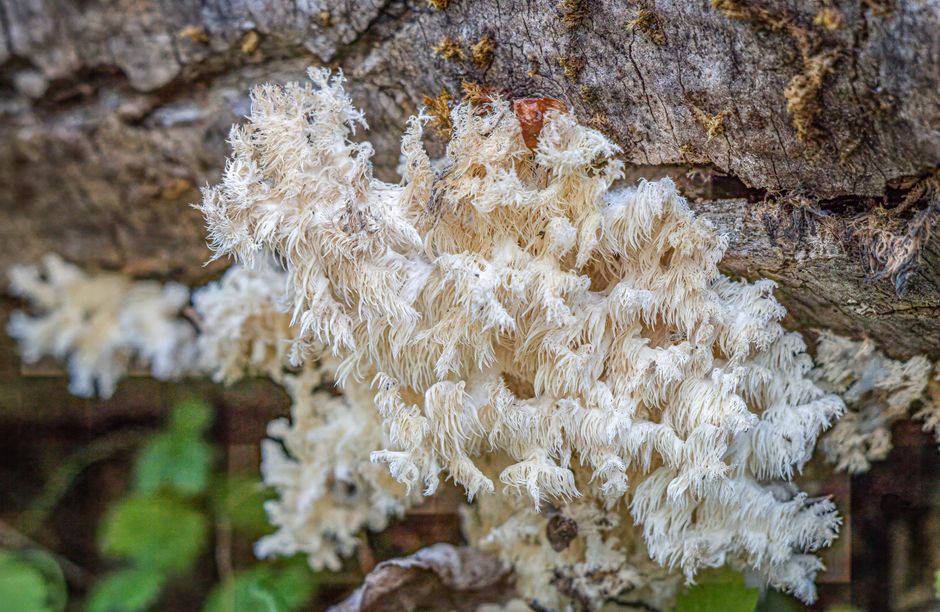
Lion’s mane is a medicinal mushroom that has been used for centuries in traditional Chinese and Japanese medicine. Today, research is focused on its potential effects on the brain, the digestive tract, and the immune system. The most studied benefits involve nerve health and cognitive function, but the evidence is still developing and does not support every claim you see online.
What Does Lions Mane Do?
Lion’s mane contains bioactive compounds, including hericenones and erinacines, which have been shown in laboratory studies to stimulate nerve growth factor (NGF) production. NGF is a protein that helps neurons grow, survive, and form connections. In animal studies, this has translated to improved memory and reduced brain plaque formation, but those results have not been fully replicated in large human trials.
In humans, the strongest evidence is modest. Some small clinical trials have found improvements in cognitive test scores among older adults with mild memory complaints after taking lion’s mane extract daily for several months. Other studies suggest benefits for mood and anxiety, but the sample sizes are small and the results have not always been consistent.
How Does Lion’s Mane Affect the Brain?
The brain relies on NGF to maintain healthy neurons, particularly in areas involved in memory and learning. Lion’s mane compounds appear to cross the blood-brain barrier and stimulate NGF synthesis. This is why most research attention has focused on conditions like mild cognitive impairment and Alzheimer’s disease.
A 2009 study published in Phytotherapy Research gave older adults with mild cognitive impairment 250 mg of lion’s mane extract three times daily for 16 weeks. Cognitive function scores improved compared to placebo, but the benefit disappeared four weeks after stopping the supplement. This is a small study, and no large follow-up trial has confirmed the findings.
More recent research has explored lion’s mane for depression and anxiety. A 2010 study in the Journal of Health Science found that women consuming lion’s mane cookies for four weeks reported less anxiety and irritability than the placebo group. Again, the sample was small and the mechanism is not fully understood. The current evidence supports cautious optimism, not certainty.
Can Lion’s Mane Help Nerve Repair?
Nerve damage is difficult to treat because peripheral nerves regenerate slowly and central nervous system neurons often do not regenerate at all. Animal research suggests lion’s mane may accelerate nerve regrowth after injury. One study in rats with sciatic nerve damage found that lion’s mane extract improved nerve regeneration and functional recovery compared to controls.
These findings are biologically plausible because NGF directly supports neuron survival and axon growth. However, no human trials have confirmed that lion’s mane repairs damaged nerves. If you have peripheral neuropathy, nerve compression, or spinal cord injury, lion’s mane is not an established treatment. It should not replace standard medical care.





What About Digestion and Gut Health?
Lion’s mane has a separate line of evidence related to the digestive tract. The mushroom contains polysaccharides that may reduce inflammation in the gut lining. Some animal studies have shown protective effects against gastric ulcers and inflammatory bowel disease.
There is also emerging interest in the gut-brain axis. The idea is that lion’s mane may influence mood and cognition indirectly by altering the gut microbiome. This is a plausible mechanism, but human data is very limited. No clinical guidelines currently recommend lion’s mane for any digestive condition.
Does Lion’s Mane Support the Immune System?
Lion’s mane contains beta-glucans, which are carbohydrates found in fungal cell walls. Beta-glucans are known to modulate immune activity. Some research suggests they can enhance the activity of macrophages and natural killer cells, which help the body respond to infections and abnormal cells.
However, immune modulation is not the same as immune boosting. The effect is complex and dose-dependent. No high-quality human studies have demonstrated that lion’s mane prevents colds, flu, or infections. The marketing language around immune support often overstates what the evidence shows.
What Is the Right Dose of Lion’s Mane?
There is no official recommended dose for lion’s mane. Clinical trials have used a range of doses, typically between 250 mg and 1000 mg of dried fruiting body extract taken once to three times daily. Some studies have used up to 3000 mg per day without serious side effects.
Because there is no standardized extract, the potency varies widely between products. A supplement labeled 500 mg may contain different amounts of active compounds depending on whether it uses the fruiting body, mycelium, or a blend. Look for products that specify the extraction method and the concentration of beta-glucans or hericenones. Even then, the label does not guarantee clinical efficacy.
Are There Side Effects or Risks?
Lion’s mane is generally well tolerated. The most commonly reported side effects are mild digestive upset, nausea, or skin rash. These effects are uncommon and usually resolve when the supplement is stopped.
People with mushroom allergies should avoid lion’s mane. People taking blood thinners or diabetes medication should talk to a doctor before using it, because the mushroom may interact with these drugs. No safety data exists for pregnant or breastfeeding women, so they should not use it. No clinical guidelines currently exist for this population.
There are also no long-term safety studies beyond a few months of use. The absence of reported harm is not the same as proven safety over years of daily supplementation.
Is Lion’s Mane a Cure for Anything?
No. Lion’s mane is not a cure for Alzheimer’s, dementia, depression, nerve damage, or cancer. Some laboratory studies have shown that lion’s mane compounds can slow the growth of cancer cells in a dish, but that does not mean the mushroom treats cancer in humans. No clinical evidence currently confirms any anti-cancer effect in the body.
This distinction matters. A compound that works in a petri dish may be broken down in the digestive tract, may not reach the target tissue in sufficient concentration, or may behave completely differently in a living organism. Biological plausibility is not the same as demonstrated clinical benefit.
How to Choose a Lion’s Mane Supplement
If you decide to try lion’s mane, the product quality matters. The supplement industry is not tightly regulated, and testing has found that some products contain little or none of the labeled ingredient.
- Choose a product from a manufacturer that uses third-party testing.
- Look for extracts standardized to contain hericenones or erinacines.
- Check that the label specifies whether it uses fruiting body, mycelium, or both.
- Avoid products with proprietary blends that hide the amount of lion’s mane.
Even a high-quality product may not produce noticeable effects. The research is still early, and individual responses vary.
The Bottom Line on Lion’s Mane
Lion’s mane shows genuine promise for cognitive health and nerve function based on animal studies and small human trials. The evidence is not strong enough to call it a proven treatment for any condition. It is best understood as a supplement with preliminary support, not a medication.
If you are healthy and curious, lion’s mane is likely safe for short-term use. If you are managing a medical condition, talk to your doctor first. Do not stop or change any prescribed treatment based on a supplement claim.
Frequently Asked Questions
How long does it take for lion’s mane to work?
Most clinical trials show effects after 4 to 16 weeks of daily use. The benefit may disappear within weeks after stopping the supplement.
Can lion’s mane be taken with other medications?
Lion’s mane may interact with blood thinners and diabetes medication, so talk to a doctor before combining them. No interaction studies have been done for most other drugs.
Is lion’s mane safe to take every day?
Short-term daily use appears safe for most healthy adults, but no long-term safety studies exist. Mild digestive upset is the most common side effect.
Does lion’s mane actually improve memory?
Some small studies found modest memory improvements in older adults with mild cognitive decline. The evidence is not strong enough to guarantee any effect in healthy people.
