
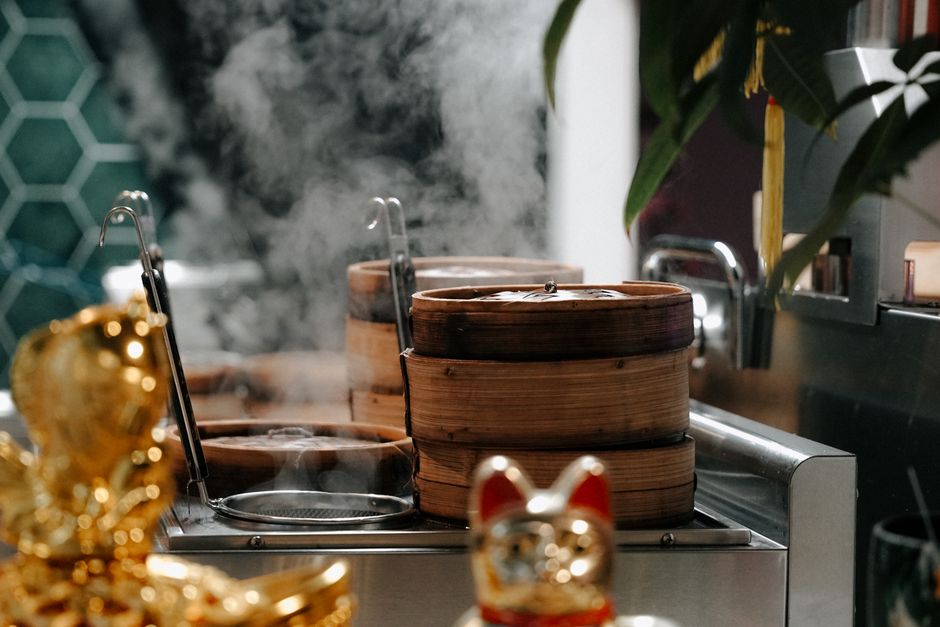
Steaming is one of the oldest cooking methods humans have used, and it is also one of the gentlest. It means cooking food with the heat of steam — water that has turned to vapor — rather than by direct contact with a hot pan, hot oil, or an open flame. The food never sits in the cooking water. It sits above it, and the steam does the work.
That single difference changes what happens inside the food. Because steam transfers heat through condensation rather than through dry, intense contact, food cooks at a temperature that rarely climbs far above the boiling point of water. That is why steamed vegetables stay bright and firm, and why steamed fish stays moist instead of drying out.
What Does It Mean To Steam Food And How Does It Work?
Steam is water that has absorbed enough energy to become a gas. At normal atmospheric pressure, water turns to steam at 212°F (100°C) at sea level. When that vapor touches a cooler surface — a piece of broccoli, a fillet of fish — it condenses back into liquid and releases the energy it absorbed. That released energy is what cooks the food.
This is the key mechanism, and it is worth understanding because it explains almost everything else about steaming. The heat transfer is efficient but capped. As long as there is water in the pot, the steam cannot get much hotter than 212°F at sea level. Compare that to a skillet, where oil can reach 350°F or higher, or a grill, where surfaces can exceed 500°F.
Lower heat does two things at once. It cooks food more slowly and evenly, and it causes fewer of the chemical changes that high heat triggers. Those changes include the browning reactions that create char and crust — and also the breakdown of certain nutrients and the formation of some compounds that high-heat cooking can produce.
Altitude matters here. At higher elevations, water boils at a lower temperature. At 5,000 feet, water boils at roughly 203°F. That means steaming takes longer at altitude, because the steam itself is cooler.
Why Does Steaming Preserve More Nutrients Than Boiling?
Water-soluble vitamins dissolve in water. That is the whole problem with boiling. When you drop vegetables into a pot of boiling water, vitamins like vitamin C and several B vitamins leach out of the food and into the water. If you drain that water, you pour those nutrients down the sink.
Steaming avoids most of this. The food does not sit in water, so there is far less opportunity for water-soluble vitamins to escape. Some research has found that steamed vegetables retain higher levels of certain vitamins than boiled ones, though the size of that difference depends heavily on the vegetable, the cooking time, and the method used.
One clarification worth making: steaming does not make food “nutrient-proof.” Heat itself degrades some vitamins regardless of the method. Vitamin C is sensitive to heat, and long steaming will still reduce it. The advantage of steaming is relative, not absolute. It tends to preserve more than boiling and often more than frying, but it is not a way to cook food without any nutrient loss.
There is also a food safety angle that is easy to overlook. Steaming does not remove pesticides or bacteria any more than other cooking methods do. It is a cooking technique, not a cleaning technique. Food safety depends on reaching a safe internal temperature, and steaming can achieve that for many foods — but only if it is done long enough.
What Foods Are Best Suited To Steaming?
Steaming works well for foods that cook evenly and do not need a crust or browned surface to taste good. It is a poor fit for foods where browning is the point.
- Vegetables: Broccoli, carrots, green beans, asparagus, cauliflower, and leafy greens all steam well and hold their color and texture.
- Fish and shellfish: Steaming is a gentle method that keeps delicate fish moist. It is common in many coastal cuisines for exactly this reason.
- Dumplings and buns: Steamed dumplings, bao, and similar dough-wrapped foods cook through without drying out.
- Rice and grains: Steaming is central to cooking many types of rice, though this usually happens in a covered pot rather than a steamer basket.
- Eggs: Steamed eggs, including custard-style preparations, cook to a smooth texture that is hard to achieve with direct heat.
Foods that do not steam well include most meats that benefit from browning, anything you want crispy, and foods that need a Maillard reaction — the browning that gives roasted and seared food its flavor. Steaming will not brown food. If you want browning, you need higher heat and a dry surface.





How Does Steaming Compare To Other Cooking Methods?
Each cooking method trades off flavor, texture, and nutrient retention in different ways. There is no single best method — it depends on the food and what you want from it.
| Method | Typical Temperature | Nutrient Retention | Browning |
|---|---|---|---|
| Steaming | ~212°F (100°C) at sea level | Generally high for water-soluble vitamins | None |
| Boiling | ~212°F (100°C) at sea level | Lower — nutrients leach into water | None |
| Pan frying | 300–400°F | Varies; some vitamins degrade with heat | Yes |
| Roasting | 375–450°F | Varies; depends on time and temperature | Yes |
| Grilling | Can exceed 500°F at the surface | Varies; high heat degrades some nutrients | Yes, often heavily |
These temperature ranges are general. Actual temperatures depend on the equipment, the food, and how the cooking is done. The point of the table is the pattern: steaming operates in a narrow, low range, while dry-heat methods reach much higher temperatures.
That high heat is not automatically bad. Browning creates flavor compounds that many people find appealing, and some nutrients are actually more available after cooking because heat breaks down cell walls. Lycopene in tomatoes, for example, becomes more bioavailable when tomatoes are cooked. Steaming and high-heat cooking simply do different things.
Does Steaming Food Have Any Downsides?
Steaming has real limitations. The most obvious is flavor. Steamed food has a milder taste because it lacks the browning that dry heat produces. For some people and some dishes, that is a benefit. For others, it makes food seem bland.
Texture is another issue. Steamed vegetables can turn mushy if they are overcooked, and because steam heat is gentle, it is easy to leave food in too long without noticing. The window between perfectly cooked and overcooked can be narrow.
There is also the question of what steaming does not do. It does not kill all bacteria instantly. It does not remove toxins that may already be present in food. And it does not make an unsafe food safe — if food is contaminated, it needs to reach a safe internal temperature, and steaming must be done long enough to achieve that.
Some people assume steaming is always healthier than other methods. That is an oversimplification. Steaming preserves more water-soluble vitamins than boiling, and it avoids the added fat that frying requires. But whether steamed food is “healthier” depends on what you are comparing it to and what else is in the meal. A steamed vegetable with a creamy sauce is not automatically healthier than a roasted vegetable with olive oil.
What Equipment Do You Need To Steam Food?
You do not need special equipment. A pot with a lid and a steamer basket is enough. The basket holds the food above a small amount of boiling water, and the lid traps the steam.
Other options include electric steamers, bamboo steamer baskets that stack over a pot or wok, and pressure steamers that cook faster by raising the temperature of the steam. Pressure steamers work differently because the increased pressure raises the boiling point, so the steam is hotter than 212°F. That cooks food faster but changes the texture and nutrient outcome compared to regular steaming.
The main practical rule is simple: keep enough water in the pot that it does not boil dry, and keep the lid on. Every time you lift the lid, you release steam and slow the cooking.
Frequently Asked Questions
Is steamed food healthier than boiled food?
Steamed food generally retains more water-soluble vitamins than boiled food, because the nutrients do not leach into cooking water that gets discarded. The difference depends on the specific food and cooking time, so it is a relative advantage rather than an absolute rule.
Does steaming vegetables destroy nutrients?
Heat degrades some vitamins no matter how you cook, and steaming is no exception. Steaming tends to preserve more heat-sensitive and water-soluble nutrients than boiling or frying, but it does not prevent nutrient loss entirely.
Can you steam meat?
Yes, meat can be steamed, and it is common in many cuisines, but it will not brown or develop a crust. Steaming works best for delicate proteins like fish and for ground or wrapped meat preparations rather than for steaks or cuts where browning is desired.
How long does it take to steam vegetables?
Time varies widely by vegetable and by how small the pieces are cut, so there is no single number that applies to all vegetables. The reliable method is to check texture with a fork and remove the food when it reaches the tenderness you want.
