
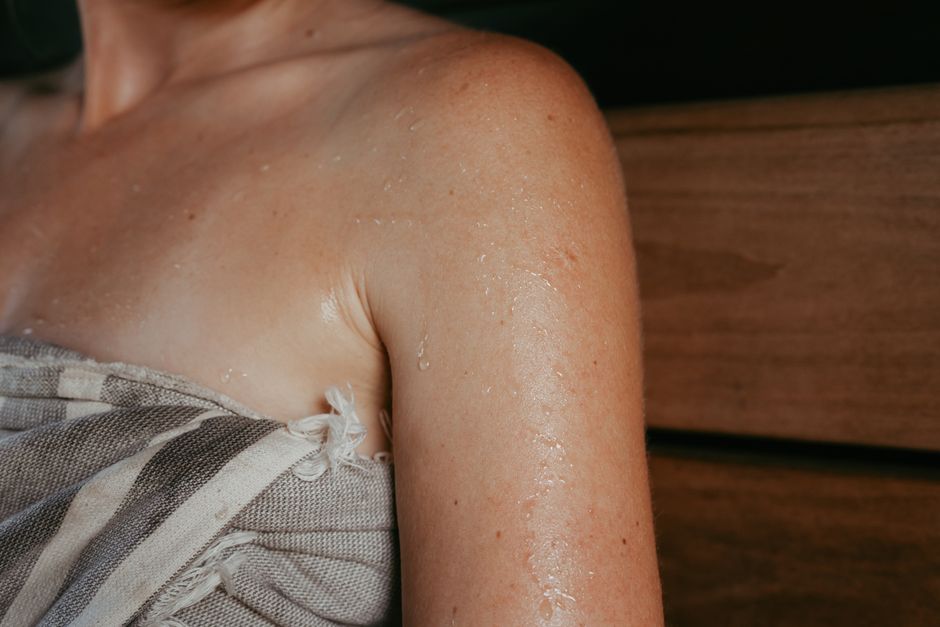
Sweating a lot is your body’s cooling system doing its job — but sometimes it runs louder than it needs to. If you sweat heavily during exercise or in hot weather, that is normal and often a sign of a well-functioning thermoregulation system. If you sweat excessively without those triggers, soak through your clothes on a mild day, or notice a sudden change from your usual pattern, that is worth paying attention to.
The medical term for sweating more than your body needs for temperature control is hyperhidrosis. It affects an estimated 4.8% of Americans, according to research published in the Journal of the American Academy of Dermatology. That is roughly 15 million people. Most of them never mention it to a doctor, largely because they assume it is just how they are built.
What Does It Mean If You Sweat A Lot?
It usually means one of two things: your body is responding normally to heat, effort, or stress, or your sweat glands are being overstimulated by the nervous system. The second scenario is what doctors call primary hyperhidrosis.
Your sweat glands are controlled by the sympathetic nervous system — the same branch that handles your fight-or-flight response. In people with primary hyperhidrosis, that nerve signal is stronger than it needs to be. The glands themselves are structurally normal. The problem is the volume knob on the signal.
Primary hyperhidrosis most commonly affects the palms, soles, underarms, and face. It typically starts in childhood or adolescence and tends to run in families. Researchers have identified a genetic component, though the exact inheritance pattern is not fully mapped.
Secondary hyperhidrosis is different. It means another condition or medication is causing the excess sweating. This type can affect the whole body rather than specific areas, and it often starts in adulthood. Distinguishing between these two categories is the first thing a doctor will work through.
What Is the Difference Between Normal Sweating and Excessive Sweating?
Normal sweating stops when the trigger stops. Excessive sweating does not.
If you sweat heavily during a workout and cool down within a few minutes afterward, that is expected physiology. If you sweat through your shirt while sitting in a 72-degree room doing desk work, that crosses into a different territory.
Doctors generally consider sweating excessive when it meets a few criteria:
- It happens at least once a week
- It occurs on both sides of the body symmetrically
- It interferes with daily activities or causes embarrassment
- It started before age 25
- There is no obvious trigger like heat or exercise
- It stops during sleep
That last point is a useful clue. Primary hyperhidrosis almost never happens during sleep. Night sweats that soak your sheets point toward a different set of causes and deserve a medical evaluation.
Some people also have what is called generalized hyperhidrosis, where sweating happens across large areas of the body. This pattern is more often linked to an underlying condition than to primary hyperhidrosis.
What Medical Conditions Can Cause Heavy Sweating?
Several conditions can drive excessive sweating, and they tend to produce different patterns.
Hyperthyroidism speeds up your metabolism and often causes sweating along with weight loss, rapid heartbeat, and heat intolerance. Diabetes can cause sweating through low blood sugar episodes, and prolonged high blood sugar can damage the nerves that control sweat glands. Menopause brings hot flashes and night sweats driven by hormonal shifts.
Infections — including tuberculosis — can cause night sweats. So can some cancers, particularly lymphomas. This does not mean that sweating a lot means you have cancer. It means that when night sweats appear suddenly alongside other symptoms like unexplained weight loss or fever, a doctor should evaluate them.
Other possible causes include:
- Anxiety disorders and panic attacks
- Heart problems, including heart attack (cold sweat is a common warning sign)
- Overactive adrenal glands (pheochromocytoma)
- Acromegaly, a rare hormone disorder
- Parkinson’s disease and other neurological conditions
- Alcohol use disorder and alcohol withdrawal
Certain medications can also trigger heavy sweating. Antidepressants, opioids, hormone therapies, and some diabetes medications are among the more common culprits. If sweating started or worsened after a medication change, that timeline matters and is worth mentioning to your prescriber.
When Should You See a Doctor About Excessive Sweating?
See a doctor if your sweating pattern has changed, if it happens at night, or if it comes with symptoms like chest pain, shortness of breath, fever, or unexplained weight loss.
Those accompanying symptoms are the key signal. Sweating on its own is rarely an emergency. Sweating paired with chest pressure, a racing heart, nausea, or lightheadedness could indicate a heart attack — that is a call for emergency services, not a wait-and-see approach.
For non-urgent cases, a primary care doctor can start the evaluation. They will typically ask about when the sweating started, what triggers it, whether it happens during sleep, and what medications you take. Blood tests can check thyroid function, blood sugar, and other markers. Referral to a dermatologist is common for confirmed primary hyperhidrosis.
Many people wait years before mentioning excessive sweating to a doctor. It is not something to be embarrassed about, and it is not something you have to manage alone.
What Treatments Are Available for Excessive Sweating?
Treatment depends on whether the cause is primary or secondary. For secondary hyperhidrosis, treating the underlying condition usually reduces the sweating. For primary hyperhidrosis, several options exist, and they vary in how well they work and how long the effect lasts.
Clinical guidelines from the American Academy of Dermatology outline a stepwise approach. Most people start with antiperspirants rather than deodorants. This distinction matters: deodorants address odor, while antiperspirants contain aluminum-based compounds that physically block sweat ducts. Over-the-counter antiperspirants with aluminum chloride are often the first step. Prescription-strength versions are stronger.
If topical antiperspirants are not enough, options include:
- Iontophoresis — a device that passes a mild electrical current through water to temporarily reduce sweating, most often used for hands and feet
- Botulinum toxin injections — approved by the FDA for underarm sweating; blocks the nerve signal to sweat glands; effects typically last several months
- Oral medications — anticholinergic drugs that reduce sweat production across the body; side effects like dry mouth and blurred vision are common
- Microwave therapy — uses energy to destroy sweat glands in the underarm area
- Endoscopic thoracic sympathectomy (ETS) — surgery that cuts or clamps the nerve pathway; generally reserved for severe cases because of the risk of compensatory sweating elsewhere on the body
Effectiveness varies by person and by treatment. No single option works for everyone, and what works well for underarm sweating may not help sweaty palms. A dermatologist can help match the approach to the specific pattern.
Does Sweating a Lot Mean You Are Out of Shape?
No. Fitness level does not determine how much you sweat.
In fact, trained athletes often start sweating sooner and more heavily than untrained people. That is because their bodies have adapted to regulate temperature more efficiently. A 2010 study in the Journal of Applied Physiology found that heat-acclimated individuals begin sweating at a lower body temperature and produce more sweat per gland. This is an adaptation, not a weakness.
Body weight, genetics, age, and sex all play a role. Men tend to sweat more than women, though researchers believe this is partly due to differences in body size and fitness rather than sex alone. People with more sweat glands — which is genetic — will produce more sweat under the same conditions.
The idea that heavy sweating signals poor fitness is a myth. It is not supported by exercise physiology research.
Can You Reduce How Much You Sweat?
You can reduce the impact of heavy sweating, though you cannot change your genetic sweat gland density or your nervous system’s baseline sensitivity.
Practical steps that help:
- Apply antiperspirant at night, not in the morning — it works better when sweat glands are less active
- Wear breathable fabrics like cotton or moisture-wicking synthetics
- Avoid triggers like spicy food, caffeine, and alcohol if they worsen your symptoms
- Manage stress through techniques that work for you — stress sweating is real and driven by the same sympathetic nervous system
- Keep backup clothing available for situations that tend to trigger heavy sweating
None of these address the underlying nerve signal. They reduce the consequences. For some people, that is enough. For others, medical treatment is the more effective path.
One non-obvious point: the smell of sweat does not come from sweat itself. Fresh sweat is mostly water and odorless. Odor develops when bacteria on the skin break down the compounds in sweat. That is why washing the skin and treating clothing matter more than trying to stop sweating entirely.
Frequently Asked Questions
Is sweating a lot a sign of a health problem?
Not always. Primary hyperhidrosis is a nervous system condition, not a sign of underlying disease, but excessive sweating can also be caused by thyroid problems, diabetes, infections, or medications. A doctor can help distinguish between the two.
What causes excessive sweating without exercise?
Overactive nerve signals to sweat glands, anxiety, hormonal changes, low blood sugar, and certain medications are common causes. When sweating happens without heat or exertion and interferes with daily life, it is worth having evaluated.
Can heavy sweating be cured?
There is no permanent cure for primary hyperhidrosis, but treatments can significantly reduce symptoms. Options include prescription antiperspirants, botulinum toxin injections, oral medications, and in some cases surgery.
Does sweating a lot mean you are unhealthy?
No. Sweating heavily during exercise or in heat is a normal and necessary body function. Fitness level does not determine how much you sweat, and many healthy people simply have more active sweat glands.
