
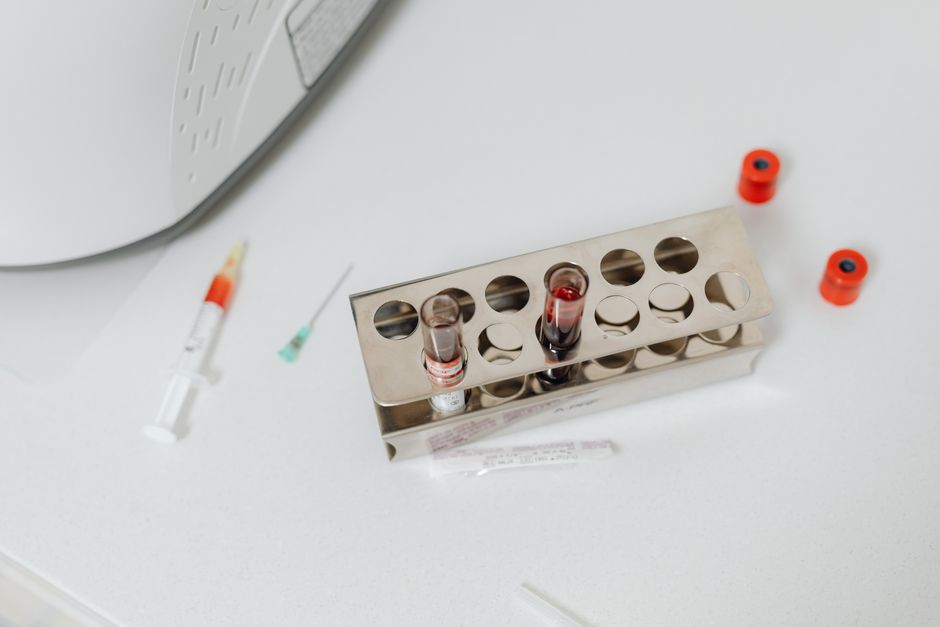
In vitro diagnostic use means a test is performed on a sample taken from your body — like blood, urine, or tissue — outside of your body in a laboratory setting. The phrase “in vitro” is Latin for “in glass,” which reflects the original practice of conducting these tests in test tubes and glassware rather than inside a living person. When a medical test is marked “for in vitro diagnostic use,” it means the product is a medical device designed to examine that sample to detect disease, measure health markers, or guide treatment decisions.
What Does In Vitro Diagnostic Use Mean in Simple Terms?
In simple terms, an in vitro diagnostic (IVD) test looks at a sample of your body to find signs of health or illness. The test never touches you directly. Instead, a healthcare provider collects the sample, and the test analyzes it outside your body.
Common examples include blood glucose meters for diabetes, pregnancy tests that detect hormones in urine, and lab panels that measure cholesterol or liver enzymes. These tests are distinct from in vivo diagnostics, which examine the body directly, such as an MRI scan or an X-ray.
How Do In Vitro Diagnostics Actually Work?
Every IVD test relies on detecting a specific substance in your sample. That substance might be a protein, a hormone, a piece of genetic material, or even a whole virus or bacterium. The test uses chemical reactions or biological molecules to produce a measurable signal when that substance is present.
For example, a rapid strep test looks for antigens from Streptococcus bacteria in a throat swab. The swab sample is mixed with reagents, and if the bacterial antigens are present, a chemical reaction produces a visible line on the test strip. If the antigens are absent, no line appears.
More complex tests, like polymerase chain reaction (PCR) tests for viruses, work differently. They amplify tiny amounts of viral genetic material until it reaches a detectable level. This is why PCR tests are considered highly sensitive — they can find very small amounts of a virus in a sample.
Laboratory-based IVDs often use automated analyzers that process hundreds of samples per hour. These machines measure everything from electrolyte levels to tumor markers with high precision. The results are then compared against established reference ranges to determine whether a value is normal for a healthy person.
Why Does the “Use” Label Matter?
The phrase “in vitro diagnostic use” is not just a technical description. It is a regulatory classification that carries legal weight. In the United States, the Food and Drug Administration (FDA) regulates IVD products as medical devices. A product labeled “for in vitro diagnostic use” has been reviewed for safety and effectiveness according to FDA standards.
This label distinguishes regulated medical tests from products that are not intended for disease diagnosis. For example, a home DNA ancestry kit is not labeled for in vitro diagnostic use because it does not diagnose, treat, or prevent disease. It provides informational results only. The distinction protects consumers from relying on unvalidated tests for medical decisions.
When a test carries the IVD label, it means the manufacturer has demonstrated that the test performs as claimed. This includes evidence that the test detects the intended substance consistently and that the results are clinically meaningful.





What Counts as an In Vitro Diagnostic?
The category of IVDs is broad and touches nearly every branch of medicine. Some of the most common types include:
- Blood glucose tests for monitoring diabetes
- Complete blood counts that measure red cells, white cells, and platelets
- Lipid panels that assess cholesterol and triglycerides
- Infectious disease tests for HIV, hepatitis, strep throat, and influenza
- Cancer screening tests such as the PSA test for prostate cancer or fecal occult blood tests
- Genetic tests that identify inherited mutations linked to conditions like cystic fibrosis or BRCA-related breast cancer
- Pregnancy and fertility tests that detect hormones like hCG or luteinizing hormone
- Drug and toxicology screens used in emergency medicine and workplace testing
- Thyroid function tests that measure TSH and other hormones
- Urinalysis that screens for kidney disease, urinary infections, and metabolic conditions
Each of these tests provides information that helps clinicians diagnose a condition, monitor a chronic disease, or assess how well a treatment is working.
What Is the Difference Between IVD and Laboratory Developed Tests?
Not all diagnostic tests go through the same regulatory pathway. An IVD is manufactured commercially and sold to hospitals, clinics, and laboratories. The manufacturer submits data to the FDA to demonstrate the test works as intended before it can be marketed.
A laboratory developed test (LDT) is designed, manufactured, and used within a single laboratory. These tests are often created when no commercial test exists for a particular rare condition or novel biomarker. Historically, LDTs have been regulated differently than commercial IVDs, though the FDA has been working to increase oversight of these tests in recent years.
For patients, the practical difference is that commercial IVDs have undergone independent regulatory review, while LDTs may not have the same level of external scrutiny. This does not mean LDTs are unreliable — many are well-validated and essential for patient care. But the regulatory history is different, and patients should feel comfortable asking how any test was validated.
How Accurate Are In Vitro Diagnostics?
Accuracy varies by test. No medical test is perfect. Every diagnostic test has a sensitivity and a specificity that describe its performance.
Sensitivity refers to how well a test identifies people who actually have the condition. A highly sensitive test rarely misses a true positive. Specificity refers to how well a test correctly identifies people who do not have the condition. A highly specific test rarely produces false positives.
For example, a rapid flu test might have moderate sensitivity, meaning it can miss some cases of flu. A PCR test for the same virus typically has very high sensitivity and specificity. This is why clinicians often confirm rapid test results with lab-based testing when the result does not match the patient’s symptoms.
Home tests are generally designed to be simple and readable, but they may have different performance characteristics than laboratory versions. A home pregnancy test, for instance, is highly accurate when used correctly, but user error — like testing too early or reading results after the recommended time — can affect the outcome.
False positives and false negatives are possible with any test. A false positive can cause unnecessary anxiety and follow-up testing. A false negative can delay treatment. This is why doctors interpret test results alongside your symptoms, medical history, and physical examination rather than relying on a single result in isolation.
How to Use In Vitro Diagnostic Tests Correctly
Following instructions matters more than most people realize. Each IVD test comes with specific requirements for sample collection, storage, and timing. Deviating from those instructions can produce inaccurate results.
For blood tests, some require fasting beforehand. Others must be collected at a specific time of day because hormone levels naturally fluctuate. Urine tests may require a clean-catch technique to avoid contamination. Swab tests must reach the correct depth to collect an adequate sample.
Home tests are especially dependent on following directions precisely. Testing too early in an infection, not waiting the required time before reading results, or using an expired test can all compromise accuracy. If a result seems inconsistent with how you feel, contact a healthcare provider rather than repeating the test indefinitely.
Storage conditions also matter. Many tests are sensitive to heat, humidity, and light. Storing tests in a bathroom cabinet where they are exposed to steam can degrade their components over time. Check expiration dates and store tests as directed on the packaging.
When Should You Seek Professional Testing Instead of Home Tests?
Home tests are convenient for screening and monitoring, but they have limits. A home blood pressure monitor is excellent for tracking hypertension between doctor visits. A home blood glucose meter is essential for daily diabetes management. These devices are well-established and validated for their intended use.
However, home tests cannot replace comprehensive diagnostic evaluation. A home test that suggests a problem is a reason to seek medical care, not a diagnosis in itself. Similarly, a home test that shows a normal result does not rule out disease if you have symptoms.
Professional laboratory testing offers several advantages. Laboratory tests are performed by trained technicians using calibrated equipment with strict quality control procedures. Results are interpreted by pathologists and clinicians who understand the nuances of reference ranges, interfering substances, and clinical context.
If you are considering a home test for a serious condition — such as a sexually transmitted infection, a genetic disorder, or cancer screening — discuss it with a healthcare provider first. They can help you choose the right test and interpret the results appropriately.
Frequently Asked Questions
Is a pregnancy test an in vitro diagnostic?
Yes, a home pregnancy test is an in vitro diagnostic because it detects the hormone hCG in a urine sample outside the body. It is regulated by the FDA as a medical device for over-the-counter use.
Are at-home COVID-19 tests considered in vitro diagnostics?
Yes, at-home COVID-19 antigen tests are in vitro diagnostics because they analyze a nasal swab sample outside the body. They are cleared by the FDA under emergency use authorization for self-testing.
What is the difference between in vitro and in vivo diagnostic tests?
In vitro tests analyze a sample taken from the body, such as blood or urine, in a laboratory setting. In vivo tests examine the body directly, such as an MRI, CT scan, or ultrasound that images tissues and organs in place.
Can in vitro diagnostic test results be wrong?
Yes, no medical test is 100% accurate, and false positives and false negatives can occur. The risk of error depends on the specific test, how well it was performed, and whether the sample was collected correctly.
