
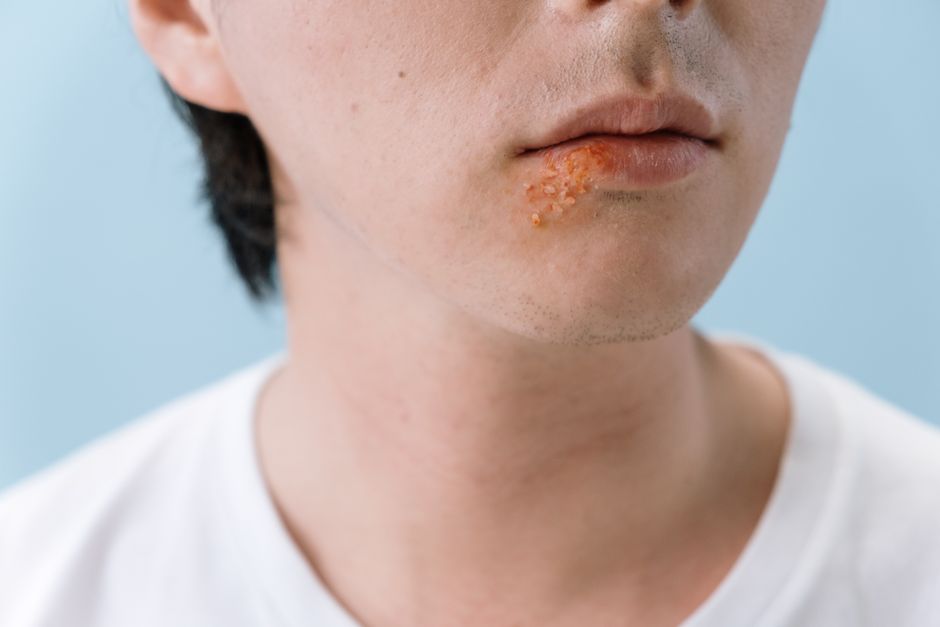
Herpes on Black skin often looks like clusters of small, fluid-filled blisters that may appear red, purple, dark brown, or skin-colored depending on a person’s natural skin tone. The outbreak follows a predictable pattern: tingling or burning first, then blisters, then open sores, and finally crusting and healing. Recognizing these stages and knowing how signs differ on Black skin can help you get the right diagnosis and avoid common mistakes.
What Does Herpes Look Like On Black Skin?
Herpes lesions on Black skin can look different than the classic “red blister” picture you may have seen. The redness of inflammation is harder to see on darker skin. Instead of bright red, the area around the blister may appear darker, purplish, or just slightly deeper in color than the surrounding skin.
The blisters themselves are usually the same on all skin types: small, raised, and filled with clear or yellowish fluid. They often grow in a cluster, like a bunch of grapes. After the blisters break, shallow open sores form. These sores can look grayish, whitish, or dark pink against Black skin. As they heal, a crust or scab forms that may be brown or black.
Common locations include the lips, mouth, genitals, buttocks, and thighs. In people with darker skin, the healed area may leave a mark that is darker than the surrounding skin. This is called post-inflammatory hyperpigmentation (PIH) and is very common after herpes outbreaks on Black skin.
What Are The Stages Of A Herpes Outbreak?
Herpes outbreaks follow a clear sequence. The first stage is the prodrome. This is the warning period before any visible bump appears. Many people feel tingling, burning, itching, or a sharp shooting pain in the area where the outbreak will happen. This can start hours to a day before the blister shows up.
The second stage is the vesicle stage. Small fluid-filled blisters appear. On Black skin, these may look like clear or slightly yellow bumps on a darker base. They are usually grouped together. The fluid is highly contagious.
The third stage is the ulcer stage. The blisters break open, leaving shallow, moist sores. These ulcers can be painful and may look grayish, whitish, or reddish on Black skin. This stage lasts a few days.
The fourth stage is the crusting stage. The sores begin to dry out and form a crust or scab. On Black skin, the scab is often dark brown or black. This is normal and not a sign of infection.
The final stage is healing. The scab falls off, and new skin grows underneath. On Black skin, the healed area may be darker or lighter than the surrounding skin for weeks or months. This color change usually fades over time.
How Do Herpes Symptoms Differ On Black Skin?
The main difference is that redness—a key clue for herpes on lighter skin—is often not visible on Black skin. Instead of seeing red inflammation, you may see a dusky, purplish, or hyperpigmented halo around the blisters or sores. This can make the early signs harder to spot.
Another difference is the frequency of post-inflammatory hyperpigmentation (PIH). After the outbreak heals, Black skin is more likely to develop dark marks that last for weeks or months. These marks are not scars; they are temporary changes in pigment. They do not mean the infection is still active.
Pain and burning sensations are the same across all skin tones. If you feel a tingling or burning in an area and notice a cluster of bumps that are darker than your skin, herpes is a possible cause.
Because the visual signs are less obvious on Black skin, herpes is sometimes misdiagnosed as ingrown hairs, pimples, or folliculitis. A healthcare provider who is not experienced with darker skin tones may miss the diagnosis. If you suspect herpes, ask for a swab test of the blister fluid. That test is accurate regardless of skin color.



What Are The First Signs Of Herpes On Black Skin?
The first sign is usually a prodrome sensation. You may feel tingling, itching, burning, or a mild ache in one spot on your lip, mouth, or genital area. This feeling can start 12 to 24 hours before anything visible appears.
Shortly after, small bumps develop. On Black skin, these bumps might not look red. They may appear as slightly raised, firm bumps that match your skin tone or look a little darker. Within a day or two, the bumps fill with clear fluid and become blisters.
If you notice any of these signs, especially if they recur in the same spot, herpes is a possibility. The first outbreak is usually the most severe. It can include fever, swollen lymph nodes, and body aches. Later outbreaks are typically milder and shorter.
Can Herpes Be Mistaken For Other Skin Conditions On Black Skin?
Yes. Several common skin problems can look like herpes on Black skin. The most frequent misdiagnoses are ingrown hairs and folliculitis. Ingrown hairs occur when a hair curls back into the skin, causing a raised, often painful bump. But ingrown hairs usually appear as single bumps, not clusters, and they do not go through the blister-then-ulcer pattern.
Folliculitis is inflammation of hair follicles. It can cause red or dark bumps that may have a whitehead. However, folliculitis bumps are usually smaller and more numerous than herpes blisters, and they do not typically form open sores that crust over.
Contact dermatitis or allergic reactions can cause blisters, but they are usually more widespread and not clustered in one small area like herpes.
Genital ulcers can also be caused by syphilis, chancroid, or other infections. A herpes sore is typically painful, while a syphilis chancre is usually painless. Only lab testing can confirm the cause.
If you are unsure, do not assume it is just a pimple or razor bump. A healthcare provider can perform a viral culture or PCR swab on an active blister. This test is the gold standard and works on all skin types.
When Should You See A Doctor For Herpes On Black Skin?
See a doctor if you have any blister or sore that does not heal within two weeks, or if you have recurrent tingling and bumps in the same location. Also see a doctor if you have flu-like symptoms along with sores, or if you have sores on your genitals and have had unprotected sex.
If you are pregnant and suspect herpes, see a doctor immediately. Herpes can be passed to a baby during childbirth, and antiviral treatment can reduce that risk.
A visual diagnosis alone can be wrong, especially on Black skin. Request a PCR swab test of the blister fluid. Blood tests for herpes antibodies are also available, but they cannot tell you where the infection is located or how long you have had it.
Antiviral medications like acyclovir, valacyclovir, and famciclovir can shorten outbreaks and reduce the chance of spreading the virus. They are most effective when started during the prodrome stage. Treatment is not a cure—herpes stays in the body—but it can manage symptoms well.
Can You Spread Herpes Without Visible Symptoms On Black Skin?
Yes. This is called asymptomatic shedding. The virus can be present on the skin surface even when no blisters or sores are visible. People with darker skin may have even less obvious signs of shedding, making it possible to pass the virus without knowing it.
The risk of transmission is highest during an active outbreak, but it can happen at any time. Using condoms and taking daily suppressive antiviral therapy reduce the risk but do not eliminate it completely. If you have herpes, it is important to tell sexual partners and discuss ways to lower the risk.
Frequently Asked Questions
Can herpes appear as a single bump on Black skin?
Yes, but it is less common. Herpes typically appears in clusters, though the first outbreak may start with one or two bumps. If you have a single bump that does not blister or crust, ingrown hair or folliculitis is more likely.
Does herpes leave scars on Black skin?
Herpes usually does not cause permanent scars. However, it often leaves dark marks called post-inflammatory hyperpigmentation that can last weeks to months. These marks are not scars and usually fade on their own.
How long does a first herpes outbreak last on Black skin?
A first outbreak can last 2 to 4 weeks from the first tingle to complete healing. Recurrences are shorter, typically 7 to 10 days. Antiviral medication can shorten both first and repeat outbreaks.
Can you have herpes without ever seeing a blister on Black skin?
Yes. Many people with herpes never notice visible blisters. The sores can be so mild that they are mistaken for other skin issues, or the skin changes are subtle on darker tones. A blood test can detect herpes antibodies even without a history of outbreaks.
