
Galangal tastes sharper and more pine-like than ginger, with a citrusy edge and a peppery finish that ginger doesn’t have. Ginger is warmer and sweeter, with a rounder flavor that softens when cooked. Both are rhizomes — underground stems — and they look similar enough that people confuse them in the store. But they are different plants, and swapping one for the other changes a dish more than most cooks expect.
This guide covers how each one actually tastes, how to tell them apart, when substitution works, and where the evidence on their health effects is stronger and where it is thin.
What Does Galangal Taste Like Vs Ginger?
Galangal tastes like ginger’s sharper, more aromatic cousin. The first note is citrus — some describe it as lime peel or lemon — followed by a piney, resinous flavor and a warm peppery bite. It lacks ginger’s sweetness almost entirely.
Ginger tastes warm, slightly sweet, and mildly spicy. It has a softness that galangal does not. When you chew a piece of raw ginger, the heat builds gently and fades. Raw galangal hits faster and feels more medicinal, almost like a cross between ginger and black pepper with a hint of eucalyptus.
There is a detail worth knowing here. What most people call “galangal” in US grocery stores and Thai recipes is greater galangal, also called lengkuas or laos. A second species, lesser galangal, is smaller, more pungent, and more medicinal in flavor. It shows up more often in traditional medicine than in home cooking. The two taste different enough that a recipe written for one will not taste right with the other, though most packages do not tell you which you have.
Fresh galangal is also much harder and more fibrous than fresh ginger. Slicing it takes real effort. That texture is one reason Thai cooks often slice it thick and leave it in the dish rather than grating it fine.
How Do You Tell Galangal and Ginger Apart at the Store?
You can separate them by skin, shape, and flesh color in a few seconds. The differences are consistent enough to rely on.
- Skin: Ginger is thin, light tan, and easy to scrape off with a spoon. Galangal skin is thicker, darker, and often shows faint ring-like bands.
- Shape: Ginger pieces are plump and knobby, like a hand with stubby fingers. Galangal is longer, more cylindrical, and smoother.
- Flesh: Ginger is pale yellow. Greater galangal is cream to slightly pinkish, with a tougher, more woody grain.
- Smell: Scratch the cut end. Ginger smells sweet and warm. Galangal smells sharp, citrusy, and a little like pine.
One practical note: frozen and dried galangal are common in Asian markets, and both lose some of the citrus top notes. Dried galangal in particular tastes more woody and less bright than fresh. If a recipe depends on that citrus edge, fresh is the better choice.
Can You Substitute Ginger for Galangal?
You can substitute ginger for galangal, but the dish will taste different. Ginger brings sweetness and warmth where galangal brings sharpness and pine. In a curry paste or soup, that swap makes the result rounder and less aromatic.
The reverse swap — galangal for ginger — is riskier. Galangal is more aggressive and can overpower baked goods, teas, and anything where ginger’s sweetness is doing work. It also does not soften the same way when cooked.
If you must substitute ginger for galangal, some cooks add a little lime zest to replace the citrus note. This is a workaround, not an equivalent. No combination of ginger and zest reproduces galangal’s resinous, piney character.
For dishes built around galangal — Thai tom kha, many curry pastes, some Indonesian rendang — the substitution is noticeable. For dishes where ginger is one flavor among many, the swap matters less.
Galangal vs Ginger: Side-by-Side Comparison
The table below summarizes the practical differences. Flavor descriptions are based on common culinary use; the numbers are not included because reliable standard reference values for these rhizomes vary by species, growing conditions, and freshness.
| Feature | Galangal | Ginger |
|---|---|---|
| Main flavor | Citrusy, piney, peppery | Warm, sweet, mildly spicy |
| Heat level | Sharper, faster hit | Gentler, builds slowly |
| Texture | Hard, woody, fibrous | Firmer but easier to cut |
| Skin | Thick, darker, banded | Thin, light tan |
| Common cuisines | Thai, Indonesian, Malaysian | Broad global use |
| Cooking behavior | Holds flavor; often left in or removed | Softens; often eaten |
| Best use | Curries, soups, pastes | Tea, baking, stir-fry, marinades |
Which One Should You Use for Cooking?
Use galangal when the recipe calls for it and the cuisine depends on it. Use ginger when you want warmth and sweetness, or when the recipe calls for ginger. The choice is usually settled by the dish, not by preference.
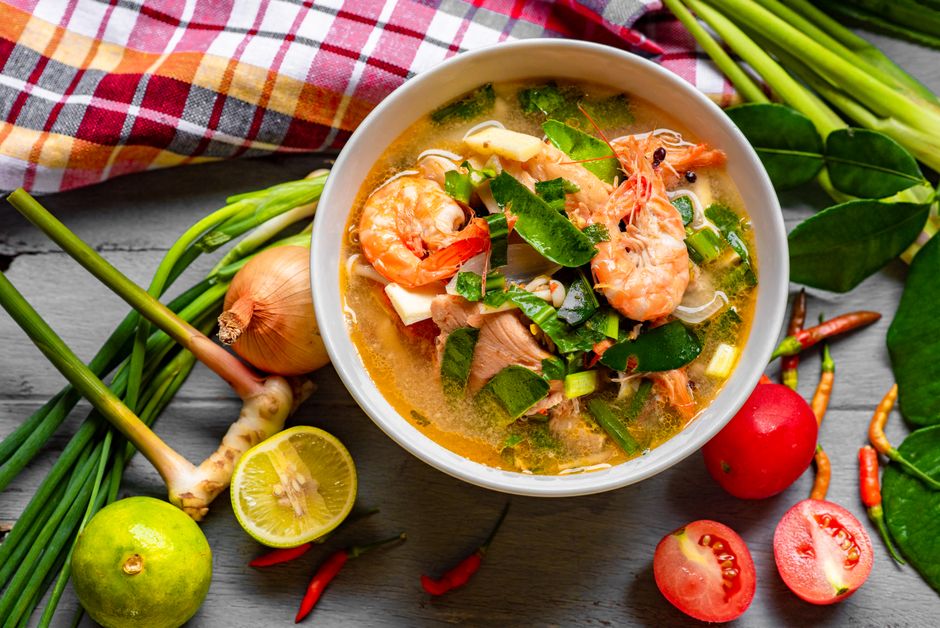
Thai and Indonesian cooking treat galangal as a building block, not a garnish. In tom kha and many curry pastes, it goes in early and stays in. Some cooks leave the slices in the bowl and eat around them, the way you would with bay leaves. That is normal, not a mistake.
Ginger is more versatile. It works in sweet and savory dishes, in tea, in marinades, and in baking. Its sweetness makes it a better fit for desserts and drinks. Galangal in a cookie or a cup of tea tends to taste harsh.
If you cook a lot of Southeast Asian food, keep both on hand. They are not interchangeable in the dishes that define those cuisines, and the difference is easy to taste.
Do Galangal and Ginger Have Different Health Effects?
Ginger has a larger body of human research behind it than galangal. That does not mean galangal is ineffective — it means the evidence is thinner and less settled.
Ginger has been studied for nausea, including nausea in pregnancy and after surgery, and for some types of pain and inflammation. The evidence is not uniform across all uses. Some research supports benefit for certain types of nausea; other claimed benefits rest on weaker or mixed findings. Ginger is generally recognized as safe in food amounts, though it can interact with blood-thinning medications, and high doses are not recommended in pregnancy without medical guidance.
Galangal has been studied mainly in laboratory and animal research, with some small human studies. It contains compounds with antioxidant and anti-inflammatory activity in the lab. Whether those translate into meaningful human health effects is not established. No large human trials have confirmed specific clinical benefits for galangal.
One clarification worth making: neither rhizome is a treatment for any disease. Marketing that presents either as a cure or a reliable remedy goes beyond what the evidence shows. Culinary use is well established. Clinical use is not.
Are There Any Safety Concerns?
Both are safe as food ingredients for most people. The main concerns are medication interactions and high-dose supplements, not normal cooking amounts.
Ginger in food amounts is widely considered safe. Concentrated ginger supplements can interact with anticoagulant and antiplatelet drugs, and people taking those medications should talk to a clinician before using them. Some clinicians also advise caution with high-dose ginger in pregnancy, even though food amounts are generally considered acceptable.
Galangal has less safety data than ginger. Food use is not a concern for most people. Supplement use is a different question, and the evidence on safety at high doses is limited. Anyone considering galangal supplements — especially during pregnancy, breastfeeding, or while taking medication — should treat the lack of data as a reason for caution, not as reassurance.
No clinical guidelines currently exist for galangal supplementation in any population. That is an honest statement of the evidence gap, not a warning about the food itself.
Frequently Asked Questions
What does galangal taste like compared to ginger?
Galangal tastes sharper, more citrusy, and more pine-like than ginger, with a peppery bite and almost no sweetness. Ginger tastes warmer and sweeter, with a gentler heat that builds slowly.
Can I use ginger instead of galangal in curry?
You can, but the curry will taste noticeably different — rounder and less aromatic. Some cooks add a little lime zest to replace galangal’s citrus note, though the swap is never exact.
Is galangal the same as ginger?
No. They are different plants in the same family, with different flavors, textures, and skin. Galangal is harder, more fibrous, and more pungent than ginger.
Is galangal healthier than ginger?
There is no reliable evidence that either is healthier than the other in normal food amounts. Ginger has more human research behind it, mainly for nausea, while galangal’s evidence is largely from lab and animal studies.
