
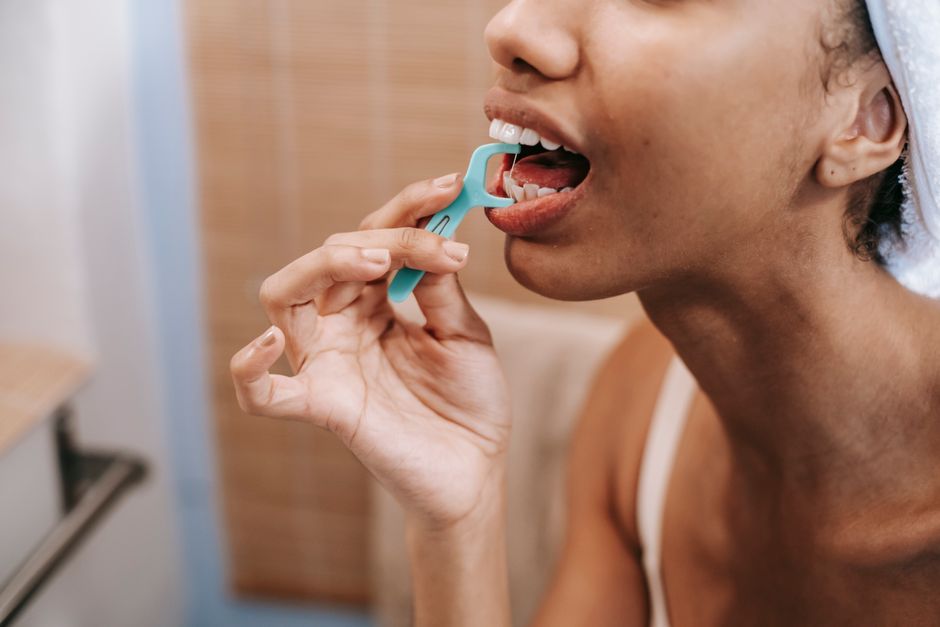
Flossing removes dental plaque and food debris from the narrow spaces between teeth where a toothbrush cannot reach. It is a mechanical cleaning method, not a chemical treatment. The main value is that it disrupts plaque before it hardens and helps prevent two conditions that start in those tight spaces: gum disease and tooth decay.
That is the core answer. Everything else is detail about how well it works, where the evidence is strong, and where it is weaker than most people assume.
What Does Flossing Actually Do to Your Teeth and Gums?
Flossing physically scrapes plaque off the sides of teeth and from just under the gumline. Plaque is a sticky film of bacteria, saliva proteins, and food particles that forms continuously on tooth surfaces. When you brush, you clean the outer, inner, and chewing surfaces. You do not clean the contact points between teeth, which is where a large share of cavities begin in adults.
The bristles of a toothbrush are too wide to fit into a contact point between two touching teeth. Floss is thin enough to slide through that gap and then wrap slightly around each tooth to wipe the side surface. Done correctly, it also reaches a small distance below the gum edge, into the sulcus — the shallow groove between the tooth and gum tissue.
What floss does not do is kill bacteria. It does not whiten teeth. It does not remove tartar, which is plaque that has mineralized and hardened onto the tooth. Once tartar forms, only a dental professional can remove it with instruments. Flossing is a prevention tool, and it works on plaque, not on what plaque has already become.
How Does Flossing Prevent Gum Disease?
Gum disease begins when plaque sits against the gumline long enough for the immune system to react. The earliest stage is gingivitis — redness, puffiness, and bleeding when you brush or floss. The gums become inflamed because bacteria in plaque trigger an immune response in the surrounding tissue.
Gingivitis is reversible. Remove the plaque consistently and the inflammation settles. If plaque is left in place, it can mineralize into tartar within roughly a day or two, and tartar cannot be brushed or flossed away. Chronic inflammation can then progress to periodontitis, where the tissue and bone that hold teeth in place begin to break down. That damage is not reversible.
This is the strongest argument for flossing. The spaces between teeth and just under the gumline are exactly where gum disease tends to start, and they are exactly the places a toothbrush misses. Flossing is one of the few home tools that reaches them.
How Strong Is the Evidence That Flossing Works?
The evidence is mixed, and this is worth being honest about. Cleaning between teeth clearly removes plaque. Whether that translates into fewer cavities is less well established than most people assume.
In 2016, an analysis by the Associated Press looked at the most-cited studies on flossing and found that many were small, short, and used unreliable methods. When the US federal government dropped flossing from its Dietary Guidelines that year, it was because the recommendation had never been formally reviewed under the guideline’s evidence standards — not because flossing had been shown to fail.
Since then, several systematic reviews have examined the question. Some found that flossing plus brushing reduces gingivitis compared with brushing alone. Others found the added benefit for preventing cavities to be small or unclear, partly because the studies were short and participants did not floss consistently. A 2019 review in the Cochrane Database of Systematic Reviews looked at interdental cleaning and found low-quality evidence overall, with some suggestion of benefit for gum inflammation.
The honest summary: flossing reliably removes plaque, and plaque removal is the foundation of gum health. The specific claim that flossing prevents cavities is supported by weaker evidence than the claim that it helps control gingivitis.





Why Do Dentists Still Recommend It?
Dentists recommend it because the mechanism is sound and the alternatives are limited. The bacteria that cause gum disease and decay concentrate in the spaces between teeth. If nothing cleans those spaces, plaque accumulates there. That much is not in dispute.
What is disputed is how much difference flossing makes in a real person’s mouth over years. The studies are hard to run well. People who floss regularly tend to do many other healthy things, which makes it hard to isolate the effect of flossing alone. Short trials cannot measure cavities that take years to develop.
So the recommendation rests on a combination of mechanism, clinical experience, and imperfect trials. That is a reasonable basis for a low-risk, low-cost habit — but it is not the same as strong proof from large randomized trials.
Does Flossing Prevent Cavities Between Teeth?
It plausibly does, and the logic is straightforward, but the direct evidence is limited. Cavities between teeth — called interproximal caries — form on surfaces a toothbrush cannot reach. If you clean those surfaces, you remove the plaque that feeds the decay process.
Here is where the evidence gets thin. Trials that measured cavities directly have generally been too short to capture the slow development of decay, or too small to detect a modest effect. Some reviews found no clear reduction in cavities from flossing. Others found a small benefit. The results vary.
One clarification worth knowing: fluoride toothpaste does much of the heavy lifting for cavity prevention. It strengthens enamel and helps repair early damage. Flossing and fluoride work on different problems — flossing removes the plaque, fluoride helps the tooth resist the acid that plaque produces. Neither replaces the other.
What Is the Right Way to Floss?
Technique matters more than most people realize. A quick snap between the teeth and out again does very little. The goal is to wrap the floss around each tooth and wipe the side surface from gumline to contact point.
- Use a piece about 18 inches long, most of it wound around your middle fingers.
- Slide the floss gently between two teeth. Do not snap it down onto the gum.
- Curve it into a C shape against one tooth and slide it up and down, including slightly below the gumline.
- Repeat against the other tooth in the same gap, using a clean section of floss.
- Move to the next gap and repeat.
Once a day is the standard recommendation. The timing matters less than consistency — some clinicians suggest flossing before brushing so that fluoride from toothpaste can reach the cleaned spaces, but this is a reasonable preference rather than a firmly established rule. Bleeding during the first week or two is common if your gums are inflamed, and it usually settles as the inflammation goes down. Bleeding that continues despite daily flossing is a reason to see a dentist, not a reason to stop.
Are Floss Picks and Water Flossers Just as Good?
They can be reasonable alternatives, but the evidence on how they compare is limited. Floss picks hold a short strand of floss in a plastic handle and can work for people who struggle with traditional floss, though the strand is often reused across several teeth, which spreads bacteria. Water flossers use a stream of water to flush debris and can help people with braces, bridges, or gum recession.
Some studies suggest water flossers reduce gingivitis and bleeding, and they may be easier to use consistently. Whether they clean the tight contact points between teeth as effectively as string floss is not well established. For most people, the best interdental cleaner is the one they will actually use every day. Consistency beats the perfect tool used twice a month.
Interdental brushes — small brushes that fit between wider gaps — have some of the better evidence for reducing plaque and gum inflammation in people with spaces between their teeth. If your dentist has recommended them, that recommendation is grounded in reasonable data.
Frequently Asked Questions
What does flossing do that brushing cannot?
It cleans the contact points between teeth and just under the gumline, which toothbrush bristles cannot reach. Those are the spots where gum disease and many cavities begin.
Is flossing actually proven to prevent cavities?
The direct evidence is limited and mixed. Flossing clearly removes plaque, and plaque causes decay, but trials have not consistently shown a large reduction in cavities from flossing alone.
Should my gums bleed when I floss?
Bleeding is common at first if your gums are inflamed, and it usually decreases within a week or two of daily flossing. Bleeding that continues despite regular flossing should be checked by a dentist.
How often should I floss?
Once a day is the standard recommendation. Consistency matters more than the exact time of day.
