
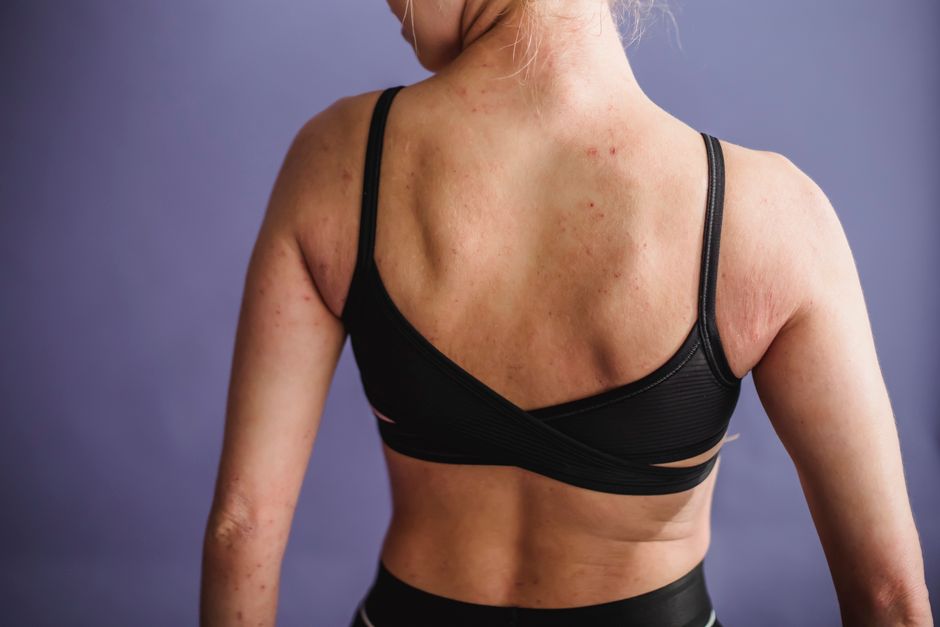
Eczema in babies usually shows up as patches of red, dry, and itchy skin on the cheeks, scalp, forehead, and the bends of the elbows and knees. The rash often starts as small bumps that can weep fluid, then dry into rough, flaky patches. In babies with darker skin, eczema may look purple, gray, or brown rather than red, which is one reason it sometimes gets missed.
What Does Eczema Look Like on Babies?
Eczema — also called atopic dermatitis — is a chronic inflammatory skin condition. In infants it typically appears between two and six months of age, though it can show up earlier.
The appearance changes as a baby grows. In the first few months, eczema tends to affect the cheeks, chin, forehead, and scalp. By around six months to a year, it often shifts to the elbows, knees, and areas where skin folds or rubs together.
Common visual signs include:
- Red, pink, or discolored patches on light or dark skin respectively
- Small raised bumps that may leak clear fluid
- Dry, scaly, or thickened skin after scratching
- Cracked skin that may bleed
- Oozing or crusting in more severe patches
On lighter skin, the affected areas look red. On darker skin, eczema can appear ashen, purple, or darker brown. This difference matters because parents and even some clinicians may not recognize eczema when it does not look red.
How Is Baby Eczema Different From Cradle Cap?
Cradle cap and eczema both affect a baby’s scalp, but they are different conditions. Cradle cap — medically called seborrheic dermatitis — produces thick, yellowish, greasy scales on the scalp. It usually does not itch and does not seem to bother the baby.
Eczema on the scalp is dry, flaky, and itchy. A baby with scalp eczema will scratch, rub their head against surfaces, and seem uncomfortable. The patches may also spread to the face, neck, or behind the ears.
Cradle cap typically clears on its own within the first year. Eczema is a longer-term condition that tends to come and go. It often improves with age but can persist into childhood and beyond.
If you are unsure which condition you are looking at, a pediatrician can usually tell the difference by examining the skin.
What Causes Eczema in Babies?
Eczema is not caused by bad parenting, dirty skin, or an allergic reaction to a specific food in most cases. It results from a combination of genetics and how the skin barrier works.
Research has identified a protein called filaggrin that helps the skin hold moisture and form a protective barrier. Some babies inherit variations in the gene that makes this protein, which weakens the skin barrier. When the barrier is compromised, moisture escapes and irritants enter more easily, triggering inflammation and itch.
Eczema also involves an overactive immune response in the skin. Even when the barrier is not severely impaired, the immune system may react to triggers that would not bother other babies.
Common triggers include:
- Dry air and low humidity
- Harsh soaps, detergents, or fragrances
- Heat and sweating
- Rough fabrics like wool
- Saliva from drooling
- Pet dander or dust mites in some cases
Food allergies can worsen eczema in some babies, but they are not the root cause for most. Eliminating foods without medical guidance is not recommended, especially during infancy when nutrition is critical.





When Should You See a Doctor?
See a pediatrician or dermatologist if the rash is widespread, oozing heavily, or does not improve with basic skin care. Also seek medical attention if the skin looks infected — signs include increased redness, warmth, pus, or a yellow crust.
Babies with eczema are more prone to skin infections because the broken barrier lets bacteria in. A common concern is infection with Staphylococcus aureus, which can cause impetigo or more serious infections.
Other reasons to see a doctor:
- The baby seems very uncomfortable or is not sleeping
- The rash is spreading quickly
- You see blisters or open sores
- The baby has a fever alongside the rash
- Over-the-counter treatments are not helping
Some clinicians recommend early evaluation because managing eczema well in infancy may reduce the risk of developing food allergies and asthma later — a pattern known as the atopic march. The evidence for how strongly early skin treatment modifies that risk is still being studied, but the connection between eczema and other atopic conditions is well established.
How Is Baby Eczema Treated?
Treatment focuses on repairing the skin barrier, reducing inflammation, and preventing flares. What works for one baby may not work for another, so a trial-and-error approach with a doctor is common.
Basic skin care is the foundation:
- Bathe the baby in lukewarm water for short periods — long, hot baths dry the skin
- Use a gentle, fragrance-free cleanser
- Pat the skin dry and apply moisturizer within a few minutes while the skin is still damp
- Choose thick creams or ointments over lotions — they hold moisture better
- Apply moisturizer at least twice a day, more often during flares
For inflamed patches, doctors may prescribe a topical corticosteroid. These are effective for reducing inflammation and itching. Parents sometimes worry about steroid creams, but when used as directed for short periods, they are considered safe and effective for infant eczema. Prolonged use without medical supervision can thin the skin, so follow the doctor’s instructions.
Other treatments a doctor may recommend include:
- Topical calcineurin inhibitors for sensitive areas like the face or eyelids
- Antibiotics if a bacterial infection is present
- Antihistamines to help with sleep during severe itching
- Wet wrap therapy for severe flares, done under medical guidance
No clinical guidelines currently exist for using many complementary or herbal treatments in infants. Some products marketed for baby eczema contain ingredients that can irritate skin or cause allergic reactions. Check with a pediatrician before trying anything new.
Can Baby Eczema Be Prevented?
Eczema cannot always be prevented, especially when there is a strong family history. But some steps may reduce the risk or delay when it starts.
Research published in the Journal of Allergy and Clinical Immunology found that applying moisturizer daily to newborns at high risk of eczema may reduce the likelihood of developing the condition. Not all studies agree, and the effect appears modest. Still, early moisturizing is low-risk and may help.
Other steps that may help:
- Keep the baby’s skin moisturized from the start
- Avoid known irritants like fragranced products and harsh detergents
- Maintain comfortable room temperature to prevent sweating
- Use a humidifier in dry climates
- Dress the baby in soft, breathable fabrics like cotton
There is no evidence that delaying certain foods prevents eczema. Current guidance from major pediatric organizations generally supports introducing allergenic foods like peanut and egg early, around four to six months, especially in babies at higher risk of allergies. Talk to your pediatrician about the right timing for your baby.
What Does Eczema Look Like as Babies Grow?
The appearance and location of eczema change with age. In infants, it favors the face, scalp, and extensor surfaces — the outer sides of arms and legs. By age two to five, it often moves to the creases behind the knees and inside the elbows.
In older children and adults, eczema tends to be drier and thicker. The skin may become lichenified — leathery and darkened from chronic scratching. This is not a sign of poor hygiene or neglect. It is the skin’s response to repeated inflammation and scratching.
Many children outgrow eczema by adolescence, but some continue to have dry, sensitive skin or occasional flares throughout life. Even when the visible rash fades, the skin barrier may remain somewhat compromised.
Frequently Asked Questions
What does eczema look like on a baby’s face?
On a baby’s face, eczema usually appears as red, dry, scaly patches on the cheeks, chin, and forehead. On darker skin, the patches may look purple, gray, or brown instead of red.
How can I tell if my baby has eczema or just dry skin?
Eczema is intensely itchy and often comes with redness, bumps, or oozing that dry skin does not have. If your baby is scratching constantly or the skin is cracked or weeping, it is more likely eczema.
Does baby eczema go away on its own?
Many babies improve significantly by age two or three, and some outgrow it entirely by adolescence. However, eczema is a chronic condition, and some children continue to have dry, sensitive skin or occasional flares into adulthood.
Can food allergies cause eczema in babies?
Food allergies can worsen eczema in some babies, but they are not the underlying cause for most. Eliminating foods without medical guidance is not recommended during infancy.
