
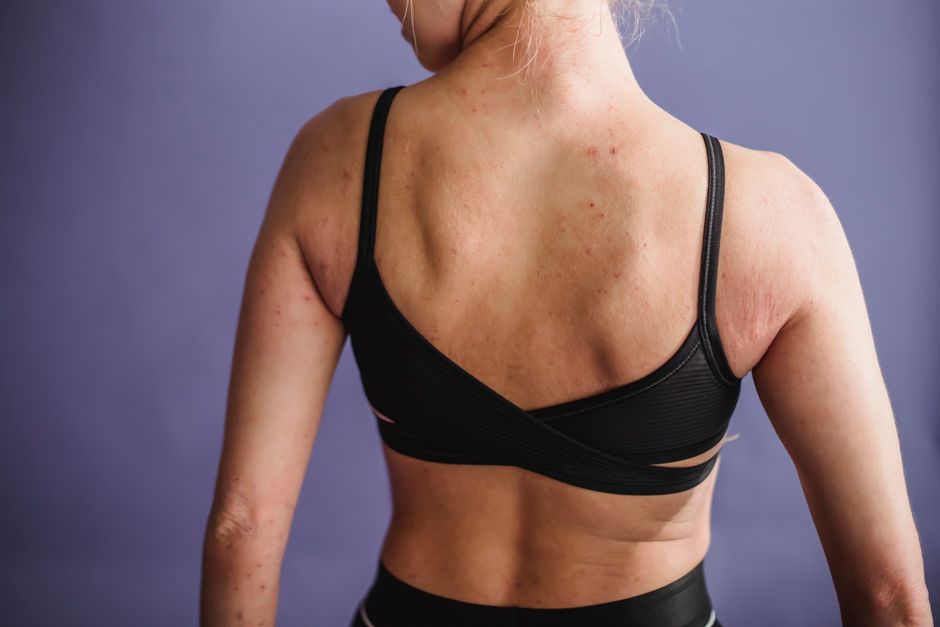
Early eczema usually shows up as patches of dry, itchy, red or pink skin — often on the cheeks, the crooks of the elbows, the backs of the knees, or the hands. The skin may feel rough, look slightly swollen, and itch before any visible rash appears. In people with darker skin tones, the redness can look more brown, purple, or gray rather than pink, which is one reason early eczema is sometimes missed.
Eczema is not one condition. It is a group of inflammatory skin conditions, and the most common is atopic dermatitis. What you see on your skin depends on your age, your skin tone, how long the flare has been going, and where on the body it appears.
What Does Early Eczema Look Like On Your Skin?
In its earliest stage, eczema looks like dry, sensitive skin that may be mildly red or discolored and feels itchy. The itch often comes first. That is a key detail — many people scratch before they see anything, then a rash appears where they scratched.
As the flare develops, the skin may become visibly inflamed. You might notice:
- Patches of dry, scaly, or rough skin
- Redness on lighter skin, or brown, purple, or gray patches on darker skin
- Small bumps or tiny fluid-filled blisters, especially on the hands and feet
- Mild swelling or warmth in the affected area
- Skin that feels thicker or leathery where it has been scratched repeatedly
- Cracks or small breaks in the skin, which can sting or weep clear fluid
Early eczema rarely appears as one neat spot. It tends to show up in patches, and the edges are often unclear rather than sharp and defined. That fuzzy border is one way to tell it apart from some other rashes.
Where Does Early Eczema Usually Appear?
The location shifts with age. This is one of the most useful things to know, because the pattern itself is a clue.
In infants, eczema most often starts on the cheeks, scalp, and chin. It can spread to the arms and legs. Because babies drool and rub their faces, these areas stay irritated.
In children, the rash tends to settle into the creases — the inside of the elbows, the back of the knees, the wrists, and the ankles. These are the flexural areas, and they are classic eczema territory.
In teenagers and adults, eczema more often shows up on the hands, neck, eyelids, and the folds around the eyes. Hands are a common site in adults, partly because of frequent washing and contact with irritants.
It usually affects both sides of the body in a roughly symmetrical way. If a rash is only on one side, that is less typical for eczema and worth having a clinician look at.
How Is Early Eczema Different From Other Rashes?
The itch is the strongest distinguishing feature. Eczema itches, and it often itches intensely. Rashes that do not itch are less likely to be eczema.
Several conditions can look similar in the early stage, which is why eczema is sometimes confused with other skin problems. A few common ones:
- Contact dermatitis — a reaction to something touching the skin, such as a soap, metal, or plant. It stays mostly where contact happened.
- Psoriasis — often produces thicker, silvery, scaly plaques, frequently on the outside of elbows and knees rather than the creases.
- Fungal infections — tend to have a clearer, more defined edge and may form a ring shape.
- Seborrheic dermatitis — commonly affects the scalp, eyebrows, and sides of the nose, and is often less itchy than eczema.
- Scabies — causes intense itching, often worse at night, with tiny burrow lines between fingers or on wrists.
No single visual feature proves eczema. A clinician makes the diagnosis by looking at the pattern, the itch, the location, and your personal or family history of eczema, asthma, or hay fever. There is no routine blood test or skin swab that confirms it.





Why Does Eczema Itch and Look Red?
Eczema is driven by inflammation in the skin, and that inflammation is what you see and feel. In atopic dermatitis, the skin barrier does not hold moisture or keep irritants out as well as it should. When the barrier is weak, allergens and irritants get in, and the immune system reacts.
That reaction releases chemicals, including histamine and others, that trigger itch and widen blood vessels. Widened vessels bring more blood to the area, which is why inflamed skin looks red on lighter skin. On darker skin, the same process shows up differently because of how melanin affects what we see.
Scratching makes it worse. It damages the barrier further and triggers more inflammation, which causes more itch. This itch-scratch cycle is central to how eczema flares build and persist.
One thing worth clarifying: eczema is not contagious. You cannot catch it from someone, and you cannot spread it to other parts of your body by touching it. It is an inflammatory condition, not an infection — though broken skin can sometimes become infected with bacteria, which is a separate issue.
What Makes Early Eczema Worse?
Many things can trigger or worsen a flare. Triggers vary from person to person, so tracking your own pattern is more useful than avoiding everything on a list.
Common triggers include:
- Dry air, especially in winter or heated rooms
- Harsh soaps, detergents, and fragrances
- Long or hot showers that strip oils from the skin
- Scratchy fabrics like wool
- Sweat and heat
- Stress, which can worsen flares even though it does not cause eczema
- Certain allergens, such as dust mites or pet dander, in some people
Food allergies are a common worry, but they are not a trigger for most people with eczema. Some children with moderate to severe eczema and a confirmed food allergy may see skin improve when that food is removed, but this should be guided by a clinician. Removing foods without confirmed allergy can do more harm than good, especially in children.
When Should You See a Doctor?
See a clinician if the rash is widespread, does not improve with basic skin care, or disrupts sleep. Itch that keeps you or your child awake is a sign the flare needs more than moisturizer.
Get medical care promptly if you notice signs of infection:
- Skin that is warm, swollen, or increasingly painful
- Yellow or green fluid, or pus
- Red streaks spreading from the rash
- Fever
- Small, painful blisters clustered together
These can point to a bacterial or viral infection that needs treatment. Eczema itself is not an emergency, but infected eczema can become one.
If the rash appears suddenly and spreads quickly, or comes with swelling of the face or lips, seek care right away. That pattern is not typical of ordinary eczema.
What Helps Early Eczema?
Basic skin care is the foundation. Moisturizing regularly — often more than once a day — helps support the skin barrier and can reduce flares. Fragrance-free creams and ointments tend to work better than thin lotions, which evaporate quickly.
Short, lukewarm showers and gentle, fragrance-free cleansers help avoid stripping the skin. Applying moisturizer within a few minutes of bathing, while the skin is still damp, helps lock in water.
For active flares, clinicians commonly recommend topical treatments such as corticosteroid creams or non-steroidal options. These are widely used and have good evidence behind them for reducing inflammation and itch. Using them as directed matters, because both underuse and overuse can cause problems.
Some people with moderate to severe eczema use other prescription treatments, including newer options that target specific parts of the immune response. These are prescribed by specialists and are not over-the-counter products.
Be cautious with products marketed as eczema cures. No cream or supplement cures eczema. Some may help symptoms, but many have little or no evidence behind them, and a few can irritate the skin or cause reactions.
Does Eczema Go Away?
Eczema often improves with age, especially in children, but it does not always disappear. Many people have periods with no symptoms followed by flares. Others have ongoing mild symptoms that need regular care.
The condition tends to be long-lasting and comes and goes. Managing it well — protecting the skin barrier and treating flares early — generally leads to fewer and milder episodes. There is no guaranteed timeline, and outcomes vary widely from person to person.
Frequently Asked Questions
What does early eczema look like on the skin?
Early eczema usually looks like dry, itchy patches that may be red on lighter skin or brown, purple, or gray on darker skin. The itch often starts before the rash is visible.
Can eczema appear without redness?
Yes. On darker skin tones, eczema may look brown, purple, or gray instead of red, and it can sometimes appear as dark or light patches rather than pink. This is a common reason early eczema is missed.
Is eczema contagious?
No, eczema is not contagious and cannot be passed from person to person. It is an inflammatory skin condition, though broken skin can sometimes become infected with bacteria.
How do I know if my rash is eczema or something else?
Intense itching and a pattern in the skin creases, hands, or face are typical of eczema, but several rashes look similar. A clinician confirms the diagnosis by examining the pattern, location, and your history.
