
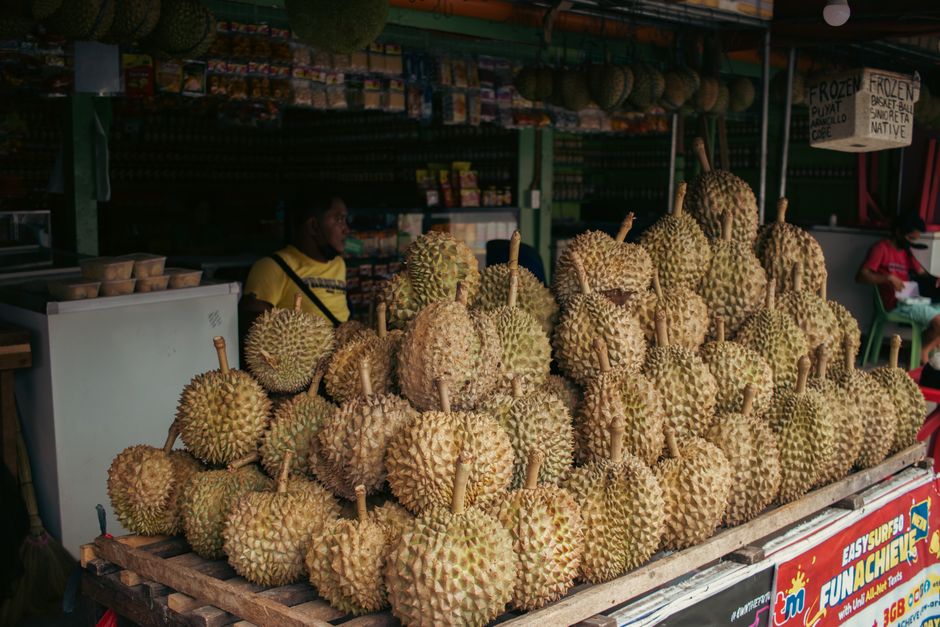
If you have heard of durian fruit you have likely heard two things: it smells terrible and people either love it or hate it. The taste is harder to describe but here is the direct answer. Durian tastes like a sweet custard with hints of vanilla and almond mixed with something savory like garlic or onion. The texture is soft and creamy like ripe avocado or pudding. The flavor is complex and changes depending on the variety and ripeness.
What Does Durian Fruit Taste Like Exactly?
The simplest way to describe durian is sweet custard with savory undertones. Think of a blend of vanilla pudding banana caramel and a hint of garlic. Some people also taste almond or coconut. The flesh is pale yellow or orange and melts in your mouth.
The flavor varies by durian variety. Monthong durian from Thailand is sweet and mild with less savory notes. Musang King durian from Malaysia is richer with more bitterness and a stronger aftertaste. Unripe durian tastes like a crunchy vegetable with almost no sweetness. Ripe durian is soft sweet and pungent.
Your first bite may surprise you. The sweetness hits first then the savory flavor comes through. The aftertaste lingers and can remind some people of cooked onions or fermented cheese. This is why some people love it and others cannot handle it.
Why Does Durian Smell So Strong?
The smell of durian is the main reason people avoid trying it. The fruit contains over 50 sulfur compounds. These same compounds are found in garlic onions and rotten eggs. That is why the smell is often described as gym socks rotting meat or sewage.
Research published in the Journal of Agricultural and Food Chemistry identified the key compounds behind the smell. One is ethanethiol which smells like onion and is also found in skunk spray. Another is methionine which breaks down into sulfur smells as the fruit ripens. The combination creates a smell that is hard to ignore.
Despite the smell the flavor is much milder than the odor suggests. Many people who try durian for the first time are surprised that it tastes good even if the smell is off-putting. The smell does not mean the fruit is spoiled. It is natural and expected.
How Does the Texture Compare to Other Fruits?
Durian texture is unlike most other fruits. It is soft creamy and almost custard-like. Ripe durian flesh can be scooped with a spoon like pudding. Some people describe it as eating sweet butter or smooth cheesecake.
Unripe durian is firmer and crunchier. It tastes more like a raw vegetable with a slight bitterness. The texture changes quickly as the fruit ripens. Within a day or two the flesh goes from firm to soft to almost liquid. Overripe durian becomes watery and develops a stronger fermented taste.
Compared to other tropical fruits durian is closer to avocado or banana in texture than mango or pineapple. It does not have fibers or seeds inside the flesh. Each segment contains one large seed that is not eaten. The edible part is the creamy aril surrounding the seed.




How Does Durian Taste Compared to Other Foods?
People often compare durian to other foods to help describe the flavor. The most common comparisons are:
- Vanilla pudding for the sweet creamy base
- Banana for the sweetness and soft texture
- Caramel for the rich sugary notes
- Almond for a nutty undertone
- Garlic or onion for the savory pungent finish
- Cheese for the fermented aftertaste in some varieties
No single comparison captures the full experience. Durian is truly unique. The combination of sweet and savory in one fruit is rare. Some people say it tastes like a dessert and a savory dish at the same time.
The flavor also changes as you eat more. The first bite is mostly sweet. The aftertaste brings the savory notes. By the third or fourth bite the full complexity comes through. This is why some people need multiple tries before they decide if they like it.
Does the Variety of Durian Change the Taste?
Yes the variety makes a big difference. There are hundreds of durian varieties and each has a distinct flavor profile. The two most common varieties are Monthong and Musang King.
Here is a comparison of common durian varieties:
| Variety | Flavor Profile | Texture | Sweetness Level |
|---|---|---|---|
| Monthong | Sweet mild creamy with hints of vanilla and banana | Soft but holds shape | High |
| Musang King | Rich sweet with bitterness and savory notes | Very creamy almost runny | Medium-High |
| Red Prawn | Sweet with floral and honey notes | Firm and smooth | Medium |
| Black Thorn | Complex sweet with bitter chocolate undertones | Thick and custard-like | Low-Medium |
| XO | Fermented wine-like flavor with bitterness | Soft and watery when overripe | Low |
If you try durian and do not like it consider trying a different variety. Monthong is the best starting point for beginners because it is sweet and mild. Musang King is more intense and may be too strong for first-timers. The variety also affects how the fruit smells. Some varieties have a milder odor than others.
What Are the Common Misconceptions About Durian Taste?
The biggest misconception is that durian tastes like it smells. This is not true for most people. The smell is much stronger and more offensive than the taste. Many people who gag at the smell enjoy the flavor once they try it.
Another misconception is that all durian tastes the same. As shown above varieties differ greatly. A Monthong durian from Thailand tastes completely different from a Musang King from Malaysia. Even within the same variety ripeness changes the flavor dramatically.
Some people also believe durian is always eaten raw. In Southeast Asia durian is used in many cooked dishes. It is added to sticky rice cakes fried in batter used in ice cream and blended into smoothies. Cooking changes the flavor and reduces the pungency. Fried durian for example tastes much milder and sweeter than raw durian.
There is also a myth that durian is dangerous to eat with alcohol. Some people report feeling sick after combining the two. As of 2026 there is no strong clinical evidence that durian and alcohol together cause serious harm. However some compounds in durian may slow down alcohol metabolism. It is best to be cautious if you are sensitive.
How Should You Try Durian for the First Time?
If you want to try durian start with a fresh ripe fruit from a trusted source. Frozen durian is also widely available and often more consistent in quality. Look for flesh that is bright yellow or orange and soft to the touch. Avoid fruit that smells overly fermented or has brown spots.
Eat durian chilled if possible. Cold temperature reduces the smell and makes the texture firmer and more pleasant for beginners. Take a small bite first. Chew slowly and let the flavor develop. Do not judge based on the first second of taste. The full flavor takes a few seconds to emerge.
Some people prefer to try durian in a prepared form first. Durian ice cream or durian mochi are popular entry points. These products have a milder flavor and less intense smell. They give you a sense of the taste without the full sensory experience.
If you try fresh durian and dislike it that is normal. Many people need multiple exposures before they develop a taste for it. In Southeast Asia durian is often described as an acquired taste. Do not force yourself to like it. Some people never do and that is fine.
Frequently Asked Questions
Does durian taste like garlic?
Some people detect a garlic-like flavor in the aftertaste but the primary flavor is sweet and creamy. The savory notes are subtle and vary by variety.
Is durian fruit sweet or savory?
Durian is mostly sweet with savory undertones. The sweetness comes from natural sugars and the savory flavor comes from sulfur compounds.
Can you eat durian seeds?
Durian seeds are not eaten raw because they are hard and toxic. They can be boiled or roasted and eaten like a starchy vegetable.
Why is durian banned in some places?
Durian is banned from many hotels and public transport in Southeast Asia because of its strong smell. The odor can linger for hours and many people find it offensive.
