
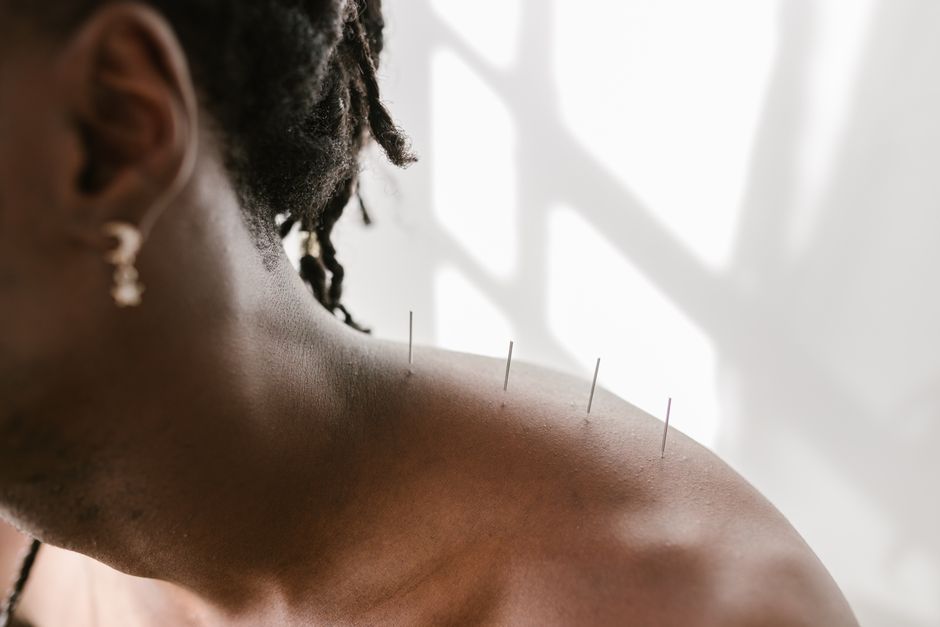
Dry needling is a treatment where a thin, sterile filament needle is inserted through the skin into a trigger point or tight band of muscle. A session usually lasts 20 to 40 minutes, but the actual needling portion often takes only a few minutes. Most people feel a brief local twitch, a deep ache, or nothing at all as the needle goes in.
What Does Dry Needling Look Like During Treatment?
From the outside, it looks unremarkable. You are usually lying face down on a treatment table. The practitioner cleans the skin, then taps or guides a very thin needle into specific spots on a muscle. The needle has no syringe and no medication — that is what “dry” means. It is dry because nothing is injected.
What you feel is where the treatment becomes interesting. When the needle reaches an active trigger point, the muscle often responds with a quick, visible twitch. Practitioners call this a local twitch response. It looks like a small flicker under the skin. Not everyone gets one. When it happens, it is generally a sign the needle has landed in the right spot.
The needles themselves are noticeably thinner than the ones used for injections or blood draws. Most people describe the insertion as a small pinch or a dull pressure rather than a sharp pain. Once the needle is in, you may feel a deep ache, a cramping sensation, or a referred sensation somewhere else in the body. That last part surprises people. A needle placed in the shoulder can produce a feeling down the arm. This is not a mistake — it reflects how trigger points refer sensation along nerve pathways.
What Happens Step by Step in a Session?
A typical session follows a predictable sequence. The details vary by practitioner and by the area being treated, but the general flow is consistent.
- Assessment. The practitioner asks about your pain and presses on muscles to find taut bands and tender spots. They may ask you to move so they can see how the muscle behaves.
- Positioning. You lie or sit in a position that exposes the target muscle and keeps you comfortable. Pillows or bolsters are common.
- Skin prep. The area is cleaned with an alcohol swab. Gloves are worn.
- Needle insertion. The needle goes in, sometimes just under the skin, sometimes deeper into the muscle belly. The practitioner may move it slightly in and out to reach the trigger point.
- Twitch response. If the muscle twitches, the practitioner may continue at that spot or move to another. Several needles may be used in one session.
- Rest period. Needles may stay in for a few minutes or be removed quickly. Some practitioners leave them in while you rest.
- Removal and cleanup. Needles are withdrawn and disposed of in a sharps container. The area is cleaned again.
Afterward, you may feel sore, similar to how a muscle feels after a hard workout. That soreness often fades within a day or two. Some people feel immediate relief. Others feel nothing until the next day. Responses vary widely.
Is Dry Needling Painful?
Most people report mild discomfort, not severe pain. The insertion itself is often described as a small pinch. The sensation that follows — the deep ache or twitch — can be more intense but usually passes in seconds.
Some spots are more sensitive than others. Muscles in the upper back and shoulders tend to be tolerated well. Areas with less muscle bulk, like the hands or feet, can feel sharper. The practitioner can adjust depth, angle, and speed based on your feedback.
If you have a low pain tolerance or anxiety about needles, tell the practitioner before the session. They can start with fewer needles or a shallower approach. Dry needling is not something you have to tough out. Communication during the session is part of how it works.
What Does Dry Needling Look Like Compared to Acupuncture?
The two look similar on the surface. Both use thin filament needles inserted into the skin. The differences are in the reasoning behind where the needles go.
| Feature | Dry Needling | Acupuncture |
|---|---|---|
| Needle type | Thin filament, sterile, single-use | Thin filament, sterile, single-use |
| Target | Trigger points and taut muscle bands | Traditional meridian points |
| Framework | Western anatomy and physiology | Traditional Chinese medicine |
| Training | Varies by state and profession | Varies by state and profession |
| Session length | Often 20–40 minutes total | Often 20–60 minutes total |
The needle itself is essentially the same. What differs is the map the practitioner uses. A dry needling practitioner is looking for a muscle knot. An acupuncturist is following a system of points and channels that predates modern anatomy. Some practitioners are trained in both and may blend approaches.
Who Typically Performs Dry Needling?
In the United States, dry needling is most often performed by physical therapists, but chiropractors, physicians, and some other licensed professionals also use it. Scope of practice and training requirements vary by state. Some states have specific regulations; others leave it to the licensing board of each profession.
Training programs range from weekend courses to more extensive certifications. There is no single national standard for dry needling credentialing in the US. That means the person treating you may have very different levels of training depending on where you live and what profession they belong to.
It is reasonable to ask about a practitioner’s training and experience before a session. A qualified practitioner should be able to explain their background, the risks, and what to expect.
What Are the Risks and Side Effects?
The most common side effects are minor and short-lived. Soreness at the needle site, small bruises, and mild bleeding are reported. Some people feel tired or lightheaded after a session.
More serious complications are rare but documented. These include pneumothorax, which is a collapsed lung caused by a needle reaching the lung cavity. This is a known risk when needling near the chest wall or upper back. It is uncommon but serious enough that practitioners are trained to avoid it. If you develop sudden shortness of breath or chest pain after a session, seek medical care immediately.
Other rare risks include infection if sterile technique is not followed, and nerve or blood vessel injury. Using single-use sterile needles and a trained practitioner reduces these risks but does not eliminate them.
Dry needling is not appropriate for everyone. People who take blood thinners, have bleeding disorders, are pregnant, or have implanted medical devices should discuss risks with their doctor first. There is no strong evidence establishing safety for dry needling during pregnancy, and clinical guidelines do not currently address it specifically.
What Does the Evidence Say About Dry Needling?
The evidence is mixed. Some studies suggest dry needling can reduce pain and improve function for certain musculoskeletal conditions, particularly when combined with other treatments like exercise. Other studies show little difference compared to sham needling or standard care.
One challenge in the research is that sham controls are hard to design. People often know whether they received a real needle. That makes it difficult to separate the treatment effect from expectation.
What the evidence does not support is the idea that dry needling fixes the underlying problem on its own. Muscles get tight for reasons — overuse, poor mechanics, injury, stress. A needle may release a trigger point temporarily, but if the reason for the tightness remains, the tightness tends to return. That is why dry needling is usually one part of a broader plan that includes movement, strengthening, and addressing what caused the problem in the first place.
If a practitioner tells you dry needling alone will permanently resolve a chronic issue, that claim goes beyond what the research supports.
How Should You Prepare for a Session?
Not much is required. Wear comfortable clothing that allows access to the area being treated. Eat something beforehand — going in on an empty stomach can make you more likely to feel lightheaded. Drink water. Avoid strenuous activity right before the session if you can.
Tell the practitioner about any medications you take, especially blood thinners. Mention if you are pregnant, have a bleeding disorder, or have any implanted device. Mention if you have a fear of needles, even if it feels minor.
During the session, speak up if something feels wrong. Sharp, shooting pain that travels far from the needle site is worth mentioning. So is numbness or tingling that does not fade. The practitioner can adjust or stop.
Afterward, gentle movement is usually fine. Some practitioners suggest avoiding intense exercise for the rest of the day. There is no strong evidence establishing an optimal post-treatment protocol, so recommendations vary.
Frequently Asked Questions
How long does a dry needling session last?
A typical session lasts 20 to 40 minutes from start to finish, though the needling itself often takes only a few minutes. The rest of the time is spent on assessment, positioning, and rest.
Does dry needling hurt the next day?
Soreness for a day or two after treatment is common and often described as similar to post-workout muscle soreness. Some people feel relief instead of soreness, and responses vary widely.
How many dry needling sessions do you need?
There is no standard number, and research does not establish a reliable protocol. Some people notice change after one session; others are recommended a series over several weeks. Response depends on the condition and the individual.
Can dry needling cause a collapsed lung?
Pneumothorax is a rare but documented risk when needling near the chest wall or upper back. Seek immediate medical care if you develop sudden shortness of breath or chest pain after a session.
