
Collagen is the most abundant protein in your body and the main structural protein in your skin. It forms a dense network of fibers that gives skin its firmness, plumpness, and shape. As you age, your body produces less collagen and existing collagen breaks down faster, which leads to wrinkles, sagging, and thinner skin. This loss starts in your mid-20s and accelerates with time, lifestyle factors, and sun exposure.
What Does Collagen Do For Skin Exactly?
Think of collagen as the scaffolding that holds your skin together. It sits in the dermis, the middle layer of skin, where it works with another protein called elastin. Collagen provides tensile strength — the ability to resist being pulled apart. Elastin provides elasticity — the ability to spring back into shape.
Without enough collagen, skin loses its firm foundation. The visible results are fine lines, deeper wrinkles, and a loss of volume. Skin also becomes thinner and more fragile because the dermis itself shrinks.
Collagen also plays a role in wound healing. When you get a cut or scrape, your body sends collagen-producing cells to the area to patch the damage. This is why skin repairs itself — and why collagen production slows as you age, healing takes longer.
Why Do You Lose Collagen As You Age?
Two processes drive collagen loss: reduced production and increased breakdown. Starting around age 25, your body begins making about 1% less collagen each year. By the time you reach your 60s, collagen production has dropped significantly.
The breakdown side matters just as much. Your body produces enzymes called matrix metalloproteinases (MMPs) that break down old collagen as part of normal tissue turnover. When you are young, production outpaces breakdown. As you age, the balance shifts.
Hormones also play a role. Estrogen supports collagen production. After menopause, estrogen levels drop sharply, and studies show women lose collagen more rapidly in the years following menopause compared to men of the same age.
What Causes Premature Collagen Loss?
Aging is unavoidable, but several factors speed up collagen loss beyond what time alone would cause.
Sun exposure is the biggest one. Ultraviolet (UV) radiation damages collagen fibers directly and triggers the production of MMPs that break collagen down. This process is called photoaging. It is responsible for most of the visible aging on your face, neck, and hands — the areas most exposed to the sun.
Smoking is another major contributor. Chemicals in cigarette smoke damage collagen and reduce blood flow to the skin. Research has found that smokers develop wrinkles earlier and have rougher, more aged-looking skin than nonsmokers of the same age.
Other factors that accelerate collagen loss include:
- High sugar intake, which can form advanced glycation end products (AGEs) that stiffen collagen fibers
- Chronic stress, which raises cortisol levels that can break down collagen
- Poor sleep, which reduces the body’s ability to repair skin overnight
- Environmental pollution, which generates free radicals that damage collagen





Can You Rebuild Collagen In Your Skin?
Yes, but with important limits. Your skin can produce new collagen at any age. The question is whether you can stimulate enough production to offset the losses.
Topical retinoids — compounds derived from vitamin A — are the most well-studied collagen boosters. Prescription tretinoin and over-the-counter retinol both stimulate collagen production in the skin. Clinical trials have shown they improve fine lines and skin texture over months of consistent use. They work by increasing collagen synthesis and slowing its breakdown.
Vitamin C is also important. Your body requires vitamin C to produce collagen. Applied topically, vitamin C can support collagen synthesis and protect existing collagen from UV damage. Oral vitamin C is essential for overall collagen production, though topical application delivers it directly to the skin.
Procedures can stimulate collagen too. Microneedling, laser resurfacing, and chemical peels all create controlled injury in the skin. The healing response triggers new collagen production. These treatments produce measurable increases in collagen density, though results vary and multiple sessions are typically needed.
Do Collagen Supplements Actually Work?
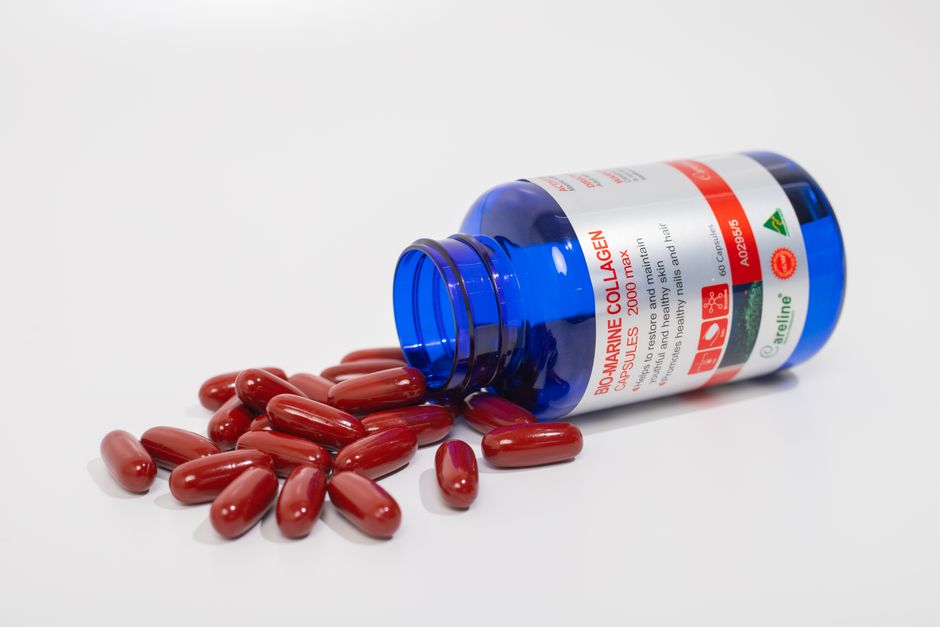
Collagen supplements — usually in the form of powders or pills — are a massive market. The question is whether the evidence supports the marketing.
Some research suggests collagen peptides may help. Several small studies have found that daily collagen peptide supplementation improves skin hydration, elasticity, and wrinkles compared to placebo. A review of clinical trials published in the International Journal of Dermatology concluded that oral collagen supplements can improve skin hydration and elasticity, though the authors noted the studies were small and short-term.
Here is what you should know. Collagen supplements are broken down into amino acids and small peptides during digestion. There is debate about whether these fragments are delivered to the skin in meaningful amounts. The evidence is promising but not definitive. Larger, longer-term studies are needed.
What collagen supplements do not do is replace the collagen you have already lost. They may support new collagen production, but they cannot reverse years of damage. If you take a supplement, expect modest improvement at best — not a transformation.
What Foods Support Collagen Production?
Your body builds collagen from amino acids, primarily glycine, proline, and hydroxyproline. It also needs vitamin C, copper, and zinc to complete the process.
Foods rich in these building blocks include bone broth, chicken skin, fish skin, and gelatin. These contain actual collagen proteins. But your body can also use amino acids from any protein source — eggs, meat, beans, and dairy all provide the raw materials.
The more important step is getting enough vitamin C. Without it, your body cannot form the stable triple-helix structure that makes collagen strong. Citrus fruits, strawberries, bell peppers, and broccoli are all excellent sources.
Zinc and copper are trace minerals that activate the enzymes involved in collagen synthesis. Oysters, beef, pumpkin seeds, and nuts provide these minerals.
What Actually Prevents Further Collagen Loss?
Prevention is more effective than restoration. The steps that protect collagen are the same ones that protect overall skin health.
Sunscreen is the single most effective step. Daily broad-spectrum sunscreen with SPF 30 or higher prevents UV damage that breaks down collagen. This one habit does more for long-term skin health than any serum or supplement. Sun protection is not just for sunny days — UV rays penetrate clouds and windows.
If you smoke, stopping is the second most impactful step. The skin of former smokers improves noticeably after they quit, though some damage is permanent.
Managing blood sugar helps too. High blood sugar leads to glycation, which stiffens collagen fibers and makes them more fragile. A diet that keeps blood sugar stable — lower in refined sugar and processed carbohydrates — supports collagen health.
How Long Does It Take To See Results?
Skin cell turnover takes roughly 28 days in young adults, and longer as you age. Changes in collagen production take even longer to become visible.
With topical retinoids, expect to wait 3 to 6 months to see noticeable improvement in fine lines. With collagen supplements, studies typically show results after 8 to 12 weeks of daily use. With professional procedures like microneedling, results develop gradually over several months as new collagen forms.
Be skeptical of any product that promises faster results. Collagen production is a slow biological process. No cream, serum, or supplement can speed it up dramatically.
What About Collagen Creams And Serums?
Topical collagen in moisturizers and serums does not work the way you might hope. Collagen molecules are too large to penetrate the stratum corneum — the outermost layer of skin. They sit on the surface and act as a moisturizer, not a collagen replacer.
Some products use hydrolyzed collagen, which has smaller peptides. These may penetrate slightly deeper, but no strong evidence shows they stimulate collagen production in the skin.
That does not mean these products are useless. They hydrate the skin, which temporarily plumps fine lines and improves appearance. But they do not rebuild collagen. If a cream claims to restore collagen, read the label carefully — the active ingredients that matter are retinoids, vitamin C, or peptides, not the collagen itself.
Frequently Asked Questions
At what age does collagen loss begin?
Collagen production starts declining around age 25 at a rate of roughly 1% per year. The visible effects usually become noticeable in your 30s and 40s.
Can collagen loss be reversed?
Collagen can be rebuilt through treatments like retinoids, microneedling, and laser therapy, but the process is slow and cannot fully restore youthful levels. Prevention through sun protection and healthy habits is more effective than trying to reverse damage.
Do collagen powders work better than creams?
Oral collagen supplements have more evidence for improving skin hydration and elasticity than topical collagen creams, which cannot penetrate the skin. Neither can replace collagen that is already lost, and results are modest.
What is the best way to protect collagen?
Daily sunscreen use is the most effective way to protect collagen from UV damage. Avoiding smoking and maintaining stable blood sugar also help preserve the collagen you have.
