
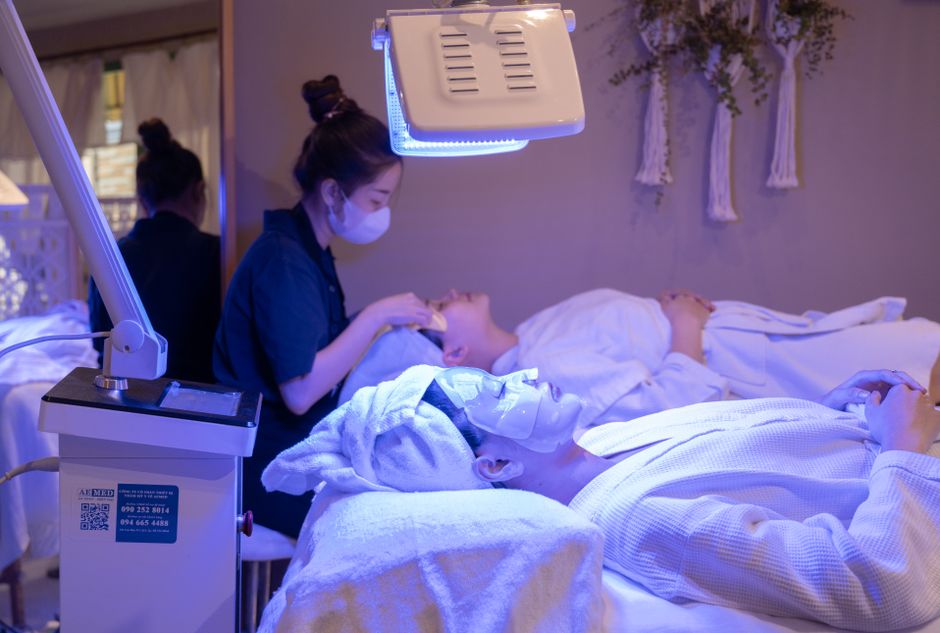
Blue light therapy uses a specific wavelength of light to reach the upper layers of the skin. It is primarily used to treat acne by killing the bacteria that cause breakouts. It also has a role in treating sun damage and some precancerous skin lesions when combined with a photosensitizing agent.
How Does Blue Light Therapy Work on Skin?
Blue light therapy targets the skin at a cellular level. The light, typically in the 405 to 420 nanometer range, penetrates the sebaceous glands and pores. These are the areas where acne bacteria live.
Acne bacteria naturally produce a molecule called porphyrin. Blue light activates this molecule. The activation creates a reaction that destroys the bacteria from the inside. This is why blue light is considered antibacterial. It does not rely on chemicals or topical creams to do the work.
This process is selective. It harms the bacteria but does not damage the surrounding skin tissue. That is the core reason it is a useful tool for inflammatory acne.
What Can Blue Light Therapy Treat?
The most common use is for mild to moderate inflammatory acne. This is the type of acne that presents as red, swollen bumps rather than blackheads or whiteheads. Studies show that regular sessions can reduce the number of lesions over several weeks.
Blue light is also used in a procedure called photodynamic therapy, or PDT. In this treatment, a photosensitizing cream is applied to the skin first. The cream sits for a period, then the skin is exposed to blue light. This combination is used to treat actinic keratoses, which are rough patches of skin that can develop into skin cancer.
Some dermatologists use PDT for severe acne, sun damage, and certain types of skin cancer. The addition of the cream makes the treatment more powerful than blue light alone. It also causes more side effects, such as redness and peeling.
What Happens During a Blue Light Therapy Session?
A session is straightforward and does not require downtime. You will sit in front of a light panel or have a handheld device moved over the skin. You will wear protective eyewear because the light is bright.
The treatment itself takes about 15 to 30 minutes. The number of sessions varies. For acne, a typical course might involve two sessions per week for four to six weeks. For photodynamic therapy, one to three sessions may be enough, spaced several weeks apart.
You may feel a warm sensation during the treatment. You will not feel pain. Afterward, you can return to normal activities immediately. This is a major advantage over more invasive procedures.



Is Blue Light Therapy Effective for Acne?
Yes, but the results are not identical for everyone. Research consistently shows that blue light reduces inflammatory acne lesions. However, it is rarely a standalone cure. Most dermatologists use it as part of a broader acne plan.
Blue light does not affect blackheads or whiteheads. These are non-inflammatory lesions caused by clogged pores. The light has no mechanism to clear those. It only works on active bacterial inflammation.
Results take time. You will not see improvement after one session. Most people need several weeks of consistent treatment before noticing a difference. Once treatment stops, acne can return. Maintenance sessions are often necessary.
Are There Risks or Side Effects?
Blue light therapy is considered safe when performed by a trained professional. The most common side effects are temporary redness and mild dryness. These usually resolve within a few hours.
Photodynamic therapy is more intense. The photosensitizing cream makes the skin highly sensitive to light. After the session, you must avoid direct sunlight for at least 48 hours. If you go outside, you need strong sun protection. Failure to do so can cause severe sunburn-like reactions.
There is no evidence that blue light therapy increases the risk of skin cancer. This is an important distinction from UV light, which is a known carcinogen. Blue light does not damage the DNA in skin cells the way UV light does.
At-Home Devices vs. Professional Treatments
At-home blue light devices are widely available. They are less powerful than the equipment used in a dermatology office. This means they require more frequent use to see any effect. Some devices are marketed for daily use.
The evidence for at-home devices is mixed. Some studies suggest they can help with mild acne. Others show minimal benefit. The key limitation is the lower intensity of the light. A professional device delivers a much higher dose in a shorter time.
If you are considering an at-home device, look for one that has been cleared by the FDA. Check the wavelength specification. It should be in the 405 to 420 nanometer range. Devices outside this range may not have the same effect.
What Does Blue Light Therapy Do For Your Skin Long Term?
Long-term use of blue light therapy has not been studied extensively. The available data covers treatment courses of several weeks or months. We do not have solid evidence about what happens with years of regular use.
For acne, the long-term picture is that it is a management tool, not a cure. Your skin will still produce oil and bacteria. The therapy keeps the bacterial population in check. When you stop, the bacteria can repopulate.
For photodynamic therapy, the long-term benefit is more established. Treating actinic keratoses reduces the risk that they will progress to squamous cell carcinoma. This is a preventive effect that lasts beyond the treatment period.
Who Should Not Use Blue Light Therapy?
People with a condition called porphyria should avoid blue light therapy. This is a rare disorder that makes the skin extremely sensitive to light. Exposure can trigger painful reactions.
People taking photosensitizing medications should also avoid it. Certain antibiotics, antifungals, and acne medications like isotretinoin increase light sensitivity. Your dermatologist should review your medication list before recommending treatment.
Pregnant women have not been studied in clinical trials for blue light therapy. There is no evidence of harm, but there is also no evidence of safety. Most clinicians will avoid treating pregnant women unless the benefit clearly outweighs the risk.
Frequently Asked Questions
How many sessions of blue light therapy do I need?
For acne, a typical course is two sessions per week for four to six weeks. For photodynamic therapy, one to three sessions spaced weeks apart is common.
Does blue light therapy hurt?
No, the treatment is painless. You may feel warmth on the skin during the session, but this subsides quickly after the light is turned off.
Can I use blue light therapy with other acne treatments?
Yes, it is often combined with topical creams or oral medications. Your dermatologist will adjust your routine to avoid over-drying the skin.
How long do results from blue light therapy last?
For acne, results can last several months, but maintenance sessions are often needed. For photodynamic therapy, the preventive effects against precancerous lesions can last for years.
