
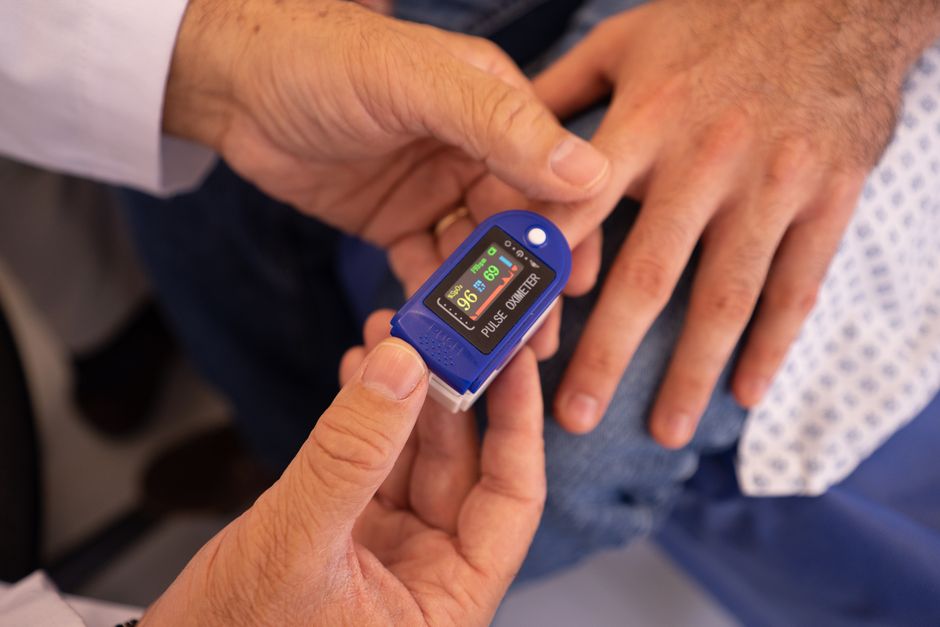
Blood oxygen level measures how much oxygen your red blood cells are carrying through your body. A normal reading for most healthy people is between 95% and 100% when measured with a pulse oximeter. Readings below 90% are considered low and require medical attention. This number tells your doctors how well your lungs are moving oxygen into your blood and how well your body is delivering it to your tissues.
Your body needs a steady supply of oxygen for every organ to work properly. When your blood oxygen drops too low, a condition called hypoxemia, it can strain your heart and brain. Understanding what your readings mean helps you know when to monitor at home and when to call a doctor.
How Is Blood Oxygen Measured?
Two main tools measure blood oxygen levels. The most common is a pulse oximeter, the small clip that goes on your finger. It shines light through your skin to estimate the percentage of oxygen-saturated hemoglobin in your blood. This reading is called peripheral oxygen saturation, or SpO2.
The other method is an arterial blood gas test, or ABG. A doctor draws blood from an artery, usually in your wrist, and measures the oxygen directly. This gives a precise value called PaO2, which is the actual pressure of oxygen in your blood. The ABG is more accurate than a pulse oximeter but requires a needle and a lab. Doctors use it in hospitals or when precise measurements matter.
Pulse oximeters are convenient but not perfect. Nail polish, cold hands, poor circulation, and movement can affect the reading. If your home oximeter shows a low number, take a few deep breaths, warm your hands, and try again before you worry.
What Does Blood Oxygen Level Mean And Whats Normal?
A normal blood oxygen level for a healthy adult at sea level is 95% to 100% on a pulse oximeter. For the arterial blood gas test, a normal PaO2 range is 75 to 100 mmHg. These ranges apply to people without lung disease or other conditions that affect breathing.
Some people naturally run lower. Smokers, people with COPD, and those living at high altitudes often have baseline readings between 90% and 94%. For these individuals, a slightly lower number may be their normal. What matters is whether the number drops from their usual baseline or causes symptoms.
A reading of 94% or below for someone without known lung disease is worth a conversation with your doctor. A reading below 90% is a medical emergency. At that level, your organs are not getting enough oxygen to function properly.
What Causes Low Blood Oxygen Levels?
Low blood oxygen happens when something interferes with the lungs’ ability to move oxygen into the blood. Several conditions can cause this.
Lung diseases are the most common cause. Chronic obstructive pulmonary disease, or COPD, damages the air sacs in the lungs and makes gas exchange less efficient. Asthma narrows the airways, reducing airflow. Pneumonia fills the air sacs with fluid, blocking oxygen from reaching the bloodstream. Pulmonary embolism, a blood clot in the lung, blocks blood flow and prevents oxygen pickup.
Other causes are not lung-related. Anemia reduces the number of red blood cells available to carry oxygen. Heart conditions can reduce blood flow to the lungs. Sleep apnea causes repeated pauses in breathing during sleep, leading to overnight drops in oxygen levels.
High altitude is another factor. At elevations above 8,000 feet, the air has less oxygen. Your body adapts by breathing faster and producing more red blood cells, but until that adaptation happens, readings can run lower than normal.

Symptoms of Low Blood Oxygen
Mild hypoxemia may not cause obvious symptoms. As oxygen levels drop, the body compensates by increasing breathing rate and heart rate. You might not notice anything until levels fall further.
Common symptoms include shortness of breath, rapid breathing, headache, confusion, and a bluish tint to the lips, fingers, or skin. This bluish color is called cyanosis and is a clear sign that oxygen levels are dangerously low. Fatigue and dizziness can also occur.
Confusion or changes in mental status are particularly important. The brain is highly sensitive to oxygen deprivation. If you or someone else shows confusion, difficulty speaking, or extreme sleepiness along with low oxygen readings, seek emergency care immediately.
Not everyone with low oxygen feels short of breath. Some people, especially those with chronic lung disease, can have dangerously low readings without noticing symptoms. This is why home monitoring can be useful for people with known risk factors.
When to See a Doctor
If your pulse oximeter consistently reads below 94% and you do not have a known lung condition, contact your doctor. This is not an emergency yet, but it deserves evaluation. Your doctor can determine whether the reading is accurate and whether further testing is needed.
Seek emergency care if your reading drops below 90% or if you have symptoms like severe shortness of breath, chest pain, confusion, or blue lips. Do not wait to see if it improves on its own. Low oxygen can cause permanent organ damage if left untreated.
For people with chronic conditions like COPD, your doctor should give you specific guidance about what numbers require action. Many COPD patients have oxygen targets that differ from the general population. Some are prescribed home oxygen therapy to keep their levels above a certain threshold.
If you use a home pulse oximeter, keep a record of your readings. Note the time of day, what you were doing, and any symptoms. This information helps your doctor see patterns and decide whether treatment adjustments are needed.
Can You Improve Your Blood Oxygen Level?
For healthy people with normal readings, no special action is needed. Your body regulates oxygen levels automatically. Exercise, particularly aerobic activity, strengthens your lungs and improves how efficiently your body uses oxygen. This can improve your overall fitness but will not significantly raise a normal resting blood oxygen reading.
For people with low levels due to lung disease, treatment targets the underlying condition. Inhaled medications can open airways. Steroids reduce inflammation. Oxygen therapy delivers supplemental oxygen directly to the lungs. These treatments are prescribed by a doctor based on your specific condition.
Breathing exercises like pursed-lip breathing and diaphragmatic breathing can help people with COPD improve gas exchange. These techniques slow your breathing and keep airways open longer, allowing more oxygen to enter the blood. A respiratory therapist can teach you these techniques properly.
Some viral social media posts claim that holding your breath or doing specific breathing patterns can dramatically raise blood oxygen. The evidence does not support these claims. Breath-holding can actually lower your oxygen temporarily. If you have genuine low oxygen levels, you need medical evaluation, not internet breathing tricks.
Limitations of Home Pulse Oximeters
Home pulse oximeters are useful screening tools but have real limitations. They measure oxygen saturation, not total oxygen content. Carbon monoxide poisoning, for example, can produce a falsely normal oximeter reading because the device cannot distinguish between oxygen and carbon monoxide attached to hemoglobin.
Skin pigmentation can affect readings. Research has shown that pulse oximeters may overestimate oxygen levels in people with darker skin. This means a reading of 95% might actually be lower in reality. If you have darker skin and your reading is on the borderline, ask your doctor about more accurate testing.
Poor circulation, cold hands, and certain medical conditions like peripheral artery disease can also produce inaccurate readings. The device needs good blood flow through the finger to work properly. If your hands are cold, warm them before taking a reading.
Despite these limitations, pulse oximeters are valuable tools when used correctly. They are especially helpful for people managing chronic lung conditions who need to track trends over time. The key is understanding that the device gives an estimate, not a laboratory-grade measurement.
Frequently Asked Questions
Is 94% blood oxygen level dangerous?
A reading of 94% is below normal for a healthy person and should be discussed with your doctor. It is not an emergency unless you have symptoms like shortness of breath or confusion.
What is the lowest blood oxygen level before death?
There is no single number that applies to everyone, but readings below 80% are extremely dangerous and indicate severe oxygen deprivation. At this level, organ damage occurs rapidly and emergency treatment is critical.
Can stress cause low blood oxygen?
Stress alone does not directly lower blood oxygen in healthy people, but it can cause rapid shallow breathing that makes you feel short of breath. If your oximeter shows a genuinely low reading, stress is unlikely to be the cause and medical evaluation is needed.
Does a pulse oximeter work on everyone?
Pulse oximeters work on most people but can be less accurate with darker skin tones, cold hands, nail polish, or poor circulation. If accuracy matters for your health, ask your doctor about arterial blood gas testing.
