
Balancing shampoo is formulated to remove excess oil from the scalp and hair without stripping away too much of the scalp’s natural moisture barrier. It typically contains milder surfactants (cleansing agents) than clarifying shampoo, and it may include ingredients that aim to support the scalp’s natural pH. The result most people notice is hair that feels clean but not squeaky, and a scalp that feels less greasy between washes. It is not a medical treatment, and it does not correct an underlying scalp condition.
What Does Balancing Shampoo Do To Your Scalp Hair?
It cleanses. That is the core function, and everything else is a variation on how gently or aggressively it does that job.
Your scalp produces sebum, an oily substance from the sebaceous glands that sits at the base of hair follicles. Sebum is not a flaw. It lubricates the skin and helps maintain a slightly acidic surface pH that supports the skin’s barrier function. Problems start when sebum builds up faster than it is removed, or when harsh cleansing strips the scalp and triggers more oil production in response.
A balancing shampoo sits between two extremes. On one end is a heavy moisturizing shampoo that leaves residue and can make fine hair look limp. On the other is a clarifying shampoo, which uses stronger surfactants to strip buildup from styling products, hard water minerals, and excess oil. Clarifying shampoos are useful occasionally but can leave hair dry and the scalp feeling tight when used regularly.
Balancing formulas generally use milder surfactant systems and skip the heavy conditioning agents that weigh hair down. Some include ingredients like niacinamide, zinc pyrithione at low levels, or botanical extracts. The evidence for these added ingredients varies widely, and I will be honest about that in the sections below.
How Does a Balancing Shampoo Differ From Regular Shampoo?
The difference is mostly in the surfactant blend and what the formula leaves behind.
Most conventional shampoos are built around surfactants like sodium lauryl sulfate or sodium laureth sulfate. These clean effectively but can be harsh, particularly for people with dry or sensitive skin. A balancing shampoo often uses gentler surfactants or a blend designed to clean without over-stripping.
The other difference is what the formula does not contain. Balancing shampoos tend to avoid heavy silicones, thick oils, and rich conditioning agents that can build up on fine hair or on a scalp that is already oily. That is why people with oily roots and dry ends often find them useful. The shampoo cleans the scalp without coating it.
One clarification worth making: “balancing” is a marketing term, not a regulated category. There is no standard definition, no required ingredient list, and no certification. Two shampoos labeled balancing could have very different formulas. Reading the ingredient list tells you more than the front of the bottle does.
Who Might Benefit From a Balancing Shampoo?
People with an oily scalp and normal-to-fine hair are the most natural fit. If your hair looks greasy by the end of the day or needs washing daily to look presentable, a gentler but effective cleanser can help without the rebound oiliness that harsh stripping can cause.
Others who may find one useful:
- People who wash daily and want a formula that will not dry out the scalp over time
- Anyone with combination hair — oily at the roots, drier toward the ends
- People who use light styling products and need consistent, gentle cleansing
- Those who find clarifying shampoos too drying for regular use
It is less suited to very dry scalps, tightly coiled or highly textured hair that needs more moisture, or hair that has been chemically treated and requires conditioning agents to prevent breakage. For those situations, a moisturizing shampoo is usually the better choice.
Does Balancing Shampoo Actually Fix an Oily Scalp?
It manages oil. It does not change how much oil your scalp produces.
Sebum production is influenced by genetics, hormones, and age. Androgens drive sebaceous gland activity, which is why oiliness often shifts during puberty, pregnancy, and menopause. No shampoo changes that underlying biology. What a shampoo can do is remove oil consistently and gently enough that the scalp does not respond with increased production.
The idea that over-washing causes the scalp to produce more oil is widely repeated. The mechanism is plausible — stripping the skin barrier can disrupt its function — but the evidence that shampoo frequency directly drives sebum overproduction in humans is limited. What is better established is that harsh surfactants can cause irritation and dryness, which is a reason to choose gentler formulas, not a reason to skip washing.
If oiliness is severe, sudden, or accompanied by redness, flaking, or itching, that is worth a conversation with a dermatologist. Seborrheic dermatitis, for example, is a common inflammatory condition that causes oily, flaky scaling and needs targeted treatment, not a cosmetic shampoo.
What About the Added Ingredients?
This is where honesty matters most, because the gap between marketing and evidence is wide.
Niacinamide has reasonable evidence in skincare for supporting the skin barrier and moderating oil. Whether it delivers meaningful benefit in a shampoo that is rinsed off within a minute or two is not well established. Contact time is short, and much of the ingredient goes down the drain.
Zinc pyrithione has genuine evidence as an anti-dandruff agent and is used in medicated shampoos at regulated concentrations. In a balancing shampoo at low levels, its role is unclear. It is not a substitute for a medicated dandruff treatment if you have active flaking.
Botanical extracts — tea tree, rosemary, peppermint, and others — appear in many formulas. Some have shown antimicrobial or anti-inflammatory activity in laboratory studies. Clinical trials in actual shampoo use are sparse, and results vary. Tea tree oil has some supporting evidence for dandruff, but it can also irritate sensitive skin and should not be used undiluted.
No clinical evidence currently confirms that most “scalp-balancing” botanicals deliver the benefits their marketing implies. That does not make them harmful. It means the claims run ahead of the data.
How Should You Use It?
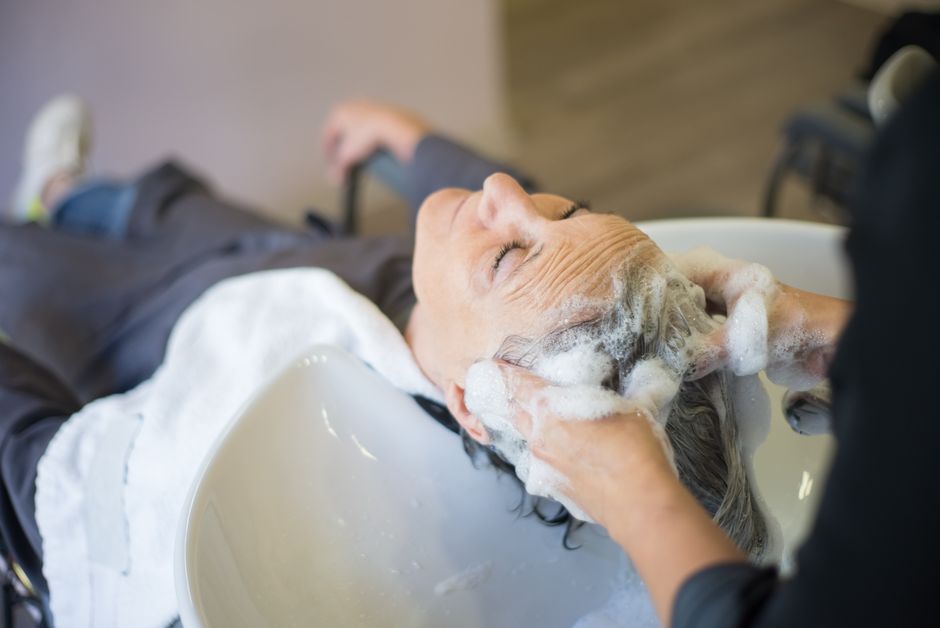
Focus on the scalp, not the hair. Massage the shampoo into the scalp with your fingertips, let it sit briefly, then rinse thoroughly. The hair gets clean as the lather rinses through it. Applying shampoo mainly to the ends adds little and can contribute to dryness.
There is no universal rule for how often to wash. Frequency depends on your scalp, hair type, activity level, and climate. Some people do well washing daily; others every two to three days. The right answer is the one that keeps your scalp comfortable and your hair manageable.
If you use a balancing shampoo and still notice heavy buildup from styling products, a clarifying wash every week or two can help. If your scalp feels tight or flaky after washing, the formula may be too stripping for you.
What It Will Not Do
A balancing shampoo will not treat dandruff, seborrheic dermatitis, psoriasis, or fungal scalp infections. Those need diagnosis and, in most cases, medicated treatment. It will not regrow hair or stop hair loss. It will not “detox” the scalp — a word with no medical meaning in this context. And it will not permanently change your scalp’s oil production.
What it can do is clean your scalp effectively and gently, which is a real and worthwhile function. The best predictor of whether a balancing shampoo works for you is not the label. It is how your scalp and hair feel after a few weeks of consistent use.
Frequently Asked Questions
Is balancing shampoo the same as clarifying shampoo?
No. Clarifying shampoos use stronger surfactants to strip heavy buildup and are usually used occasionally, while balancing shampoos are milder and designed for regular use. Using a clarifying shampoo daily can leave hair dry and the scalp irritated.
Can balancing shampoo help with dandruff?
Generally no. Dandruff is usually driven by a yeast called Malassezia and an inflammatory response, and it responds to medicated shampoos containing ingredients like zinc pyrithione or ketoconazole at effective concentrations. A cosmetic balancing shampoo is not a substitute for those.
Should I use balancing shampoo every day?
That depends on your scalp and hair type, and there is no universal recommendation. Many people with oily scalps wash daily without problems, while others do better every two to three days.
Does balancing shampoo stop oily hair?
It removes oil gently but does not change how much oil your scalp produces, since sebum output is driven largely by genetics and hormones. It can help manage the appearance of oiliness between washes.
