
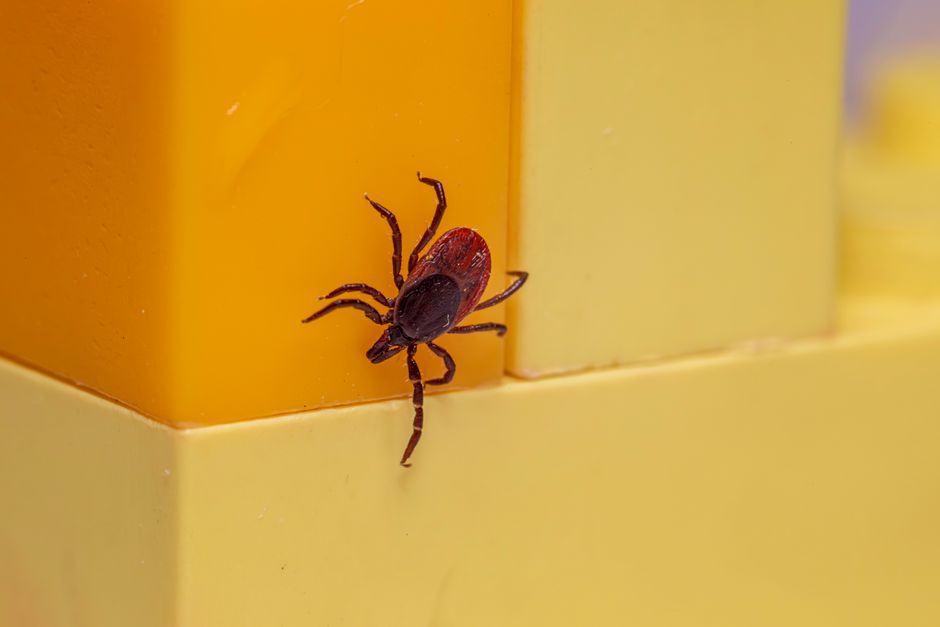
An embedded tick looks like a small dark bump on the skin, often with tiny legs visible at the surface and a reddish ring or swelling around it. The tick’s body may be flat like a sesame seed or plump and gray like a small grape, depending on how long it has been feeding. The key feature is that it stays attached and does not brush away.
Ticks bury their mouthparts into the skin to feed on blood. Once attached, they can stay for days. Knowing what that looks like matters because prompt removal reduces the risk of tick-borne illness.
What Does An Embedded Tick Look Like On Skin?
An embedded tick appears as a small, distinct lump attached to the skin, usually dark brown, black, or grayish. You will often see a bit of the tick’s body above the skin surface, and sometimes the legs are visible too.
When a tick first attaches, its body is flat and small — roughly the size of a poppy seed or sesame seed for many common species. As it feeds over hours and days, the body swells and can grow to the size of a small grape. A fully engorged tick looks smooth, round, and grayish or greenish-blue.
Around the attachment point, you may notice:
- A small red spot or ring of redness right where the tick entered the skin
- Mild swelling or a raised area around the tick
- A crust or scab if the tick has been attached for a while
- The tick’s head and mouthparts visible right at the skin line
One detail people often miss: the redness from a tick bite is usually small and localized. It is not the same as the spreading rash associated with some tick-borne illnesses, which I’ll describe later.
How Can You Tell The Difference Between An Embedded Tick And A Scab Or Mole?
A tick has legs and a segmented body. A scab does not. A mole is part of your skin and cannot be pulled away.
Look closely with a magnifying glass or your phone camera zoomed in. An embedded tick will show:
- Legs near the skin surface, often moving slightly
- A body that is separate from the skin and sits on top of it
- A smooth, oval or teardrop shape that does not match surrounding skin texture
A scab is flat or slightly raised, rough, and continuous with the skin. A mole has been there for years and does not change shape quickly. A new mole or a changing mole should be checked by a doctor, but it will not have legs or a separate body.
If you are unsure, do not dig at it. A healthcare provider can look and tell you within seconds.
What Does A Tick Bite Look Like After The Tick Is Removed?
After removal, a small red bump often remains for a few days. This is a normal reaction to the bite and the tick’s saliva.
The site may be slightly itchy or tender. A tiny crust can form. Most reactions settle within a week or so without treatment.
Watch for signs that need medical attention:
- A rash that expands outward over days, especially a ring-like or “bull’s-eye” pattern
- Fever, chills, or fatigue in the days after a bite
- Muscle aches or joint pain
- The bite area getting increasingly red, warm, or painful
A spreading rash is not a normal bite reaction. It can be a sign of tick-borne infection and warrants prompt medical evaluation. The same goes for fever or flu-like symptoms appearing days to weeks after a bite.





Where On The Body Do Embedded Ticks Usually Hide?
Ticks prefer warm, moist, hidden areas. They often go unnoticed because they attach where you cannot easily see.
Common locations include:
- Behind the knees
- In the groin and inner thigh area
- Under the arms
- Around the waist and beltline
- Behind the ears and along the hairline
- Inside the belly button
After time outdoors in grassy or wooded areas, a full-body check in a mirror — or with someone’s help — is the most reliable way to find ticks before they stay attached long. Showering soon after outdoor activity also helps wash off unattached ticks.
How Should An Embedded Tick Be Removed?
Use fine-tipped tweezers. Grasp the tick as close to the skin surface as possible and pull straight up with steady, even pressure. Do not twist or jerk.
This is the method recommended by public health agencies, and it is the one with the strongest support. Pulling straight up helps remove the mouthparts intact.
After removal:
- Clean the bite area and your hands with rubbing alcohol or soap and water
- Save the tick in a sealed container or take a clear photo, which can help if symptoms develop
- Note the date of the bite
Do not use petroleum jelly, nail polish, alcohol, or a hot match to make the tick let go. These folk methods are not supported by evidence and can increase the chance the tick releases saliva into the wound or that you injure your skin.
If you cannot remove the tick, or if part of it stays deeply embedded and you cannot get it out, see a healthcare provider. Do not dig with needles or sharp tools at home.
What Does A Bull’s-Eye Rash Look Like Compared To A Normal Bite Reaction?
A normal bite reaction is a small red spot or ring right at the tick’s attachment site, appearing within a day or so and staying small. A bull’s-eye rash is different: it expands outward over days, often reaching several inches across.
The classic bull’s-eye pattern has a red outer ring, a clearer area, and sometimes a red center. It can also appear as a solid expanding red patch without the ring pattern. The rash is usually not very itchy or painful, which is part of why it can be missed.
Not every tick-borne illness causes this rash, and not every person who is infected develops it. A spreading rash after a tick bite should be evaluated by a healthcare provider promptly. Early treatment of certain tick-borne infections is more effective than delayed treatment.
When Should You See A Doctor After Finding An Embedded Tick?
See a doctor if you develop a spreading rash, fever, chills, fatigue, muscle aches, or joint pain after a tick bite. These symptoms can appear days to weeks after the bite.
Also seek care if:
- You cannot fully remove the tick
- The bite area becomes increasingly red, swollen, or painful
- You are unsure how long the tick was attached and are concerned
Whether preventive treatment is appropriate after a tick bite depends on factors like the tick species, how long it was attached, and local disease rates. This is a decision for a clinician, not something to self-manage.
Many tick bites cause no illness at all. Watching for symptoms and knowing what to look for is the practical approach for most people.
Frequently Asked Questions
How do I know if a tick is fully embedded?
If you can see the tick’s body sitting on the skin with legs visible, it is attached but the body is outside. If only a dark speck remains at the skin line and the body is gone, part of the mouthparts may be embedded. A healthcare provider can check if you are unsure.
Can an embedded tick fall off on its own?
Yes, a tick usually detaches on its own after it finishes feeding, which can take several days. Waiting for it to fall off is not recommended because longer attachment increases the risk of disease transmission.
What does a tick look like when it is full of blood?
A fully engorged tick looks like a smooth, round, grayish or greenish-blue swelling, roughly the size of a small grape. It is much larger and lighter in color than an unfed tick.
Should I save the tick after removing it?
Saving the tick in a sealed container or taking a clear photo can help if symptoms develop later. Some health departments offer tick identification services, which can inform whether preventive treatment is considered.
