
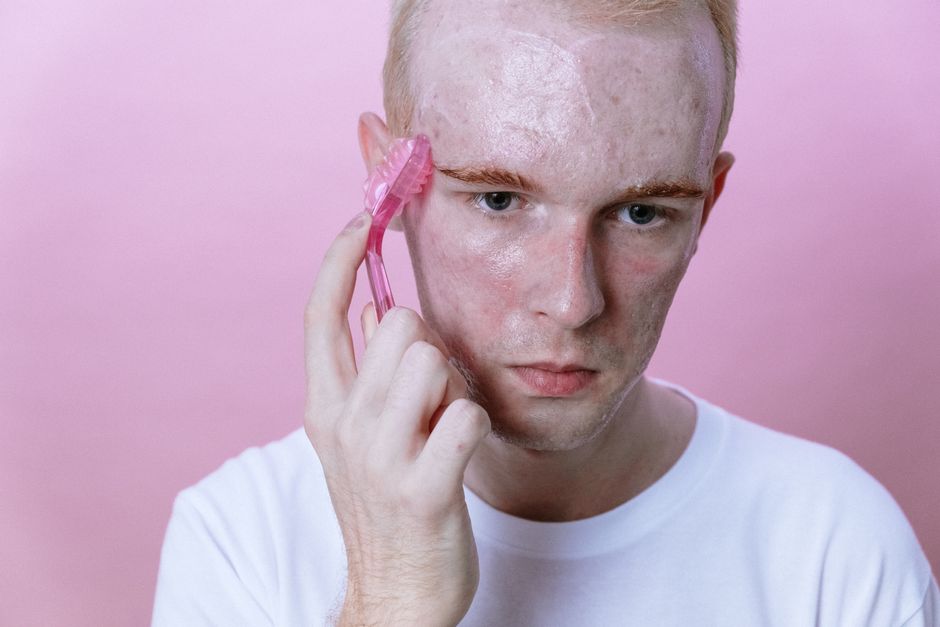
Acne is the most common skin condition in the United States, affecting an estimated 50 million people each year, according to the American Academy of Dermatology. It happens when hair follicles become blocked with oil and dead skin cells. That blockage can trigger inflammation, which is why pimples look red, swollen, and tender.
Acne is not a sign of poor hygiene or a failing diet. It is a medical condition with well-understood mechanisms. Where it appears on your face can offer clues about what is driving it, though those clues are not as precise as many people believe.
What Does Acne On Your Face Actually Mean?
Acne means your pores are getting clogged, and your immune system is responding to that clog. The process starts deep inside the hair follicle, not on the surface of your skin.
Each pore contains a hair follicle and a sebaceous gland. That gland produces sebum, an oil that lubricates your skin and hair. Sebum normally travels up the follicle and out onto the skin surface. When dead skin cells shed too slowly, they mix with sebum and form a plug. That plug traps bacteria — specifically Cutibacterium acnes, which lives on everyone’s skin — inside the follicle. Your immune system detects the bacteria and sends inflammatory cells to the area. The result is the redness, swelling, and pus you see on the surface.
Four factors drive this process:
- Excess sebum production — often triggered by hormones
- Dead skin cells not shedding properly — causing blockages inside the pore
- Bacterial overgrowth — C. acnes multiplying inside the blocked follicle
- Inflammation — the immune system’s response to the blockage and bacteria
All four must be present for acne to develop. That is why treatments target different parts of the cycle. A treatment that only kills bacteria, for example, may not help much if dead skin cells are still plugging the pore.
Does Where Acne Appears On Your Face Tell You Anything?
Where acne shows up on your face gives some information, but far less than social media suggests. The “face mapping” theory — that each zone of your face corresponds to a specific organ or internal problem — is not supported by clinical evidence.
That said, certain patterns do have practical explanations:
- Forehead and hairline: Often linked to hair products, sweat, and friction from hats or helmets. This pattern is sometimes called acne cosmetica or pomade acne.
- T-zone (forehead, nose, chin): This area has the highest concentration of sebaceous glands, so it tends to be oiliest and most prone to breakouts.
- Cheeks: Can be triggered by friction from phone screens, pillowcases, or resting your face on your hands. This is called acne mechanica.
- Jawline and chin: In adults, this pattern is commonly hormonal. It often flares around menstrual cycles in women.
The face-mapping claims you see online — that forehead acne means liver problems, or chin acne means hormonal imbalance in everyone — oversimplify a complex process. Chin acne in adult women does often have a hormonal component. But forehead acne does not reliably indicate anything about your liver.
Why Do Adults Still Get Acne?
Acne is not just a teenage condition. Research published in the Journal of the American Academy of Dermatology found that acne persists into the 20s in a significant portion of people, and some continue to have it into their 30s, 40s, and beyond.
Adult acne has different drivers than teenage acne. In teenagers, the surge of androgens during puberty dramatically increases sebum production. In adults, the mechanisms are more varied:
- Hormonal fluctuations: Menstrual cycles, pregnancy, perimenopause, and conditions like polycystic ovary syndrome (PCOS) can all trigger acne in women.
- Stress: Stress increases cortisol, which can stimulate sebum production. The evidence here is moderate — stress clearly worsens acne in some people, but it is not the sole cause.
- Medications: Some medications, including certain steroids, lithium, and some anticonvulsants, list acne as a known side effect.
- Cosmetics and skincare products: Heavy or comedogenic products can clog pores.
Adult acne also tends to look different from teenage acne. It is more often inflammatory, appears lower on the face (jawline and chin), and is more likely to leave lasting marks or scars.
What Makes Acne Worse — And What Doesn’t
Many common beliefs about acne triggers are not supported by evidence. Others are well-established. Here is where the science currently stands.
What does make acne worse:
- Picking, squeezing, or popping pimples — this pushes bacteria deeper and increases scarring risk
- Friction from helmets, tight collars, backpacks, and phone screens
- Comedogenic skincare and makeup products
- High-glycemic diets — some studies suggest a link, though the evidence is not definitive
- Certain hormonal contraceptives (progestin-only options may worsen acne in some women)
What does not cause acne:
- Chocolate — no consistent evidence supports chocolate as a cause, though individual responses vary
- Poor hygiene — acne is not caused by dirty skin. Overwashing can actually irritate skin and make it worse
- Greasy foods — the evidence linking fried foods to acne is weak and inconsistent
Diet and acne is an area where the evidence is genuinely mixed. Some studies suggest that high-glycemic diets and dairy — particularly skim milk — may be associated with acne in some people. But the research is not strong enough to make universal dietary recommendations. If you notice a pattern between a specific food and your breakouts, that observation is worth discussing with a dermatologist.
When Should You See a Doctor For Acne?
Mild acne often responds to over-the-counter treatments. But some situations warrant medical care.
See a dermatologist or healthcare provider if:
- Your acne is causing scars or dark spots that persist
- Over-the-counter treatments have not helped after several weeks of consistent use
- You have deep, painful nodules or cysts under the skin
- Your acne is affecting your mental health or self-esteem
- You have signs of hormonal imbalance — irregular periods, excess hair growth, or sudden severe acne
Acne that leaves scars is worth treating aggressively and early. Scarring is permanent, while acne itself is treatable. Research consistently shows that early and effective treatment reduces the risk of lasting scars.
Treatment options range from topical retinoids and benzoyl peroxide to oral antibiotics, hormonal therapies, and isotretinoin for severe cases. Each has specific indications, and what works for one person may not work for another. A dermatologist can match treatment to your specific type of acne.
Does Acne Mean Something Is Wrong Internally?
For most people, acne does not signal an underlying medical problem. It is a condition of the skin itself — the follicle, the sebaceous gland, and the local immune response.
There are exceptions. Sudden, severe acne in an adult woman, especially when accompanied by irregular periods or rapid hair growth, can be a sign of PCOS or another hormonal disorder. Acne that appears suddenly after starting a new medication may be a drug side effect. In these cases, the acne is a symptom of something else, and treating the underlying cause matters.
But for the vast majority of people with acne, the skin is the issue. The follicles are clogging, the sebaceous glands are overproducing oil, and the immune system is responding. No hidden organ problem is driving it.
This distinction matters because it shapes treatment. If acne is caused by a hormonal disorder, treating the skin alone may not be enough. If it is not, looking for an underlying cause can delay effective treatment.
Frequently Asked Questions
Does acne on your face mean poor hygiene?
No. Acne is caused by blocked hair follicles, excess oil, bacteria, and inflammation — not by dirty skin. Overwashing can strip the skin and make irritation worse.
Can face mapping tell you what’s causing your acne?
No. The idea that specific face zones correspond to specific internal organs is not supported by clinical evidence. Some patterns, like jawline breakouts in adult women, do have hormonal explanations, but the broader face-mapping theory is not reliable.
Why am I suddenly getting acne in my 40s?
Adult acne is common and often driven by hormonal changes, stress, medications, or skincare products. It tends to appear lower on the face and is more inflammatory than teenage acne.
When should acne on your face concern you?
See a doctor if your acne is causing scars, is not responding to over-the-counter treatments, or is accompanied by signs of hormonal imbalance like irregular periods. Severe acne that leaves marks is worth treating early.
