
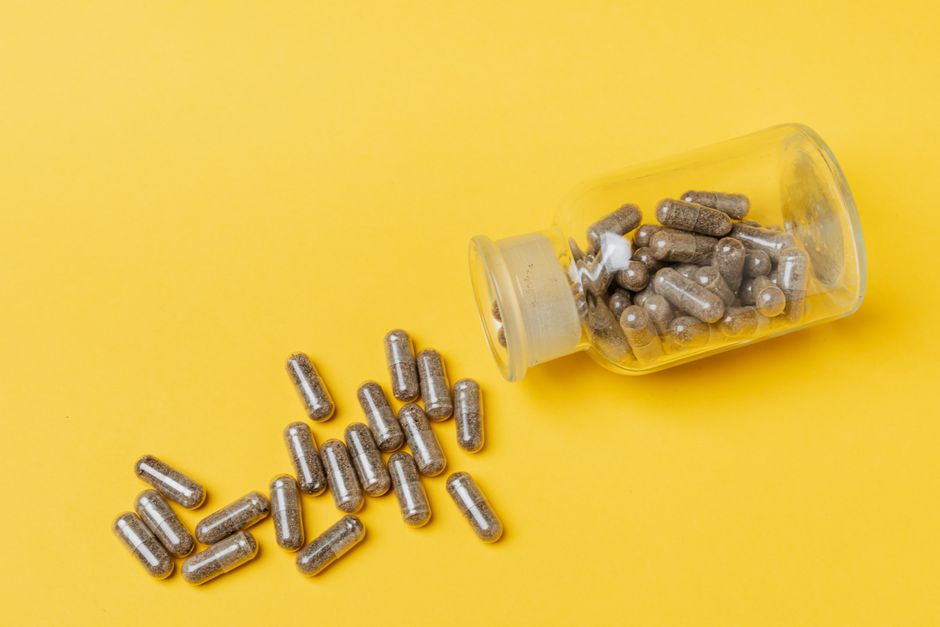
“Rhino pill” is a nickname, not a medical term, and it covers a wide range of products sold with claims about male sexual performance. Most contain blends of herbs, vitamins, and minerals rather than any single regulated drug. What they actually do depends entirely on what is inside the specific bottle — and independent testing has repeatedly found that the label often does not match the contents.
Some rhino pills are marketed as natural supplements for erection quality, stamina, or libido. Others are sold as “herbal” alternatives to prescription erectile dysfunction drugs. The important point is this: a meaningful number of these products have been found to contain undeclared prescription drugs, most often sildenafil or tadalafil, the active ingredients in Viagra and Cialis. That changes the question from “does this herb work” to “what am I actually swallowing.”
What Is a Rhino Pill?
“Rhino pill” is a category name for male enhancement capsules and tablets, not a single product or brand. The name comes from a cluster of brands that used rhinoceros imagery and similar names to suggest power and virility. They are typically sold online, in gas stations, convenience stores, and smoke shops.
These products are usually labeled as dietary supplements. That label matters. In the United States, dietary supplements are not reviewed by the FDA for safety and effectiveness before they are sold. The manufacturer is responsible for making sure the product is safe and that the label is truthful. Enforcement happens after problems surface, not before a product reaches a shelf.
That regulatory gap is the main reason rhino pills are a recurring public health issue rather than just an overhyped product category.
What Does a Rhino Pill Do to Your Body?
There is no single answer, because the effects depend on the ingredients. Broadly, the products fall into a few groups.
- Herbal blends. Common ingredients include ginseng, horny goat weed, tribulus terrestris, maca, and various plant extracts. Some small studies suggest modest effects on libido or markers like testosterone, but the evidence is generally weak, mixed, and often from small or low-quality trials. There is no strong clinical evidence that these herbs reliably produce erections or treat erectile dysfunction.
- Undeclared prescription drugs. Independent laboratory testing has found sildenafil, tadalafil, and similar drugs in many “all-natural” male enhancement products. These are the same active ingredients as prescription ED medications, at unknown and sometimes high doses.
- Unapproved drug analogs. Some products contain chemical cousins of approved drugs that were never tested in humans and are not approved for any use.
If a rhino pill contains an undeclared PDE5 inhibitor — the drug class that includes sildenafil and tadalafil — it can lower blood pressure, cause headaches, flushing, and nasal congestion, and it can interact dangerously with nitrates. That is a drug effect, not a supplement effect, and the person taking it has no way to know the dose.
Why Have Rhino Pills Been Recalled?
The FDA has issued repeated public warnings and recalls for rhino-branded and similarly marketed male enhancement products after lab testing found undeclared prescription ingredients. This is not a rare event. It has happened across many brands over many years.
The pattern is consistent: a product is sold as “all natural,” testing reveals sildenafil, tadalafil, or an unapproved analog, and a recall or warning follows. In some cases the same product reappears under a new name.
The core risk is not that the herb is weak. It is that the bottle may contain a prescription-strength drug with no dosing information, no quality control, and no warning about interactions. For someone taking nitrates for chest pain, for example, an undeclared PDE5 inhibitor can cause a dangerous drop in blood pressure. That interaction is well established in clinical medicine.





Do Rhino Pills Work for Erectile Dysfunction?
Prescription PDE5 inhibitors are genuinely effective for many men with erectile dysfunction, and that effectiveness is supported by substantial clinical research. That is not the same as saying a rhino pill works.
If a rhino pill happens to contain an undeclared PDE5 inhibitor, it may produce an effect similar to a prescription drug — but at a dose nobody has measured, in a product nobody has tested, with no medical supervision. That is not a benefit. It is an uncontrolled exposure to a drug.
If a rhino pill contains only herbs, the honest position is that the evidence for treating erectile dysfunction is limited. Some ingredients have small studies behind them. None have the kind of large, well-controlled trial evidence that supports approved medications.
Erectile dysfunction is also often a signal of an underlying condition. It can be an early sign of cardiovascular disease, diabetes, or low testosterone. Treating it with an unregulated capsule can delay a diagnosis that matters.
What Are the Risks of Taking Rhino Pills?
The clearest documented risk is undeclared pharmaceutical ingredients. Beyond that, there are several others.
- Drug interactions. Undeclared PDE5 inhibitors can interact with nitrates, some blood pressure medications, and certain HIV medications. The nitrate interaction can be life-threatening.
- Unknown dosing. Without quality control, the amount of active ingredient can vary from pill to pill or batch to batch.
- Unapproved analogs. Some detected compounds have never been studied in humans, so their risks are largely unknown.
- Contaminants. Products made without oversight can contain heavy metals, pesticides, or other impurities.
- Delayed care. Relying on a supplement can postpone evaluation and treatment of a real medical condition.
Anyone who has taken one of these products and experiences chest pain, a severe drop in blood pressure, vision changes, or a painful erection lasting several hours should seek emergency care. A prolonged erection is a medical emergency that can cause permanent damage if not treated promptly.
How Can You Tell If a Rhino Pill Is Safe?
You generally cannot, and that is the honest answer. A supplement label is not a guarantee of contents. Independent testing has shown that products labeled “all natural” can contain prescription drugs.
A few practical points:
- Check the FDA’s recall and warning lists before buying any male enhancement supplement.
- Be skeptical of products sold in gas stations, convenience stores, or unfamiliar websites with no manufacturing transparency.
- Treat claims like “instant results,” “prescription strength,” or “no side effects” as red flags rather than selling points.
- If you are taking nitrates or blood pressure medication, do not take these products without talking to a clinician first.
If you are dealing with erectile dysfunction, the more reliable path is a conversation with a doctor. Approved treatments exist, they are dosed and monitored, and they come with known interaction warnings. That is a meaningfully different situation from an unregulated capsule with a rhinoceros on the label.
Frequently Asked Questions
What does a rhino pill do?
A rhino pill is a male enhancement supplement marketed for erection quality, stamina, or libido, but its actual effects depend on its ingredients. Many have been found to contain undeclared prescription drugs like sildenafil or tadalafil, so the real effect may be that of an unmonitored drug rather than an herb.
Are rhino pills FDA approved?
No. They are sold as dietary supplements, which the FDA does not review for safety or effectiveness before sale. The FDA has issued repeated warnings and recalls after testing found undeclared prescription ingredients in these products.
Are rhino pills safe to take with blood pressure medication?
They should not be taken with nitrates or certain blood pressure medications, because undeclared PDE5 inhibitors can cause a dangerous drop in blood pressure. Anyone on these medications should talk to a clinician before taking any male enhancement supplement.
Do rhino pills actually work?
If a product contains an undeclared PDE5 inhibitor, it may produce a drug-like effect, but at an unknown dose with no medical oversight. If it contains only herbs, the clinical evidence for treating erectile dysfunction is limited and not comparable to approved medications.
