
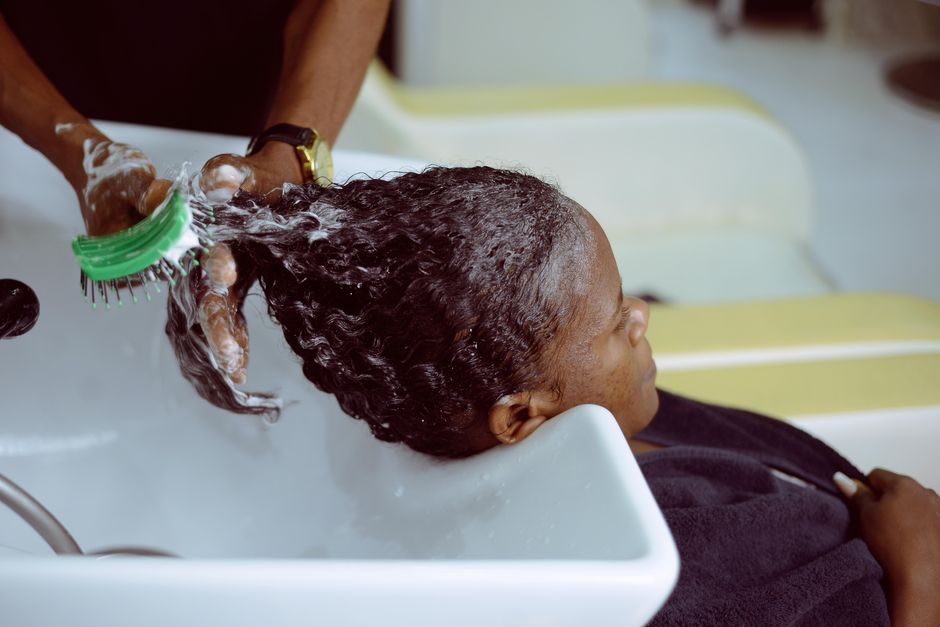
A relaxer changes the shape of your hair by breaking chemical bonds inside the hair shaft. Most relaxers use sodium hydroxide or a similar alkaline agent to force the hair straight. The same chemical process can irritate or burn the scalp, especially if the product stays on too long or is used on already damaged hair.
What Does A Relaxer Do To Your Hair And Scalp?
A relaxer works by disrupting the protein structure of your hair. Hair is mostly made of a protein called keratin. The strength and shape of that keratin depend partly on chemical bonds between protein strands.
Relaxers break those bonds. The hair then takes on a straighter shape. Once the bonds are broken, they do not fully re-form in the original pattern. That is why a relaxer is not temporary in the way a blowout is. The change lasts until that hair grows out or is cut off.
There are two main types:
- Lye relaxers use sodium hydroxide.
- No-lye relaxers use other alkaline chemicals, such as calcium hydroxide or guanidine hydroxide.
Both types raise the pH of the hair to a very high level. Normal hair sits at a pH around 4.5 to 5.5. Relaxers push it far above that. This is what forces the cuticle — the outer layer of the hair — to open and lets the chemical reach the inner structure.
The scalp is affected differently. It is skin, not hair. The same alkaline chemicals that straighten hair can irritate skin. Sodium hydroxide at the concentrations used in relaxers can cause chemical burns if left on too long. This is why relaxers are applied quickly and rinsed out on a strict schedule.
How Does The Chemical Process Actually Work?
To understand what a relaxer does, you have to understand what gives hair its shape in the first place.
Curly and coily hair has a specific pattern of bonds. Disulfide bonds link sulfur atoms between protein chains. These bonds act like rungs on a ladder, holding the hair in its curl pattern. Hydrogen bonds also play a role, but they are weaker and break with water and heat.
Relaxers target the disulfide bonds. The alkaline chemical breaks them open. While the bonds are broken, the hair is physically smoothed straight, often with a comb or by hand. Then a neutralizing shampoo brings the pH back down. This step is what stops the chemical reaction and helps the hair hold its new shape.
The key point: this is a permanent structural change to that strand of hair. It cannot be reversed. You can only grow it out.
The cuticle also takes damage in the process. It lifts during application. Some of it may not lie flat again afterward. A lifted or rough cuticle is one reason relaxed hair often feels drier and breaks more easily than it did before.
Why Do Relaxers Burn The Scalp?
Scalp burns from relaxers are a known risk, not a rare fluke. The chemicals involved are strong enough to damage skin if they stay on too long or sit on broken skin.
Several things raise the risk:
- Leaving the product on past the recommended time
- Scratching or irritating the scalp in the days before application
- Applying to a scalp with cuts, sores, or recent chemical damage
- Overlapping the relaxer onto already-relaxed hair
- Using a strength that is too high for your hair type
A mild reaction may feel like tingling or warmth. A more serious one can cause redness, blistering, and scabbing. If the scalp is visibly burned, that is a chemical injury and should be treated as one. Persistent pain, open sores, or signs of infection need medical attention.
There is a separate and more serious concern. Some research has looked at whether frequent use of hair straightening chemicals is linked to higher rates of certain cancers, including uterine cancer. This research is still developing, and the findings are not yet enough to say that relaxers cause cancer. What the evidence does suggest is a possible association that deserves more study. This is an area where honest uncertainty is the right position.
What Happens To Hair Over Time With Repeated Use?
A single relaxer weakens hair. Repeated relaxers compound the damage.
Each application lifts the cuticle and breaks bonds. Over time, the hair shaft can become thinner, rougher, and more prone to splitting. The ends are usually the first to go, because they are the oldest part of the hair and have been through the most.
Common signs of cumulative damage include:
- Hair that snaps easily when wet or dry
- Split ends that travel up the shaft
- Rough or dull texture that does not improve with conditioning
- Breakage near the roots, sometimes called mid-shaft breakage
Relaxed hair also tends to lose moisture more easily. The lifted cuticle lets water escape. That is why relaxed hair usually needs more conditioning than natural hair to feel soft and stay flexible.
One non-obvious point: the new growth coming in at the roots is not relaxed. It has its natural texture. This is the source of the “two textures” problem many people deal with between touch-ups. The line where relaxed hair meets new growth is a common place for breakage, because the two textures behave differently under tension.
How Do You Care For Relaxed Hair And Scalp?
Care for relaxed hair centers on two goals: keep moisture in, and avoid adding more stress to fragile strands.
General approaches that many people find helpful include:
- Condition regularly, including deeper conditioning treatments
- Limit heat styling, which adds its own damage
- Avoid tight hairstyles that pull on the roots
- Space out touch-ups rather than overlapping chemicals
- Protect the scalp before each application, following the product directions
It is worth being clear that these are widely used practices, not proven fixes. No routine can undo the structural change a relaxer makes. Care can reduce further damage and improve how hair feels, but it cannot restore hair to its pre-relaxer state.
Scalp care matters too. A burned or irritated scalp needs time to heal before any more chemical is applied. Applying a relaxer over damaged skin raises the risk of another injury.
Are There Alternatives To Relaxers?
If the goal is straighter hair without a permanent chemical change, several options exist. Each has trade-offs.
- Heat styling straightens temporarily but can cause heat damage with frequent use.
- Roller sets and wraps smooth hair without high heat, though results are temporary.
- Texturizers use similar chemicals to relaxers but are left on for a shorter time, so they loosen the curl rather than straightening it fully. They still carry chemical risk.
- Wigs, weaves, and extensions change the look without altering your own hair.
None of these is risk-free. Heat tools can cause their own kind of permanent damage if used too hot or too often. The right choice depends on what you want and how much upkeep you are willing to do.
If you are considering stopping relaxers, the transition takes patience. The relaxed hair has to grow out and be trimmed away over time. Many people manage the two textures with protective styles during this period.
What Should You Know Before Getting A Relaxer?
Know that a relaxer is a permanent chemical change, not a temporary style. Know that scalp burns are a real risk, not a sign you did something unusual. And know that repeated use weakens hair over time.
If you have a sensitive scalp, a history of reactions, or already damaged hair, that is worth discussing before any application. A licensed professional can assess your hair and scalp and choose an appropriate strength. Doing it at home raises the risk of mistakes with timing and overlap.
On the cancer question, the honest position is that the research is still developing. It is reasonable to factor that uncertainty into your decision, especially if you have used relaxers frequently for many years. That is a conversation worth having with a doctor who knows your history.
Frequently Asked Questions
Does a relaxer permanently change your hair?
Yes. A relaxer breaks the bonds that give hair its curl pattern, and those bonds do not fully re-form. The change lasts until the relaxed hair grows out or is cut off.
Can a relaxer burn your scalp?
Yes. The alkaline chemicals in relaxers can cause chemical burns if left on too long or applied to broken skin. Persistent pain, blistering, or open sores need medical attention.
Is it safe to relax your hair while pregnant?
There is no clear clinical guidance confirming relaxers are safe during pregnancy, so this is a decision to discuss with your doctor. Some people choose to avoid chemical treatments during pregnancy out of caution.
Can you undo the damage from a relaxer?
No. The structural change cannot be reversed, and damage to the cuticle cannot be fully repaired. Conditioning and gentle care can reduce further damage and improve how hair feels.
