
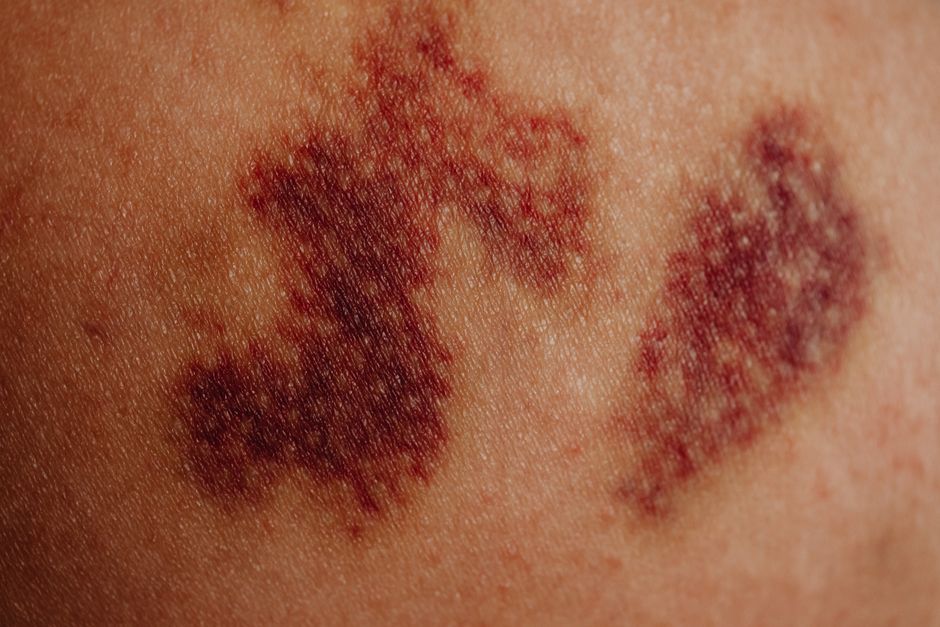
A popped blood vessel usually looks like a small red, purple, or blue mark on or just under the skin. In the white of the eye, it appears as a bright red patch. On the skin, it may look like a tiny dot, a thin squiggle, or a small bruise. The size and color depend on where the vessel is and how much blood leaked out.
Most people mean one of three things when they search this: a red spot in the eye, a small broken capillary on the face or leg, or a bruise from a minor injury. Each looks different and has different causes. None of them is usually dangerous on its own. This guide explains what each one looks like, why it happens, and when a mark on the skin or eye deserves a doctor’s attention.
What Does a Popped Blood Vessel Look Like in the Eye?
A popped vessel in the eye shows up as a bright red patch on the white part of the eye. Doctors call this a subconjunctival hemorrhage. The red area can be a small dot or can spread across much of the white of the eye.
The redness comes from blood trapped between the clear tissue covering the eye (the conjunctiva) and the white of the eye (the sclera). The blood cannot go anywhere, so it stays visible until the body reabsorbs it. It does not move around when you blink.
A subconjunctival hemorrhage usually has these features:
- Bright red color that may darken slightly over the first day or two
- A flat patch, not a raised bump
- No pain in most cases
- Normal vision
- No discharge or pus
It often looks worse than it is. The white of the eye is a large, visible surface, so even a small amount of blood stands out. People are frequently alarmed by how dramatic it looks. In most cases the eye is not injured, vision is unaffected, and the redness clears on its own.
One detail worth knowing: the blood may spread before it fades. Gravity can pull it downward, so a patch that starts near the colored part of the eye may drift toward the lower white area over a day. That is normal and does not mean the problem is getting worse.
What Does a Broken Capillary Look Like on the Skin?
A broken capillary on the skin looks like a tiny red, purple, or blue line just under the surface. These are sometimes called spider veins or thread veins. They are most common on the face, especially around the nose and cheeks, and on the legs.
On the skin, a small popped vessel can take a few forms:
- A pinpoint red dot that does not fade when you press on it
- A thin, branching line that looks like a small web
- A short, squiggly streak
- A small bruise-like patch if more blood leaked out
These marks are close to the surface, which is why the color shows through. They are usually painless. They may fade or stay the same over time. Many are simply a cosmetic concern rather than a sign of disease.
Sun exposure, aging, and genetics all affect how visible these small vessels become. Fair skin tends to show them more clearly. Pressure and minor trauma can also cause a small vessel to break, which is why a bruise can look like a cluster of tiny red or purple dots.
What Causes a Blood Vessel to Pop?
Most popped vessels come from minor pressure or trauma. A hard cough, a sneeze, straining, rubbing the eye, or a small bump can break a tiny vessel. In the eye, a sudden increase in pressure is a common trigger.
For subconjunctival hemorrhage in the eye, established causes and triggers include:
- Forceful coughing, sneezing, or vomiting
- Straining, such as during heavy lifting
- Rubbing the eye
- A minor eye injury
- Medicines that thin the blood, such as aspirin or anticoagulants
- High blood pressure, in some cases
Many episodes have no clear cause at all. A person wakes up, looks in the mirror, and finds a red eye with no memory of anything that would have caused it. That is common and not a sign that something was missed.
On the skin, broken capillaries are linked to sun damage, aging, genetics, and pressure. Rosacea, a common skin condition, can make small vessels on the face more visible. Some people simply have vessels that are closer to the surface and easier to see.




When Should You Worry About a Popped Blood Vessel?
Most popped vessels are harmless, but some signs mean you should see a doctor. The key is whether the mark comes with other symptoms or keeps happening.
For a red eye, get medical care if you notice:
- Pain in the eye
- Changes in vision, such as blurring
- Sensitivity to light
- Discharge from the eye
- Redness that keeps returning or does not fade over time
- A red eye after a head injury
These symptoms can point to something other than a simple broken vessel, such as an infection or inflammation. A red eye alone is usually not an emergency, but pain or vision changes change the picture.
For skin marks, see a doctor if a spot grows, changes shape or color, bleeds on its own, or does not heal. A mark that looks like a small red dot is usually harmless. A changing or non-healing spot should be checked, because some skin conditions can look like a broken vessel at first. A doctor can tell the difference.
How Long Does a Popped Blood Vessel Take to Heal?
A subconjunctival hemorrhage in the eye usually clears within one to two weeks. The blood is gradually reabsorbed, and the color shifts from bright red to yellow or green before fading. The exact time varies from person to person.
Small broken capillaries on the skin often do not fully disappear on their own. Some fade, but many stay the same or become slightly more visible over time. That is different from a bruise, which is blood leaking into tissue and is reabsorbed over days to weeks.
There is no proven way to speed up healing of a red eye at home. Time is the main factor. For skin capillaries, some people seek treatment for cosmetic reasons, but no home remedy has been shown to remove them reliably. If a mark bothers you, a doctor can discuss options and whether treatment is appropriate for your situation.
Popped Vessel in the Eye vs. a Bruise on the Skin
A red eye and a bruise both come from leaked blood, but they look and behave differently. The table below compares the two.
| Feature | Red eye (subconjunctival hemorrhage) | Bruise on the skin |
|---|---|---|
| Location | White of the eye | Skin or deeper tissue |
| Color | Bright red, may darken then fade to yellow | Purple, blue, then green or yellow |
| Typical cause | Pressure, coughing, rubbing, minor injury | Bump, blow, or pressure |
| Pain | Usually none | Often tender to touch |
| Healing time | Usually one to two weeks | Varies; often days to a few weeks |
The color changes in both cases come from the same process. As the body breaks down the blood, the pigments change, which is why a bruise turns yellow and a red eye can take on a yellowish tint before it clears.
What a Popped Blood Vessel Is Not
A popped vessel is not the same as a blood clot that blocks a vessel. It is a small break that lets blood leak out, not a blockage inside the vessel. This distinction matters because the two have very different causes and risks.
A subconjunctival hemorrhage is also not a sign of a stroke or a brain problem. The blood is in the surface layer of the eye, not inside the skull. People sometimes worry about this, but the two are not connected.
A small red dot on the skin is also not automatically a sign of a bleeding disorder. Most are caused by sun, age, or minor trauma. A bleeding disorder is more likely to show up as easy bruising in many places, frequent nosebleeds, or bleeding that is hard to stop. If you have several of those signs together, it is reasonable to ask a doctor about them.
Frequently Asked Questions
What does a popped blood vessel in the eye look like?
It looks like a bright red patch on the white of the eye that is flat and usually painless. Vision is normally unaffected, and the redness fades over one to two weeks.
Is a popped blood vessel in the eye dangerous?
In most cases it is harmless and clears on its own. See a doctor if there is eye pain, vision changes, light sensitivity, or discharge.
What does a broken capillary on the face look like?
It looks like a tiny red, purple, or blue line or dot just under the skin, often on the nose or cheeks. These marks are usually painless and often cosmetic.
Can a popped blood vessel go away on its own?
A red eye usually clears within one to two weeks without treatment. Small broken capillaries on the skin often stay the same or fade only partly over time.
