
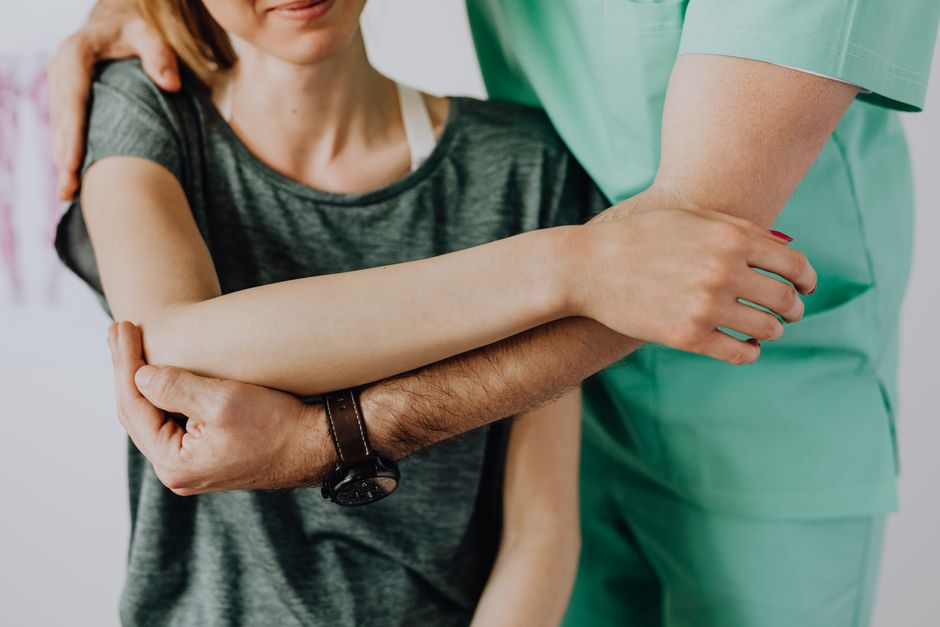
A labral tear often feels like a deep, aching pain inside the joint that gets worse with certain movements. Many people describe a catching or locking sensation, as if something inside is getting stuck. You might also feel a sharp stab when you twist or rotate the joint. The pain is usually not constant but flares up during specific activities.
What Does a Labral Tear Feel Like in the Hip?
Hip labral tears are common in athletes and people with hip shape issues. The labrum is a ring of cartilage that lines the hip socket. When it tears, you often feel pain deep in the groin or front of the hip. Some people feel it in the buttock or side of the hip instead.
The sensation is often described as a dull ache that turns sharp with twisting motions. Sitting for long periods can make it worse. You might hear or feel a click when you walk or rotate your leg. A study in the American Journal of Sports Medicine found that over 90% of people with hip labral tears reported groin pain as their main symptom.
Stiffness is another common complaint. You may feel like your hip is tight or that it cannot move through its full range. This is different from a muscle strain, which usually heals within weeks. A labral tear does not get better on its own with rest alone.
What Does a Labral Tear Feel Like in the Shoulder?
Shoulder labral tears are different from hip tears. The labrum in the shoulder helps keep the ball of the joint in place. A tear here often causes a deep ache in the back or front of the shoulder. You might feel pain when you reach overhead or throw a ball.
Many people describe a feeling of instability. It can feel like the shoulder is going to pop out of place. Catching and grinding sensations are common. The SLAP tear (Superior Labrum Anterior to Posterior) is a specific type that often causes pain with lifting or throwing motions.
Weakness is also a key symptom. You may struggle to lift objects or perform overhead tasks. Some people report a dull ache that keeps them awake at night, especially if they sleep on that side. The pain is rarely sharp and sudden. It usually builds over time.
What Does a Labral Tear Feel Like Compared to Other Injuries?
Labral tears are often mistaken for other problems. In the hip, the pain can feel like a groin pull or hip flexor strain. But a muscle strain improves with rest in a few weeks. A labral tear does not. The pain stays or gets worse when you return to activity.
In the shoulder, a labral tear can feel like rotator cuff tendinitis. Both cause pain with overhead movement. But a labral tear often includes that mechanical catching or locking feeling. Rotator cuff problems usually cause more weakness and less clicking.
Hip arthritis can also feel similar. Both cause deep groin pain and stiffness. But arthritis pain is usually more constant and worse with weight bearing. Labral tear pain is more activity-specific and positional. An MRI with contrast is the best way to tell them apart.





What Activities Make a Labral Tear Feel Worse?
Certain movements consistently aggravate labral tears. In the hip, twisting motions are the biggest trigger. Think of swinging a golf club, pivoting in dance, or getting out of a car. Deep squatting and prolonged sitting in low chairs also flare up symptoms.
For shoulder labral tears, overhead activities are the main culprit. Throwing, serving in tennis, or lifting weights above the head all stress the torn labrum. Pushing open heavy doors or doing push-ups can also cause sharp pain.
Symptoms often get worse after activity rather than during it. You might feel fine while playing a sport but have deep aching pain that night. Morning stiffness is also common. The joint may feel tight and hard to move until you warm it up.
How Do Doctors Diagnose What a Labral Tear Feels Like?
Doctors start with a physical exam. They move your joint through specific positions to see if they reproduce your pain. For the hip, the FADIR test (flexion, adduction, internal rotation) is common. For the shoulder, the O’Brien test is often used. These tests are helpful but not perfect.
Imaging is needed for a clear diagnosis. Regular X-rays do not show labral tears. They only show bone. An MRI with contrast dye injected into the joint is the gold standard. This is called an MR arthrogram. A 2019 review in Orthopaedic Journal of Sports Medicine found that MR arthrograms detect hip labral tears with over 90% accuracy.
Ultrasound is sometimes used but is less reliable. It depends heavily on the skill of the person doing it. CT scans are rarely used for labral tears. They are better at showing bone problems like hip impingement, which often occurs alongside labral tears.
Common Misconceptions About Labral Tear Pain
A big misconception is that labral tears always cause severe pain. Many people have labral tears and feel nothing at all. Studies using MRI scans on people without any hip pain have found labral tears in up to 20% of them. A tear on a scan does not automatically mean it is causing your symptoms.
Another myth is that surgery is always needed. This is not true. Many people improve with physical therapy alone. Therapy focuses on strengthening the muscles around the joint to take pressure off the torn labrum. A 2020 study in the Journal of Hip Preservation Surgery found that about 70% of people with hip labral tears avoided surgery after completing a structured therapy program.
Some people think a popping joint always means a labral tear. Popping and clicking are very common in healthy joints. They are usually caused by tendons snapping over bone, not by a torn labrum. If there is no pain with the pop, it is rarely a problem.
| Symptom | Hip Labral Tear | Shoulder Labral Tear |
|---|---|---|
| Pain location | Deep groin, front of hip | Back or front of shoulder |
| Pain type | Dull ache, sharp with twisting | Deep ache, sharp with throwing |
| Mechanical sensations | Catching, locking, clicking | Catching, grinding, instability |
| Worst activities | Sitting, twisting, squatting | Overhead lifting, throwing, pushing |
| Night pain | Less common | Common, especially sleeping on that side |
What to Do If You Think You Have a Labral Tear
Start by seeing a sports medicine doctor or an orthopedic surgeon. Describe exactly what the pain feels like and when it happens. Tell them about any clicking, catching, or instability. Bring a list of activities that make it worse.
Physical therapy is usually the first step. A good therapist will assess your movement patterns and find weak muscles. They will give you exercises to strengthen the hip or shoulder stabilizers. Avoid doing stretches that pull on the joint. That can make the tear worse.
- Modify activities that cause pain. Do not push through sharp pain.
- Avoid deep squatting and heavy overhead lifting until you are evaluated.
- Use ice after activity if the joint feels sore or swollen.
- Do not rely on popping pills to mask the pain. Address the root cause.
Surgery is an option if therapy fails. Arthroscopic surgery can trim or repair the torn labrum. Recovery takes several months. Most people return to sports after surgery, but the outcome depends on the size and location of the tear and how much arthritis is already present.
Frequently Asked Questions
Can a labral tear heal on its own?
No, labral tears do not heal on their own because the labrum has poor blood supply. Symptoms can improve with therapy even if the tear remains.
How long does it take to recover from a labral tear without surgery?
Recovery with physical therapy usually takes 3 to 6 months. Some people feel better within weeks, while others need longer.
Is a labral tear the same as a torn labrum?
Yes, they are the same thing. Labral tear and torn labrum are just different words for the same injury.
What happens if a labral tear goes untreated?
Untreated labral tears can lead to joint stiffness and weakness. Over years, they may increase the risk of developing arthritis in that joint.
