
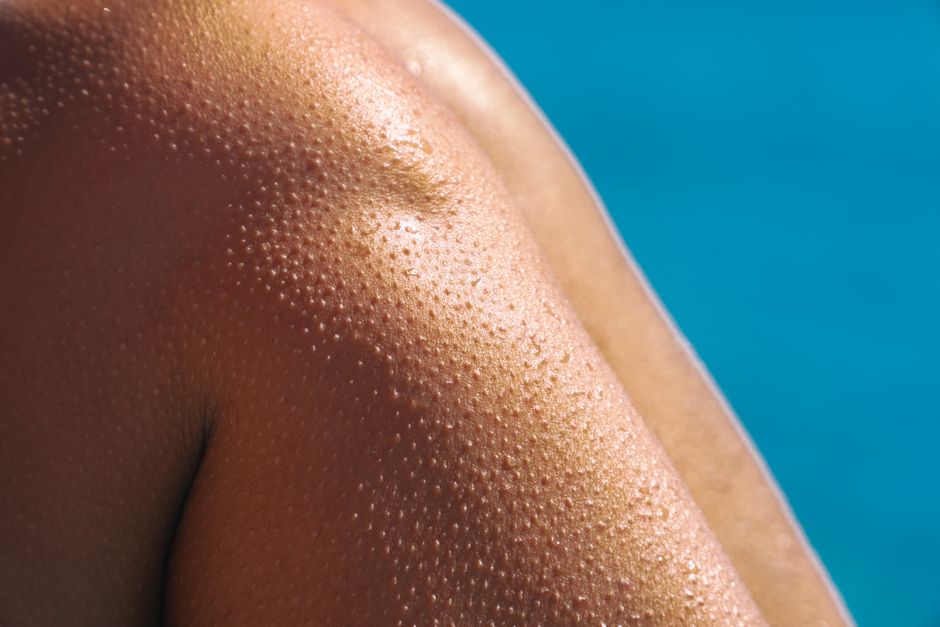
A heat rash on a newborn looks like a cluster of tiny red or pink bumps, often with a slightly raised or prickly texture. The bumps usually appear in small patches on the neck, chest, back, armpits, or in skin folds. Some babies also develop tiny clear blisters that sit on top of reddened skin. The rash tends to show up in areas where skin touches skin or where clothing traps warmth.
It is one of the most common skin findings in the first few months of life. Newborns have narrow sweat ducts that clog easily, so when they get too warm, sweat gets trapped under the skin and causes irritation. This article explains exactly what heat rash looks like, how it differs from other newborn rashes, and when it needs medical attention.
What Does A Heat Rash Look Like On A Newborn?
Heat rash on a newborn typically appears as small red bumps or tiny blisters packed closely together in patches. The medical name for this condition is miliaria.
Doctors classify it into a few types based on how deep the blockage sits in the skin:
- Miliaria crystallina — tiny, clear, thin-walled blisters with no redness around them. These look like small beads of water sitting on the skin. They are the mildest form and usually break easily.
- Miliaria rubra — small red bumps that feel prickly. This is the most common type and the one parents usually notice first. The bumps have a red base and can look inflamed.
- Miliaria pustulosa — red bumps that develop small pus-filled heads. This form is less common but can look alarming because it resembles an infection.
- Miliaria profunda — firm, skin-colored bumps that look like goosebumps. This is rare in newborns and more often seen in adults who live in hot climates.
The rash usually stays in areas that get warm and covered: the neck, upper chest, back, armpits, groin, and inside elbow or knee creases. It does not usually appear on the palms or soles.
Most heat rash does not itch severely in newborns, though some babies seem uncomfortable when the affected area is touched. The skin around the bumps may feel warm and slightly damp.
Why Do Newborns Get Heat Rash So Easily?
A newborn’s sweat glands are not fully developed at birth. The ducts that carry sweat from the gland to the skin surface are narrow and can block easily.
When a baby gets too warm, sweat is produced but cannot escape. It builds up under the skin and leaks into the surrounding tissue, causing inflammation. That inflammation is what you see as redness and bumps.
Several factors make newborns more prone to this:
- Overdressing — parents often add layers out of caution, but babies overheat faster than adults.
- Warm environments — a heated room, a car seat with blankets, or being held skin-to-skin for long periods without a break.
- Fever — a rise in body temperature increases sweating.
- Tight clothing or hats — anything that traps heat against the skin.
- Thick creams or ointments — heavy products can block sweat ducts.
The condition is not caused by poor hygiene. It is a mechanical problem with immature sweat ducts. It is also not contagious.
How Is Heat Rash Different From Other Newborn Rashes?
Newborn skin can develop several different rashes, and telling them apart matters because the care is different. Heat rash has a few features that help distinguish it.
Heat rash appears in warm, covered areas and improves when the baby is cooled down. Other rashes often follow a different pattern.
- Erythema toxicum — a common newborn rash with red blotches and small yellow-white bumps. It tends to move around the body and usually appears in the first few days of life. It clears on its own.
- Baby acne — small red bumps on the cheeks, nose, and forehead. It usually appears around two to four weeks of age and is not related to warmth.
- Diaper rash — redness and irritation confined to the diaper area. It is caused by moisture, friction, and contact with urine or stool, not by trapped sweat.
- Eczema — dry, scaly, itchy patches that often appear on the cheeks, scalp, and outer arms or legs. It tends to be chronic and flares with triggers like dry air or certain fabrics.
- Viral rash — usually accompanied by fever, fussiness, or other symptoms. It often spreads across the body in a pattern that heat rash does not follow.
One helpful clue: heat rash usually clears within hours to a few days once the baby is kept cool and dry. If a rash persists despite cooling measures, it may not be heat rash.




What Should You Do If You Think Your Newborn Has Heat Rash?
The main treatment for heat rash is cooling the baby down and keeping the skin dry. This is not a condition that requires medication in most cases.
Practical steps include:
- Remove extra layers of clothing. Dress the baby in one light layer.
- Move the baby to a cooler room or a shaded area.
- Loosen tight clothing and remove hats.
- Gently pat the skin dry — do not rub.
- Let the skin air-dry when possible.
- Avoid heavy creams, ointments, or powders on the affected area unless a doctor recommends them.
Some clinicians suggest a cool bath to help bring down skin temperature, but the water should not be cold. Lukewarm water is safer for a newborn. After the bath, pat the skin dry and let it air out.
Do not use petroleum jelly or thick barrier creams on heat rash. They can trap more sweat and make the blockage worse.
If the rash does not improve within a few days of cooling measures, or if it seems to be spreading or getting worse, contact your baby’s doctor.
When Should You Call a Doctor About a Newborn Rash?
Most heat rash is harmless and resolves on its own. But some signs suggest something more serious.
Call your baby’s doctor if you notice any of the following:
- The rash has pus-filled bumps that are spreading.
- The skin around the rash is hot, swollen, or very red.
- Your baby has a fever (rectal temperature of 100.4°F or higher in a baby under 3 months old).
- Your baby seems very fussy, lethargic, or is not feeding well.
- The rash does not improve after 2 to 3 days of cooling measures.
- The rash appears on the palms or soles.
- There are signs of dehydration, such as fewer wet diapers or a dry mouth.
In newborns under 3 months old, any fever is considered an emergency and needs immediate medical attention. Do not wait to see if it goes away on its own.
If the rash looks like small blisters that are spreading quickly, or if the skin appears to be peeling, seek care right away. These can be signs of a more serious skin condition or infection.
Can Heat Rash Be Prevented?
You cannot prevent every case, but you can lower the chances by keeping your baby from getting too warm.
General prevention strategies include:
- Dress your baby in the same number of layers you would wear, plus one light layer if needed.
- Keep the room at a comfortable temperature — most experts suggest keeping a baby’s room between 68°F and 72°F.
- Avoid heavy blankets in car seats and strollers.
- Check your baby’s neck and chest for warmth — if the skin feels hot or damp, remove a layer.
- Use lightweight, breathable fabrics like cotton.
- Avoid prolonged skin-to-skin contact without a break if the room is warm.
Some parents worry that a cool room will make the baby cold. A good rule is to feel the baby’s chest or back, not the hands or feet. Hands and feet are often cooler than the rest of the body and are not a reliable guide.
If your baby is sweating, that is a sign they are too warm. Sweating in a newborn is not normal at rest and usually means they need fewer layers or a cooler environment.
Frequently Asked Questions
How long does heat rash last on a newborn?
Most heat rash clears within a few hours to 2 to 3 days once the baby is kept cool and dry. If it persists beyond that despite cooling measures, have a doctor look at it.
Is heat rash dangerous for a newborn?
Heat rash itself is not dangerous and rarely leads to complications. The main concern is that it can look similar to other rashes that do need treatment, so persistent or worsening rashes should be checked.
Can I use baby powder on heat rash?
Powders are not recommended because they can be inhaled by a newborn and cause breathing problems. Keeping the skin cool and dry is safer and more effective.
Does heat rash mean my baby is too hot?
Yes, heat rash is a sign that your baby’s skin is trapping sweat, which usually means they are too warm. Removing a layer or moving to a cooler space is the first step.
