
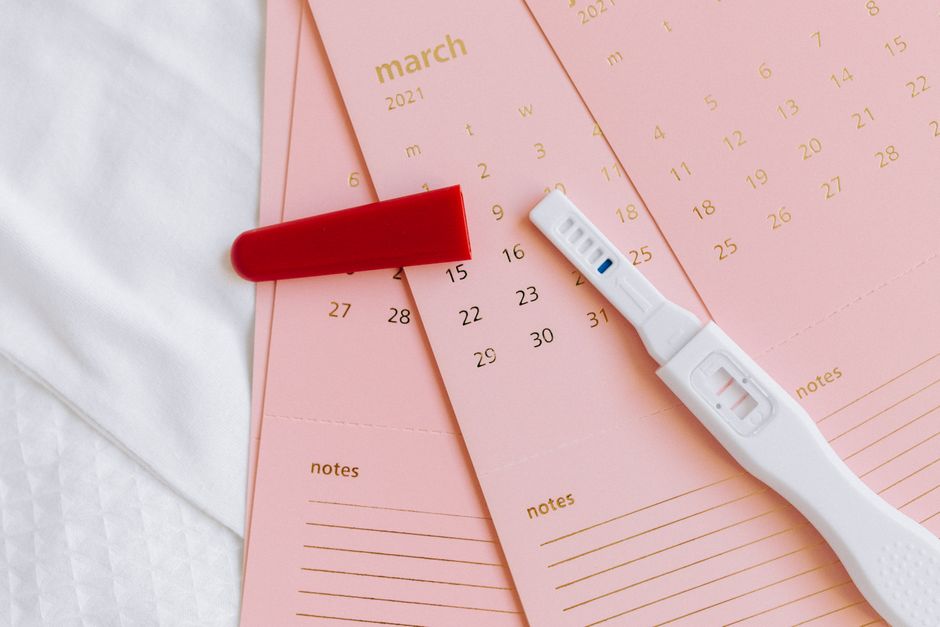
You pee on a stick, wait a few minutes, and pick it up to see two lines — except one of them is barely there. A faint line on an ovulation test usually means the test detected some luteinizing hormone (LH), but not enough to signal that ovulation is about to happen. Ovulation predictor kits work by measuring LH in your urine, and the test line needs to be as dark as or darker than the control line to count as a positive. Anything lighter is a negative result, even if you can see a line.
That last part surprises a lot of people. A line you can see with your eyes is not the same as a positive ovulation test. The darkness of the line is the whole point.
How Do Ovulation Tests Actually Work?
Ovulation tests detect luteinizing hormone, a hormone your pituitary gland releases. LH surges roughly 24 to 36 hours before an egg is released from the ovary. That surge is what the test is looking for.
Each test strip has two lines. The control line shows the test is working. The test line reacts to LH in your urine. When LH climbs, the test line gets darker. When the test line matches or beats the control line in darkness, you have a positive result. That is your signal that ovulation is likely coming in the next day or so.
Here is the part many people miss: LH is always present in urine at low levels. So a faint test line is normal on most days of your cycle. It does not mean you are “almost ovulating.” It means the test picked up your baseline LH, which is exactly what it should do.
What Does A Faint Line On An Ovulation Test Mean?
A faint line means the test detected LH, but the level is below the threshold for a positive result. In practical terms, it is a negative test.
There is one important exception. A faint line that is clearly getting darker over several days may mean your LH is rising toward a surge. This is why testing at the same time each day and comparing lines across days matters more than judging any single strip.
What a faint line does not mean:
- It does not confirm ovulation has happened.
- It does not confirm ovulation is about to happen.
- It does not mean the test failed.
- It does not mean you are infertile.
Many people see a faint line and assume something is wrong. Usually nothing is wrong. A faint line is the expected result on a low-LH day.
Why Is My Ovulation Test Line Always Faint?
Some people never see a strong test line, and there are several possible reasons. The most common one is timing. If you test once a day, you can miss the surge entirely. LH can rise and fall within a window of hours, so a single daily test may land before or after the peak.
Other reasons include:
- Testing at the wrong time of day. LH is often easier to detect in afternoon urine than first-morning urine for some people, though this varies.
- Drinking a lot of water before testing. Diluted urine can lower the detectable LH concentration.
- Testing too early or too late in your cycle. If your cycle is longer or shorter than average, the standard testing window may not match your surge.
- Individual hormone levels. Some people simply have lower baseline LH, or a shorter, less pronounced surge.
- Certain medications or health conditions. Some can affect LH levels or how the test reads.
If you consistently see faint lines and never a positive, that is worth discussing with a healthcare provider. It may point to a timing issue, or it may point to something about your cycle that deserves a closer look.





Does A Faint Line Mean I Am Not Ovulating?
No. A faint line on a given day says nothing about whether you are ovulating. It only tells you that LH was below the positive threshold when you tested.
Ovulation tests are designed to predict a surge, not to confirm that ovulation occurred. Even a clear positive test does not prove an egg was released. It predicts that ovulation is likely within the next day or two.
The only way to confirm ovulation happened is through other methods, such as a sustained rise in basal body temperature, a progesterone blood test, or ultrasound. If you are trying to conceive and want to know whether you are ovulating, those methods give more reliable answers than reading line darkness.
How Can I Get A Clearer Result?
Getting a clearer reading comes down to consistency and timing. Small changes in how and when you test can make a real difference.
- Test at the same time every day. Pick a window and stick to it. Many people find early afternoon works well.
- Reduce fluids for about two hours before testing. This helps keep urine concentrated enough to detect the surge.
- Start testing based on your cycle length. Kits include guidance, and testing a few days earlier can help you catch a short surge.
- Test more than once a day as your expected ovulation approaches. This is the single most effective way to catch a surge you would otherwise miss.
- Compare lines across days, not within one test. The trend matters more than any single strip.
One clarification worth making: line darkness is subjective. Two people can look at the same strip and disagree. If you are unsure, taking a photo in consistent lighting each day can help you track the trend more objectively.
What About Faint Lines And Pregnancy Tests?
Faint lines on ovulation tests and faint lines on pregnancy tests mean different things, and mixing them up causes a lot of confusion.
A pregnancy test detects human chorionic gonadotropin (hCG). On a pregnancy test, even a faint second line can be significant, because hCG is not normally present in urine unless you are pregnant. That is why people scrutinize faint pregnancy test lines so closely.
An ovulation test is different. LH is always present, so a faint line is expected and normal. The rules for reading the two tests are not the same.
Some people use ovulation tests to try to detect pregnancy, because LH and hCG are chemically similar and can sometimes cross-react. This is not a reliable method. If you think you might be pregnant, use a pregnancy test.
When Should I Talk To A Healthcare Provider?
Occasional faint lines are not a concern. They are part of normal testing. But some patterns are worth a conversation with a healthcare provider.
Consider reaching out if:
- You never get a positive result across multiple cycles, despite testing carefully.
- Your cycles are very irregular or you are not sure you are ovulating.
- You have been trying to conceive for a year or longer, or six months if you are 35 or older.
- You have symptoms that suggest a hormonal or reproductive health condition.
A provider can look at the bigger picture, including whether ovulation is happening at all. Ovulation tests are a useful tool, but they are one piece of a larger puzzle.
The Bottom Line On Faint Lines
A faint line on an ovulation test is a negative result. It means LH was detected but not at the level that signals a surge. This is normal and expected on most days of your cycle.
What matters is the trend. A line that stays faint is not a positive. A line that grows darker over consecutive days is your signal to keep testing, because a surge may be building. When the test line matches or exceeds the control line, you have your positive.
If faint lines are all you ever see, that is a reason to look at your testing method first, and then talk to a provider if the pattern continues. It is not a reason to panic, and it is not proof of anything about your fertility on its own.
Frequently Asked Questions
Can a faint line on an ovulation test be positive?
No. A positive ovulation test requires the test line to be as dark as or darker than the control line. A faint line is a negative result, even though LH was detected.
Why do I get a faint line every day on ovulation tests?
LH is always present in urine at low levels, so a faint line is normal on most days. If you never see a darker line, it may be a timing issue or a sign to check with a provider.
Can I be pregnant if I see a faint line on an ovulation test?
Ovulation tests are not reliable for detecting pregnancy. LH and hCG can sometimes cross-react, but this method is not dependable. Use a pregnancy test instead.
Does a faint line mean I already ovulated?
No. A faint line does not tell you whether ovulation has happened or is coming. It only shows that LH was below the positive threshold when you tested.
