
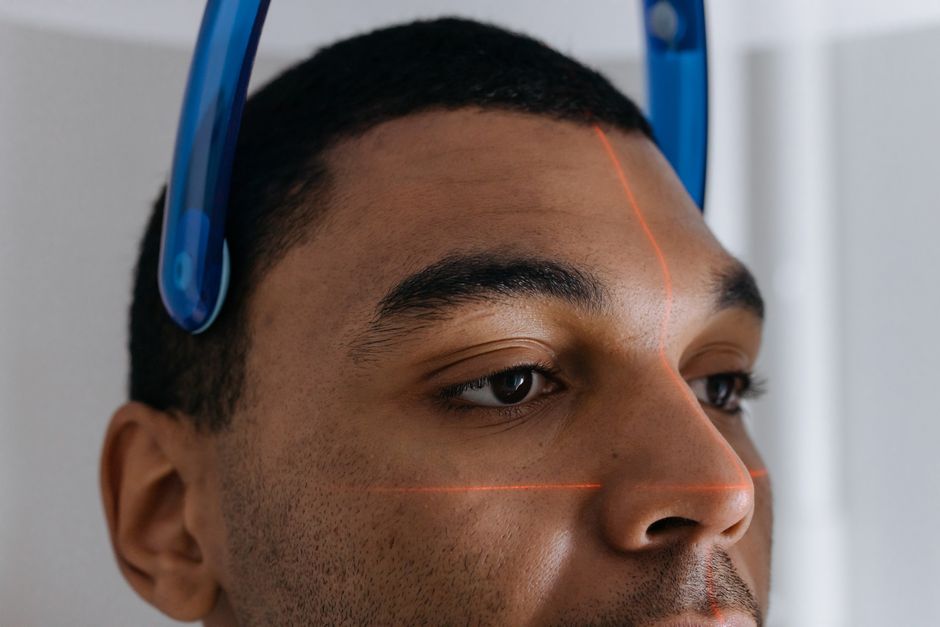
A facial CT scan shows the bones, sinuses, eye sockets, nasal passages, and soft tissues of the face in detailed cross-sectional images. Doctors use it most often after facial trauma, to check for fractures, bleeding, or infection that a standard X-ray cannot reveal. It does not show the brain in detail the way a dedicated head CT does, and it cannot identify most soft-tissue problems without contrast dye.
What Does a Facial CT Scan Actually Show?
A facial CT produces thin-slice images that a radiologist reads layer by layer. Each slice shows a slightly different depth of the face, which lets the reader trace a fracture line or follow the path of an infection through bone.
The scan captures these structures clearly:
- The bones of the face, including the orbits (eye sockets), nasal bones, cheekbones, upper and lower jaw, and the hard palate
- The paranasal sinuses — maxillary, ethmoid, frontal, and sphenoid
- The nasal cavity and septum
- The temporomandibular joints (TMJ)
- Soft tissues such as muscles, fat, and the eyes themselves
- Blood vessels and lymph nodes, especially when contrast dye is used
What it does not show well is the brain tissue itself. The facial bones sit in front of and below the skull cavity, so a facial CT protocol is not designed to evaluate the brain. If a doctor suspects a brain injury, they order a separate head CT.
Why Do Doctors Order a Facial CT Scan?
Facial trauma is the most common reason. When someone takes a punch, falls off a bike, or hits a dashboard, a plain X-ray can miss fractures that run at an angle or sit behind other bone. CT catches those.
Other common reasons include:
- Suspected orbital fracture — a break in the eye socket that can trap a muscle and limit eye movement
- Chronic or recurrent sinusitis — to see whether polyps, a deviated septum, or a blocked drainage pathway is causing repeated infections
- Pre-surgical planning — surgeons use the images to map exactly where bone and nerves sit before operating
- Foreign bodies — metal, glass, or other material lodged in the face
- Tumors or cysts — to define the size and location of a growth in the jaw, sinus, or soft tissue
- Dental problems that spread — an abscess at the root of a tooth can erode into the sinus or jawbone
One clarification that matters: a facial CT is not the same as a sinus CT or a dental CT, even though the images overlap. Each protocol uses different slice thickness and positioning to answer a specific question. Radiologists choose the protocol based on what the doctor needs to know.
What Can a Facial CT Detect That an X-Ray Cannot?
CT detects fractures that X-rays routinely miss. Studies have consistently found that plain radiographs have limited sensitivity for facial fractures compared with CT, particularly in the orbital floor, the zygomatic arch, and the nasal-ethmoid region.
The difference comes down to how the two tests work. An X-ray flattens a three-dimensional structure onto a single plane. Bones overlap, and a fracture line can hide behind them. CT takes images from many angles and reconstructs them into cross-sections, so nothing overlaps.
CT also shows soft tissue. An X-ray shows bone and little else. CT can reveal a hematoma (a pool of blood) collecting behind the eye, which can press on the optic nerve and threaten vision. That finding changes how fast a patient goes to surgery.





What Does a Facial CT Scan Show After an Injury?
After facial trauma, the scan answers four questions: Is there a fracture? Where is it? Is anything trapped or displaced? Is there bleeding?
Specific findings a radiologist looks for include:
- Orbital floor fracture — the thin bone at the bottom of the eye socket breaks and can trap the muscle that moves the eye up and down
- Zygomatic complex fracture — the cheekbone breaks and shifts, flattening the cheek
- Nasal bone fracture — the most common facial fracture, though often diagnosed by exam alone
- Le Fort fractures — patterns where a large section of the midface separates from the skull base
- Mandibular fracture — a break in the lower jaw, often near the angle or the chin
- Retrobulbar hematoma — blood collecting behind the eye, a vision-threatening emergency
- Intracranial extension — a fracture that reaches into the skull cavity, which raises the risk of infection or brain injury
The presence of a retrobulbar hematoma is one of the few findings on a facial CT that can require immediate surgical decompression. That is why the scan is done quickly in emergency settings.
What Does Contrast Dye Add to the Picture?
Contrast dye makes blood vessels, inflamed tissue, and tumors stand out. Without it, those structures blend into the surrounding tissue.
Doctors use contrast for different reasons:
- Infection — an abscess shows a bright rim around a dark center
- Tumors — cancer often takes up dye differently than normal tissue
- Vascular problems — aneurysms, malformations, or active bleeding
- Lymph nodes — enlarged or abnormal nodes in the neck and jaw
Contrast is not used for every facial CT. For a simple fracture, plain images are usually enough. Contrast carries small risks, including allergic reaction and, in people with reduced kidney function, a risk of kidney injury. The ordering doctor weighs those risks against the benefit.
What a Facial CT Scan Cannot Tell You
A facial CT cannot diagnose nerve damage. If a patient has numbness in the cheek or lip after an injury, the scan can show whether a fracture is pressing on the nerve canal, but it cannot measure how well the nerve is working.
It also cannot reliably distinguish between some types of soft-tissue masses. A tumor and an area of inflammation can look similar on CT. In those cases, an MRI or a biopsy is needed.
The scan also does not show cartilage well. The nasal septum and the cartilage of the ear are largely invisible on CT, which is one reason septal injuries are often diagnosed by physical exam rather than imaging.
How Much Radiation Does a Facial CT Involve?
A facial CT uses a low dose of ionizing radiation compared with a full-body scan, but more than a single chest X-ray. The exact dose depends on the scanner, the protocol, and the size of the patient.
Radiation exposure from a single diagnostic CT is generally considered low risk for an adult. The risk is higher for children and for people who need repeated scans. When a doctor orders a facial CT, they are weighing the benefit of an accurate diagnosis against that small added risk.
If you are concerned about radiation, ask whether an alternative such as ultrasound or MRI could answer the same question. For bone fractures, though, CT is usually the most accurate option available.
Frequently Asked Questions
What does a facial CT scan show that a regular X-ray does not?
A facial CT shows fractures that X-rays miss, especially in the eye socket, cheekbone, and nasal-ethmoid area. It also shows soft tissue, blood, and fluid that plain X-rays cannot capture.
Can a facial CT scan show a brain injury?
No, a facial CT is not designed to evaluate brain tissue. If a brain injury is suspected, a separate head CT is ordered.
Does a facial CT scan require contrast dye?
Not always. Simple fractures are usually visible without contrast, while infections, tumors, and vascular problems often need it for a clearer picture.
How long does a facial CT scan take?
The scan itself usually takes only a few minutes once the patient is positioned. Total appointment time, including preparation and waiting for results, is longer.
