
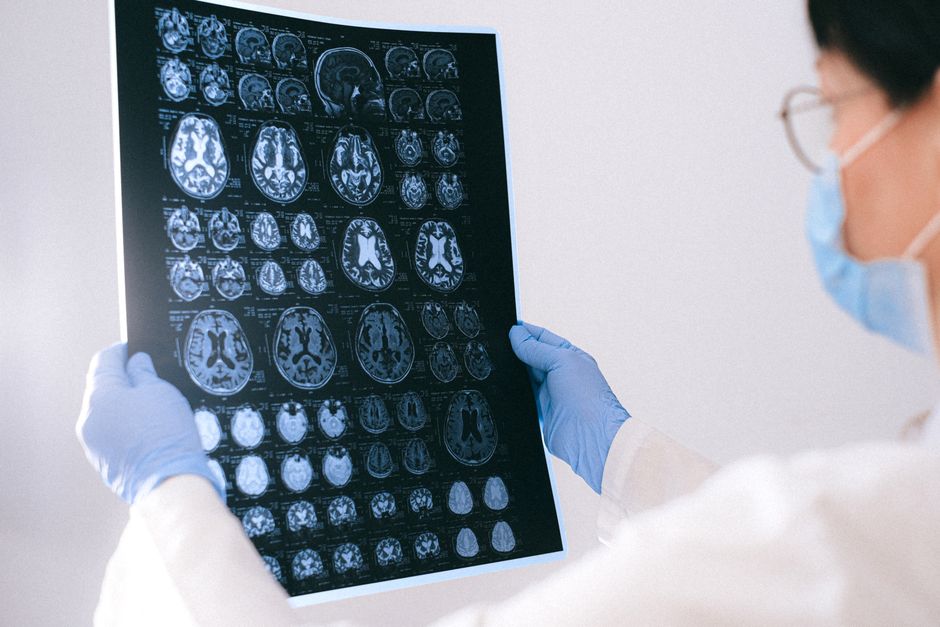
A DEXA scan looks like lying fully clothed on a padded table while a mechanical arm passes over your body for a few minutes. The machine takes two low-dose X-ray images at different energy levels, and a computer compares them to measure bone mineral density and body composition. You get a report with a T-score, a Z-score, and sometimes a body fat breakdown, usually within a day or two.
DEXA stands for dual-energy X-ray absorptiometry. The scan is quick, painless, and uses a small fraction of the radiation of a standard chest X-ray. Most people want to know three things: what the room and machine are like, what happens during the scan, and how to read the numbers that come back. This guide covers all three, in order.
What Does A DEXA Scan Machine Look Like?
A DEXA machine is a large, open scanner that looks a bit like a padded bed with a movable arm above it. There is no tunnel and no enclosure. You are not slid into a tube the way you would be for an MRI or a CT scan.
The table is flat and cushioned. Overhead, a C-shaped arm holds the X-ray source below and a detector above. During the scan, that arm glides slowly along the length of your body. Some machines are tabletop models for the heel, wrist, or forearm, but the central DEXA used for bone density and body composition is the full-table version.
The room itself is ordinary. It is usually a quiet imaging suite with a computer workstation nearby. The technologist sits at a screen while the scan runs. You can see the ceiling and the room around you the whole time. People who feel anxious in enclosed spaces generally do fine with DEXA because nothing closes around them.
Radiation exposure is low. A central DEXA scan delivers a small dose, well below the amount from a typical chest X-ray. That is one reason it is used for repeat monitoring over years.
What Happens During a DEXA Scan From Start to Finish?
The whole appointment usually takes 15 to 30 minutes, and the scan itself takes only a few minutes. Here is the sequence most people experience.
- Check-in and screening. You answer questions about pregnancy, recent contrast dye, and prior scans. Tell the staff if you might be pregnant.
- Clothing. You usually stay in your clothes if they have no metal zippers, buttons, or underwire. Otherwise you change into a gown. Metal interferes with the reading.
- Positioning. You lie on your back on the table. For a standard bone density scan, the technologist positions your legs and may use a small foam block to keep them in place.
- The scan. The arm passes over you. You hold still and breathe normally. There is no noise beyond a soft mechanical hum.
- Completion. You get up and leave. No recovery time is needed, and you can drive yourself home.
For a body composition scan, the machine may also image your whole body, which takes a little longer. Some centers ask you to fast or avoid exercise beforehand so the body fat reading is consistent. Follow whatever instructions your center gives you.
What Does a DEXA Scan Measure?
A DEXA scan measures two things depending on the order: bone mineral density and body composition. They use the same machine but answer different questions.
Bone mineral density is the amount of mineral, mainly calcium, packed into a section of bone. The scan usually measures the lumbar spine and the hip, and sometimes the forearm. Density is reported in grams per square centimeter. Lower density means weaker bone structure and a higher risk of fracture.
Body composition breaks your weight into fat mass, lean mass, and bone. A whole-body scan reports total body fat percentage and where fat sits, such as the android (belly) and gynoid (hip and thigh) regions. It also reports lean tissue by limb. This is why athletes and people tracking muscle loss sometimes seek out DEXA.
One clarification worth knowing: DEXA body composition is not the same test as a bone density scan, even though the machine is identical. A doctor ordering a bone density test is looking at fracture risk, not body fat. If you want body composition, ask specifically for it, because not every center offers it and insurance often does not cover it for that purpose.
How Do You Read DEXA Results and Scores?
Your report comes back with a T-score and a Z-score for bone density. These two numbers are the core of the result and they mean different things.
The T-score compares your bone density to that of a healthy young adult of the same sex at peak bone mass. It is expressed as a standard deviation, meaning how far you sit from that young-adult average. The World Health Organization defines the categories this way:
| T-score | Category |
|---|---|
| -1.0 and above | Normal |
| Between -1.0 and -2.5 | Low bone mass (osteopenia) |
| -2.5 and below | Osteoporosis |
The Z-score compares you to other people your own age and size. It is used more often in younger people and children. A Z-score of -2.0 or lower is generally considered below the expected range for your age.
A few practical points. A single T-score at one site does not always tell the whole story, so clinicians look at the lowest site and consider your overall fracture risk. Results can vary slightly between machines and between technologists, which is why follow-up scans are best done on the same machine when possible. And a low score is not a diagnosis on its own. Your clinician combines it with your age, history of fractures, medications, and other risk factors before deciding what it means for you.
How Accurate Is a DEXA Scan?
DEXA is the standard method for measuring bone mineral density and is well validated for that purpose. It is accurate enough that guidelines around the world rely on it for diagnosing osteoporosis. For bone density, the evidence is strong.
Body composition is a different story. DEXA gives a reliable estimate of fat and lean mass, but it is not perfect. It can be thrown off by hydration status, recent meals, and how you are positioned. The readings are useful for tracking change over time when conditions are kept consistent, but treat any single body fat number as an estimate, not an exact figure. Some studies suggest DEXA and other methods can disagree on body fat percentage, so comparing numbers across different machines is not reliable.
One thing DEXA cannot do is measure bone quality directly. It measures density, and density is only one part of bone strength. That is part of why two people with the same T-score can have different fracture risks.
How Long Until You Get DEXA Results?
Results usually come back within a day or a few days, though timing varies by center. The scan images are read by a radiologist or a clinician trained in bone density interpretation, and a written report goes to your referring doctor.
Some centers give you a preliminary summary at the visit, but the formal report is what your doctor uses. Ask how and when you will receive it, and plan a follow-up conversation to go over the numbers in context. A score without a discussion can be misleading on its own.
Is a DEXA Scan Safe and Who Should Get One?
DEXA is considered safe, with very low radiation exposure and no known serious risks. It is one of the least invasive imaging tests available. There is no injection, no contrast dye for a standard scan, and no downtime.
The main precaution is pregnancy. Tell the technologist if you are or might be pregnant, because even low-dose radiation is avoided when possible. Recent barium or contrast studies can also interfere with a scan, so mention any recent imaging.
Guidelines generally recommend bone density testing for women aged 65 and older and for younger people with risk factors such as a previous fracture, long-term steroid use, early menopause, or a family history of osteoporosis. Men are screened based on individual risk. If you are unsure whether you need one, that is a conversation to have with your clinician rather than a decision to make from a general article.
Frequently Asked Questions
Do you have to undress for a DEXA scan?
Usually not. You can often keep your clothes on if they have no metal zippers, buttons, or underwire. Otherwise the center provides a gown.
Is a DEXA scan painful?
No. You lie still on a padded table while a mechanical arm passes over you. There are no needles and no discomfort.
What is a normal DEXA T-score?
A T-score of -1.0 or above is considered normal. Scores between -1.0 and -2.5 indicate low bone mass, and -2.5 or below indicates osteoporosis.
How much radiation is in a DEXA scan?
Very little. A central DEXA scan uses a small fraction of the radiation of a standard chest X-ray.
