
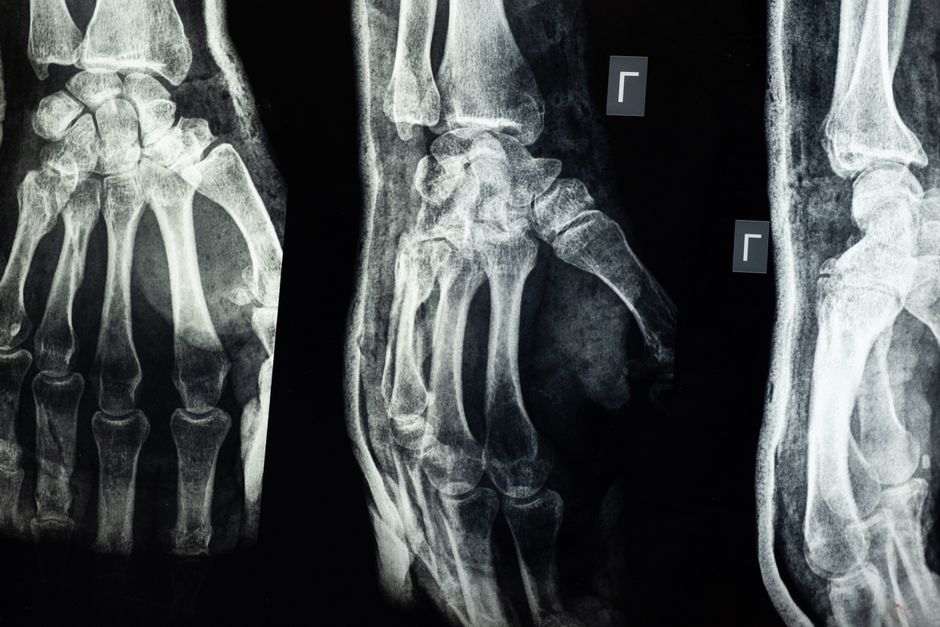
A buckle fracture doesn’t break all the way through the bone. It crumples one side of the bone’s outer shell, like a soda can dented on one edge. On an X-ray, you see a small bulge or wrinkle in the bone’s surface, not a clean break line. The skin over it is usually normal — perhaps mild swelling or tenderness, but often nothing dramatic to see.
That mismatch — a visible bone injury with a calm-looking arm or leg — is exactly why buckle fractures get missed by parents and sometimes by clinicians. The bone is bent out of shape on the inside while the skin on the outside gives little away.
What Does A Buckle Fracture Look Like X Ray Skin?
On the X-ray, a buckle fracture looks like a subtle outward bulge at the edge of the bone. The bone’s cortex — the hard outer layer — wrinkles or kinks rather than snapping. Radiologists call this a “torque” or “buckle” deformity. There’s no gap between bone fragments because the bone hasn’t separated.
On the skin, there’s usually little to see. Maybe slight puffiness. Maybe a spot that’s tender to touch. In many cases the skin looks completely normal.
That’s the key thing to understand. Buckle fractures are sometimes called “incomplete fractures” or “torus fractures” for exactly this reason. The bone is injured but not divided. Because the bone stays in one piece, the injury doesn’t produce the dramatic swelling, deformity, or bruising that a full fracture often does.
This also explains why buckle fractures are so common in young children. Their bones are more flexible and have a thicker outer layer relative to their size. When a child falls on an outstretched hand, the bone compresses on one side instead of snapping. The result is a small buckle rather than a break.
Why Are Buckle Fractures So Common in Children?
Children’s bones are built differently from adult bones. They’re more porous and more pliable. The periosteum — the tough membrane that wraps around bone — is thicker and more active in children. This combination means a child’s bone can absorb a lot of force before it actually breaks.
When the force is more than the bone can absorb but not enough to snap it, the bone buckles. This typically happens in the forearm, near the wrist, after a fall onto an outstretched hand. It’s one of the most common childhood injuries seen in emergency departments.
Adults can get buckle fractures too, but far less often. Adult bones are denser and less flexible. When an adult bone fails, it tends to fracture completely rather than buckle. So if you’re an adult and a clinician mentions a buckle fracture, it’s worth asking for clarification.
What Are the Signs of a Buckle Fracture Without an X-Ray?
Without imaging, buckle fractures are hard to identify with confidence. The signs overlap with many other injuries — sprains, bruises, and more serious fractures. Here’s what’s typically reported:
- Pain near the wrist or forearm after a fall
- Tenderness when pressing on a specific spot
- Mild swelling, or none at all
- Reluctance to use the arm, especially in young children
- Normal-looking skin in many cases
Notice what’s missing from that list: visible deformity, severe bruising, and dramatic swelling. Those are more typical of complete fractures. A child with a buckle fracture might cry after the fall, then seem mostly fine — until someone touches the sore spot or asks them to use the hand.
That quiet presentation is a real problem. A child who seems fine can still have a fractured bone. If a child fell and won’t use their arm normally, imaging is the only reliable way to know. No physical exam finding can rule a buckle fracture in or out with certainty.





How Is a Buckle Fracture Diagnosed on X-Ray?
Diagnosis relies on X-ray. The radiograph typically shows a subtle bulge at the bone’s edge — sometimes described as a step-off or a wrinkle in the cortex. Because the finding can be small, buckle fractures are sometimes missed on first read, especially by less experienced eyes.
Clinicians usually take at least two views — often a front-to-back view and a side view — because a buckle visible on one angle may be invisible on another. Some buckle fractures are so subtle that they’re only confirmed when a follow-up X-ray taken days later shows new bone formation at the injury site.
This is worth knowing: a normal-looking initial X-ray doesn’t always mean there’s no fracture. If a child has clear tenderness and a mechanism of injury that fits, some clinicians treat it as a fracture even when the X-ray looks unremarkable. That’s a judgment call, not a rule.
Does a Buckle Fracture Always Show Up on the Skin?
No. Most buckle fractures don’t produce obvious skin changes. The skin over the injury may look entirely normal. If there’s any change, it’s usually mild swelling or a small area of tenderness rather than bruising or deformity.
This is where buckle fractures differ from other bone injuries. A complete fracture often causes rapid swelling, bruising, and sometimes a visible bend in the limb. A buckle fracture doesn’t, because the bone hasn’t separated and the surrounding tissue hasn’t been disrupted the same way.
Parents sometimes assume that a bone injury must look dramatic to be real. That assumption is wrong, and it’s a common reason buckle fractures go unrecognized at home. A child with a normal-looking arm after a fall can still have a fractured bone.
How Are Buckle Fractures Treated?
Most buckle fractures heal well with simple support — typically a removable splint or a short period in a cast, depending on the clinician’s judgment and the child’s age and activity level. Because the bone is stable and not displaced, surgery is rarely needed.
Treatment approaches vary. Some clinicians use a removable splint that allows the child to take it off for bathing. Others prefer a short arm cast. Some research suggests removable splints may be as effective as casts for certain buckle fractures and are often preferred by families. But practice varies, and the right choice depends on the specific injury.
Healing timelines also vary. Buckle fractures generally heal faster than complete fractures because the bone isn’t displaced and the injury is less severe. Most children recover within a few weeks, but the exact timeline depends on the child’s age, the bone involved, and how the injury is managed.
Follow-up imaging isn’t always necessary. Some clinicians recommend a repeat X-ray to confirm healing; others don’t. This is an area where practice differs, and there’s no single standard that applies to every case.
When Should You Get Medical Care After a Fall?
Get medical care if a child won’t use their arm or leg normally after a fall, if there’s tenderness over a bone, or if pain persists beyond what seems reasonable for a simple bump. Don’t wait for visible swelling or bruising — those signs may never appear with a buckle fracture.
Seek urgent care if there’s obvious deformity, severe pain, numbness or tingling in the fingers or toes, or if the limb looks pale or feels cold. Those signs suggest a more serious injury or a problem with blood flow or nerve function.
For young children especially, “won’t use the arm” is a meaningful sign. A toddler who stops using one hand after a fall should be evaluated. Young children can’t always explain what hurts, and their injuries can be easy to underestimate.
What Else Can Look Like a Buckle Fracture?
Several injuries can mimic a buckle fracture — both on X-ray and in how they present. A sprain, a bone bruise, or a greenstick fracture (where the bone bends and cracks on one side but doesn’t break all the way through) can look similar. A growth plate injury can also cause pain and tenderness near the wrist in a child.
Distinguishing between these requires imaging and clinical judgment. A buckle fracture and a greenstick fracture are both incomplete fractures, but they look different on X-ray and may be managed differently. A sprain involves ligaments, not bone, and won’t show a buckle on X-ray — but it can cause similar pain and swelling.
This is why self-diagnosis is unreliable. The skin often gives no clue, and the symptoms overlap. Imaging is the only way to know for certain what’s going on inside the bone.
Frequently Asked Questions
Can you see a buckle fracture without an X-ray?
No, a buckle fracture can’t be confirmed without imaging. The skin usually looks normal, and the symptoms overlap with sprains and other injuries.
Does a buckle fracture cause bruising?
Usually not, or only mild bruising if any. Because the bone doesn’t separate, the surrounding tissue isn’t disrupted the way it is with a complete fracture.
How long does a buckle fracture take to heal?
Most buckle fractures heal within a few weeks, often faster than complete fractures. The exact timeline depends on the child’s age, the bone involved, and how the injury is managed.
Is a buckle fracture serious?
It’s generally considered a stable, low-risk fracture that heals well with simple support. That said, it still needs proper evaluation and follow-up with a clinician.
