
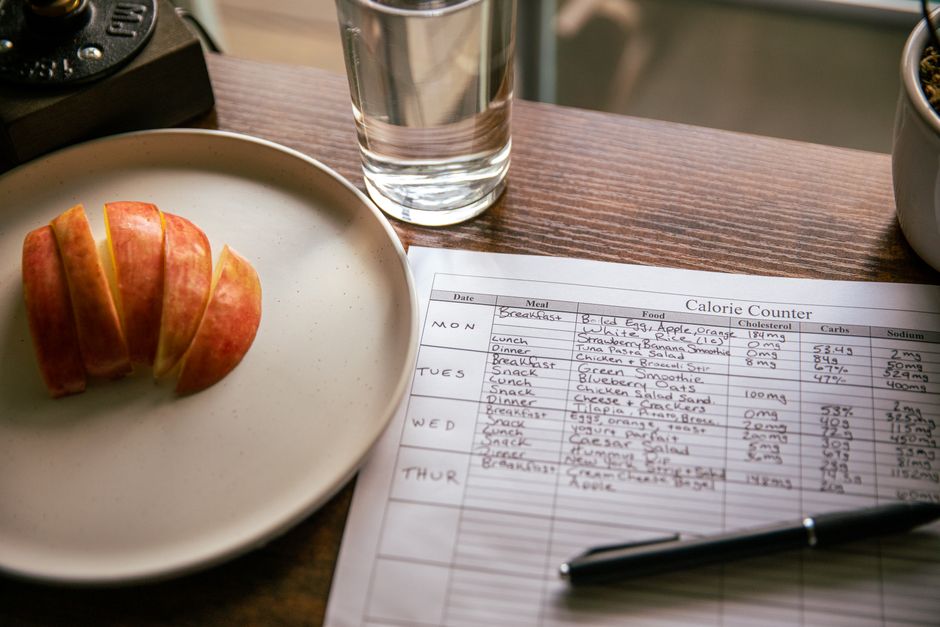
Two thousand calories is the amount of food energy a typical adult might eat in a day — but the number of meals it takes to get there depends entirely on what’s on the plate. Two thousand calories can be a plate of pasta, a burger and fries with a soda, or a full day of vegetables, lean protein, and whole grains. The calorie count stays the same. The volume of food, the nutrients, and how full you feel can look completely different.
That gap is the most useful thing to understand about 2,000 calories. It is not a target everyone should hit. It is a reference point used on food labels, and it is only roughly right for some people.
Where Does the 2,000-Calorie Number Come From?
The 2,000-calorie figure is a labeling convention, not a personal prescription. It comes from U.S. food label rules, which use 2,000 calories as a general reference for calculating “percent Daily Value” on the Nutrition Facts panel.
The actual number of calories a person needs varies widely. It depends on body size, age, sex, and how physically active they are. The Dietary Guidelines for Americans, which are updated every five years, estimate daily calorie needs across a broad range — roughly 1,600 to 2,400 calories for many adult women and 2,000 to 3,000 for many adult men, depending on activity level. Those are population estimates, not individual targets.
So 2,000 is a useful yardstick. It is a poor rule for any one person. A small, sedentary older adult and a large, very active younger adult can have very different needs, and neither may land on exactly 2,000.
What Does 2000 Calories Look Like on a Plate?
Two thousand calories can be spread across three meals and a snack, or squeezed into a single fast-food combo. The same number of calories can look like a large volume of food or a small one.
Here is a rough comparison. These are approximate figures based on standard food composition data, and portion sizes and preparation change the numbers.
| Food | Approximate calories |
|---|---|
| 1 cup cooked white rice | About 200 |
| 1 medium banana | About 105 |
| 1 tablespoon olive oil | About 120 |
| 1 large cheeseburger | About 500–600 |
| 1 medium order french fries | About 350 |
| 1 can regular soda (12 oz) | About 140 |
| 4 oz cooked chicken breast | About 190 |
| 1 cup cooked broccoli | About 55 |
Notice the pattern. A burger, fries, and a soda can add up to well over 1,000 calories in one meal, and that meal is not especially large on the plate. Meanwhile, it takes a lot of broccoli to reach even a few hundred calories. This is what people mean when they talk about calorie density.
Why Can the Same Calories Look So Different?
Calorie density is the amount of energy in a given weight of food. Foods high in water and fiber carry fewer calories per bite. Foods high in fat and added sugar carry more.
Fat has about 9 calories per gram. Carbohydrate and protein each have about 4 calories per gram. Water and fiber add weight and volume without adding many calories. That is why a large salad and a small pastry can contain similar energy but feel nothing alike.
This matters for how full you feel. Foods with high water and fiber content tend to take up more room and are often more filling per calorie. Some studies suggest that people tend to eat a similar weight of food regardless of its calorie content, which is one reason high-volume, lower-calorie foods can help with appetite. The evidence here is reasonable but not universal — individual appetite varies a lot.
One clarification worth making: calorie density does not make a food “good” or “bad.” Olive oil is calorie-dense and also a source of healthy unsaturated fat. The point is not to avoid dense foods but to see how quickly they add up.
What Does a Full Day of 2,000 Calories Actually Include?
A balanced 2,000-calorie day is not a precise formula, but it has a recognizable shape. It includes several servings of vegetables and fruit, whole grains, a source of protein at each meal, and some healthy fat — with room for variety.
Here is one rough example of how the calories might spread across a day:
- Breakfast: Oatmeal with milk, a banana, and a spoon of peanut butter — roughly 450 calories
- Lunch: A turkey sandwich on whole wheat with lettuce and tomato, plus an apple — roughly 500 calories
- Snack: A handful of almonds and a piece of fruit — roughly 250 calories
- Dinner: Baked chicken, a baked potato, green beans, and a small salad with olive oil — roughly 700 calories
That lands near 1,900 calories, leaving a little room. The exact totals depend on portions and brands. What this shows is that a full day of food can be a generous amount when it is built around vegetables, fruit, whole grains, and lean protein.
Now compare that to a day built on fast food and sugary drinks. It is easy to pass 2,000 calories before dinner without feeling especially full. The calories are real either way. The nutrients and the sense of fullness are not the same.
Is 2,000 Calories Right for You?
Probably not exactly, and that is normal. Calorie needs are individual, and the 2,000 figure is a label reference point, not a personal goal.
Several things shift your actual need:
- Body size: Larger bodies generally need more energy at rest.
- Activity level: Movement adds to daily calorie needs, sometimes substantially.
- Age: Needs tend to decline somewhat with age as muscle mass and activity change.
- Sex: Men and women often differ in average needs, though individual variation is large.
If you want a personal estimate, a doctor or registered dietitian can help. They can account for your health history, which a single number on a food label cannot. No clinical guidelines set one calorie target for all adults, because no single target fits everyone.
Does a 2,000-Calorie Diet Mean Cutting Calories?
Not necessarily. For some people 2,000 calories is a maintenance level. For others it is a reduction, and for still others it is more than they need.
The word “diet” gets used loosely. A 2,000-calorie eating pattern is simply a way of describing a day’s food. Whether it leads to weight loss, weight gain, or no change depends on how it compares to that person’s own energy needs — not on the number itself.
This is where a lot of confusion starts. People see “2,000-calorie diet” and assume it is a weight-loss plan. It is not. It is a reference pattern that some meal plans and food labels use for consistency.
How Can You Use the 2,000-Calorie Reference Wisely?
The 2,000-calorie figure is most useful as a comparison tool, not a daily target. It helps you read labels and see how a food fits into a day.
When you look at a Nutrition Facts panel, the “percent Daily Value” is based on 2,000 calories. If a snack has 20 percent of the Daily Value for a nutrient, that is 20 percent of the amount a 2,000-calorie diet would provide. If you eat more or fewer calories than that, the percentages are approximate for you.
The practical takeaway is simpler than the math. Build meals around foods that carry more volume and nutrients per calorie. Watch how quickly calorie-dense foods add up. And treat 2,000 as a label convention, not a personal rule.
What 2,000 calories looks like depends on what you choose. The number is fixed. The food is not.
Frequently Asked Questions
Is 2,000 calories a day a lot?
It depends on the person. For many adults it is close to a maintenance level, but needs range widely based on body size, age, sex, and activity.
How many meals is 2,000 calories?
It can be three meals and a snack, or fewer larger meals, or a single fast-food combo. The number of meals matters less than what those meals contain.
Why do food labels use 2,000 calories?
It is a general reference figure set by U.S. labeling rules so that percent Daily Values can be calculated consistently. It is not a personal recommendation.
Can I lose weight on 2,000 calories a day?
Only if 2,000 calories is below your individual energy needs. Weight change depends on the balance between calories eaten and calories used, which varies from person to person.
