
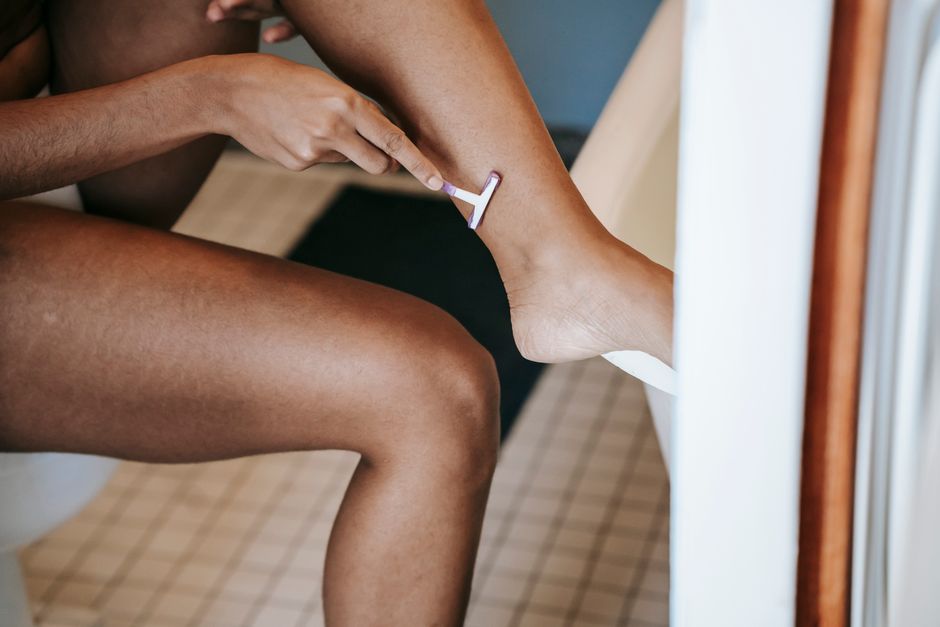
An ingrown hair happens when a hair curls back into the skin or grows sideways instead of pushing up through the surface. The result is a small, raised bump that can look like a pimple and may itch or hurt. Most ingrown hairs clear up on their own within a few days to a week, and simple steps like stopping shaving the area, applying a warm compress, and leaving the bump alone are usually enough. When a bump becomes infected, keeps coming back, or spreads, it is worth seeing a doctor.
What you should not do is squeeze, pick, or dig at it. That is the single most common mistake, and it is the one most likely to turn a minor annoyance into an infection or a scar.
Why Does an Ingrown Hair Happen?
Hair grows out of a follicle, a small pocket in the skin. Normally the hair shaft rises through the opening and out. An ingrown hair occurs when the sharpened tip of a cut or plucked hair grows back into the skin, or when dead skin cells block the follicle opening and force the hair to grow sideways.
The hair then triggers a mild inflammatory response. The body treats it a little like a foreign object, which is why the bump turns red and tender. Sometimes the bump fills with pus, which is not automatically a sign of a serious infection. It can simply be the body’s response to the trapped hair.
Curly and coarse hair is more likely to curve back into the skin. That is why ingrown hairs are common in the beard area, on the back of the neck, in the pubic region, on the legs, and in the armpits. Shaving, waxing, tweezing, and tight clothing all raise the odds.
One clarification worth knowing: an ingrown hair and a pimple are not the same thing, even though they look alike. A pimple is a blocked or inflamed oil gland. An ingrown hair has an actual hair shaft trapped under the skin. This matters because squeezing a pimple and squeezing an ingrown hair carry different risks, and the ingrown hair is more likely to need the hair released before it resolves.
What Do You Do With An Ingrown Hair?
Start by leaving it alone and stopping the hair removal that caused it. Give the area a break from shaving, waxing, or plucking for several days. This alone resolves many ingrown hairs as the hair grows out on its own.
A warm compress can help. Hold a clean, warm, damp cloth against the bump for a few minutes a few times a day. The warmth softens the skin and can encourage the hair to work its way to the surface. Do not use water hot enough to burn.
If the hair becomes visible at the surface, you can gently free it. Wash your hands and the area first. Use clean tweezers to lift the hair tip without digging into the skin. Do not pull the hair out if it is still under the surface, and never probe with a needle or pin. That is how people cause infections and scars.
Resist squeezing. A trapped hair does not pop out the way a pimple’s contents do. Squeezing pushes bacteria deeper, breaks the skin, and increases the chance of scarring and infection.
Over-the-counter options are limited in what they can do. Some clinicians suggest a mild exfoliant or a product containing salicylic acid or glycolic acid to help clear dead skin, but these do not remove an already trapped hair. The evidence that they prevent ingrown hairs is not strong. Treat them as a possible aid, not a fix.
When Should You See a Doctor About an Ingrown Hair?
Most ingrown hairs do not need medical care. Some do. See a doctor or a dermatologist if the bump gets larger, becomes increasingly painful, or shows signs of infection such as spreading redness, warmth, swelling, or pus that keeps coming back.
Get medical attention promptly if you develop a fever, red streaks spreading from the area, or increasing pain out of proportion to the bump. These can signal a deeper skin infection that needs treatment.
Also see a doctor if ingrown hairs keep returning in the same spot, if you develop dark raised scars (called keloids) or hardened bumps, or if the condition covers a large area. A dermatologist can release a stubborn trapped hair or treat scarring.
One important exception involves the pubic and genital area. If you have painful, deep, recurring lumps or boils in the groin, armpits, or under the breasts, that pattern can be a sign of a condition called hidradenitis suppurativa, which is not simply ingrown hairs and needs a proper diagnosis. Do not assume recurrent boils are just shaving bumps.
How Do You Prevent Ingrown Hairs?
Prevention comes down to how you remove hair and how you treat your skin afterward. The goal is to let hair grow out cleanly and to keep the follicle opening clear.
- Shave in the direction the hair grows, not against it.
- Use a sharp razor and replace it regularly. A dull blade tugs and cuts hair at an angle that encourages it to curl back.
- Wet the skin and use shaving cream or gel. Never shave dry skin.
- Rinse the blade after each stroke and keep the area clean.
- Avoid shaving too close or stretching the skin tight while shaving.
- Wear loose clothing in areas prone to friction.
- If you are prone to ingrown hairs, consider gentler hair removal methods or simply trimming instead of shaving close.
Gentle exfoliation a few times a week can help keep dead skin from blocking follicles. Be careful not to overdo it. Scrubbing hard irritates skin and can make the problem worse.
For people who get ingrown hairs repeatedly after shaving, some clinicians recommend letting hair grow out for a period before resuming, or switching to a method like trimming that does not cut hair as short. Laser hair removal reduces hair growth and is sometimes used for recurrent cases, but it is a medical procedure with its own costs and risks, and it is not a guaranteed fix.
Does an Ingrown Hair Go Away on Its Own?
Yes, most do. A typical ingrown hair resolves within a few days to a week as the hair grows out or the inflammation settles. Many people find the bump disappears without any treatment at all.
The timeline varies. Some bumps last longer, especially if the hair is deeply curled or if you keep irritating the area by shaving over it. Recurring ingrown hairs in the same spot can take longer to settle and may leave a small dark mark that fades slowly over weeks to months.
If a bump has not improved after a week or two, or if it is getting worse rather than better, that is a reasonable point to check with a doctor. Persistent or worsening bumps are worth a professional look, partly because other skin conditions can look similar.
What Can Go Wrong If You Pick or Squeeze?
Picking and squeezing cause most of the complications people associate with ingrown hairs. The skin around the follicle is thin and easily damaged.
Squeezing can push bacteria into the follicle and turn a minor bump into an infection. It can also break the skin and leave a scar. Repeatedly digging at the same spot can cause a raised or darkened scar that is harder to treat than the original ingrown hair.
There is also a condition called post-inflammatory hyperpigmentation, in which the skin darkens after inflammation or injury. Picking makes this more likely, and the dark marks can take months to fade. People with darker skin tones are more prone to this.
The bottom line is simple. Hands off the bump, warm compress if it is uncomfortable, and let the hair work its way out. That approach avoids the problems that aggressive treatment creates.
Frequently Asked Questions
How long does an ingrown hair last?
Most ingrown hairs clear up within a few days to a week as the hair grows out or the inflammation settles. Bumps that keep returning or get worse should be checked by a doctor.
Can I pop an ingrown hair like a pimple?
No, you should not squeeze or pop an ingrown hair. A trapped hair does not pop out the way a pimple does, and squeezing raises the risk of infection and scarring.
Should I pull out an ingrown hair with tweezers?
Only if the hair tip is visible at the surface, and only gently with clean tweezers. Never dig under the skin or use a needle, which can cause infection.
When should I see a doctor for an ingrown hair?
See a doctor if the bump gets larger or more painful, shows spreading redness or pus, or keeps coming back. Fever or red streaks need prompt medical attention.
