
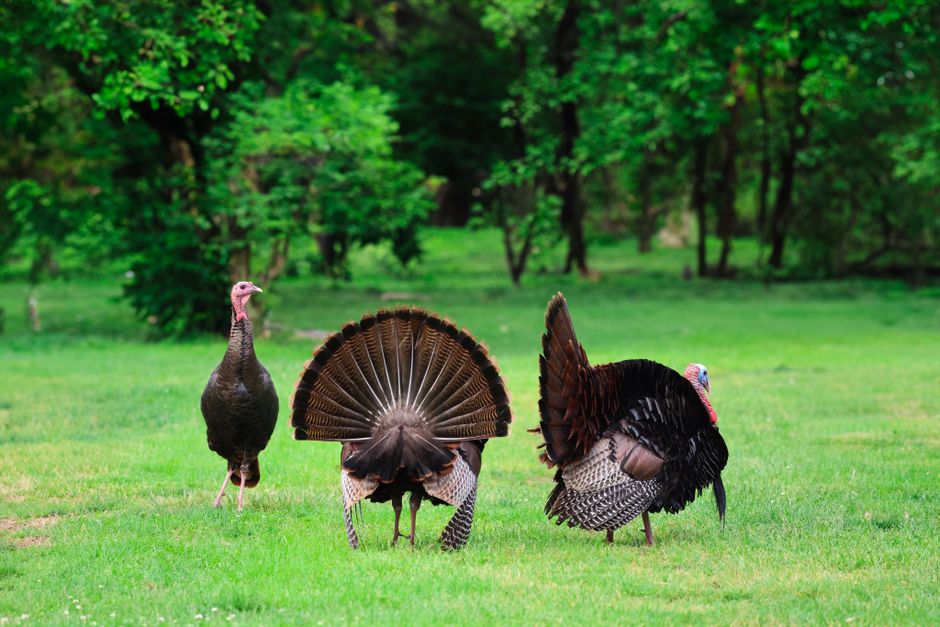
Wild turkeys are opportunistic omnivores, meaning they eat both plants and animals. Their diet changes with the seasons and what is available in their habitat. Acorns, nuts, seeds, berries, insects, and green plants make up the bulk of what they eat.
What Do Wild Turkeys Eat in the Wild?
Wild turkeys spend most of their day foraging on the ground. They scratch through leaf litter with their feet to uncover food. Their primary foods include acorns, beechnuts, and other tree nuts, which provide high energy. They also eat seeds from grasses and weeds, wild berries, grapes, and small fruits like crabapples.
Animal matter is a critical part of their diet, especially in spring and summer. Turkeys eat insects, spiders, snails, and small amphibians when they find them. This protein helps hens produce eggs and helps poults (chicks) grow rapidly. Turkeys have also been known to eat small snakes, lizards, and even mice on occasion.
Greens make up another portion of their diet. They consume tender leaves, buds, ferns, and clover. In winter, when snow covers the ground, turkeys rely heavily on acorns and buds that remain on trees.
Do Wild Turkeys Eat Different Foods by Season?
Yes, their diet shifts significantly with the seasons. In spring, turkeys eat new plant growth, insects, and leftover nuts from the previous fall. This high-protein diet supports breeding and egg production. Hens need calcium for eggshells, so they also seek out snail shells and small pebbles (grit).
Summer brings a wide variety of berries, seeds, and insects. Turkeys eat blackberries, blueberries, raspberries, and wild cherries. They also feed on grasshoppers, crickets, and beetles. The abundance of insects helps poults get enough protein to grow.
Fall is the most important feeding season. Turkeys fatten up on acorns, hickory nuts, beechnuts, and other mast crops. They also eat fallen fruits and waste grain from harvested fields. This stored fat helps them survive winter.
Winter is the leanest season. Turkeys depend on remaining acorns, buds, and evergreen needles. They sometimes eat poison ivy berries and sumac seeds. In deep snow, they may move to areas where wind has cleared the ground or where livestock feeding occurs.
What Do Wild Turkey Chicks Eat?
Young turkeys, called poults, have very different dietary needs. For the first few weeks of life, they eat almost exclusively insects. This high-protein diet is essential for their rapid growth and development. Poults will eat ants, beetles, grasshoppers, caterpillars, and spiders.
As they get older, poults gradually add plant foods to their diet. By the time they are about four weeks old, they begin to eat seeds and soft berries. Grit—small stones or sand—is also important because it helps them grind food in their gizzard. Hens lead poults to areas where insects and grit are abundant.





Can You Feed Wild Turkeys?
Wildlife experts strongly advise against feeding wild turkeys. Artificial feeding can cause problems for both turkeys and people. When turkeys gather at feeders, they spread diseases like avian pox and histomoniasis more easily. Concentrated feeding also attracts predators such as coyotes and raccoons.
Feeding turkeys can also make them lose their natural fear of humans. This can lead to aggressive behavior, especially during breeding season. In many areas, feeding wild turkeys is actually illegal because it can damage natural habitats and cause nuisance issues. The safest way to support wild turkeys is to maintain a healthy, natural habitat with native plants that provide food and cover.
Do Wild Turkeys Eat Grain and Crops?
Yes, wild turkeys frequently eat agricultural crops when they are available. Corn, wheat, barley, and oats are common targets. They also eat soybeans, sunflower seeds, and buckwheat. Turkeys will forage in harvested fields for spilled grain and leftover kernels.
In some areas, turkeys can damage crops, especially during fall when they gather in large flocks. They may pull up young corn seedlings and eat sprouting grain. However, turkeys also eat many insects that damage crops, so their overall impact can be mixed. Some farmers consider them a nuisance, while others appreciate their pest control.
Turkeys also eat the fruits and seeds of many wild plants that grow in hedgerows and forest edges. This includes sumac, dogwood berries, wild grapes, and persimmons. They are especially fond of the fruits of the hackberry tree and the berries of the Virginia creeper plant.
What Attracts Wild Turkeys to a Yard?
Wild turkeys will enter yards and gardens if they find food, water, or shelter. They are drawn to bird feeders that spill seeds, especially sunflower seeds and cracked corn. They also eat fallen fruits from ornamental trees and berry bushes. Acorns from oak trees are a major draw.
Turkeys need open areas for foraging and trees for roosting at night. A yard with a mix of open lawn, brush piles, and mature oak or hickory trees is attractive to turkeys. They also need a source of water, such as a pond or stream. If you want to observe wild turkeys, providing a native plant landscape is the most natural and safe approach.
However, once turkeys become accustomed to being fed, they may become a nuisance. They can scratch up flower beds, damage gardens, and leave droppings on patios. They may also become bold around people and pets. For these reasons, it is usually best to discourage turkeys from frequenting your yard by removing food sources and using scare tactics if necessary.
How Much Do Wild Turkeys Eat Per Day?
An adult wild turkey eats about 0.3 to 0.5 pounds (roughly 140 to 230 grams) of food per day. The exact amount depends on the season, the turkey’s size, and food availability. During fall, when they are fattening up, they may eat slightly more. In winter, they may eat less because food is harder to find and their metabolism slows.
Turkeys eat frequently throughout the day, usually in the early morning and late afternoon. They spend several hours foraging each day. Their digestive system is efficient at extracting nutrients from fibrous plant material, thanks to the grinding action of their gizzard and the help of beneficial bacteria in their ceca.
Frequently Asked Questions
Do wild turkeys eat meat?
Yes, wild turkeys eat insects, snails, amphibians, and occasionally small reptiles or mammals. Insects make up a large part of their diet in spring and summer.
Can wild turkeys eat bread?
Bread offers little nutritional value to turkeys and can cause health problems. Wildlife experts recommend avoiding feeding bread to any wild birds.
Do wild turkeys eat ticks?
Yes, wild turkeys eat ticks when they find them. However, they are not a primary method of tick control, and their overall impact on tick populations is not well documented.
What do wild turkeys eat in winter?
In winter, wild turkeys eat leftover acorns and nuts, tree buds, evergreen needles, and whatever berries remain on bushes. They also scratch through snow to find seeds and waste grain.
