
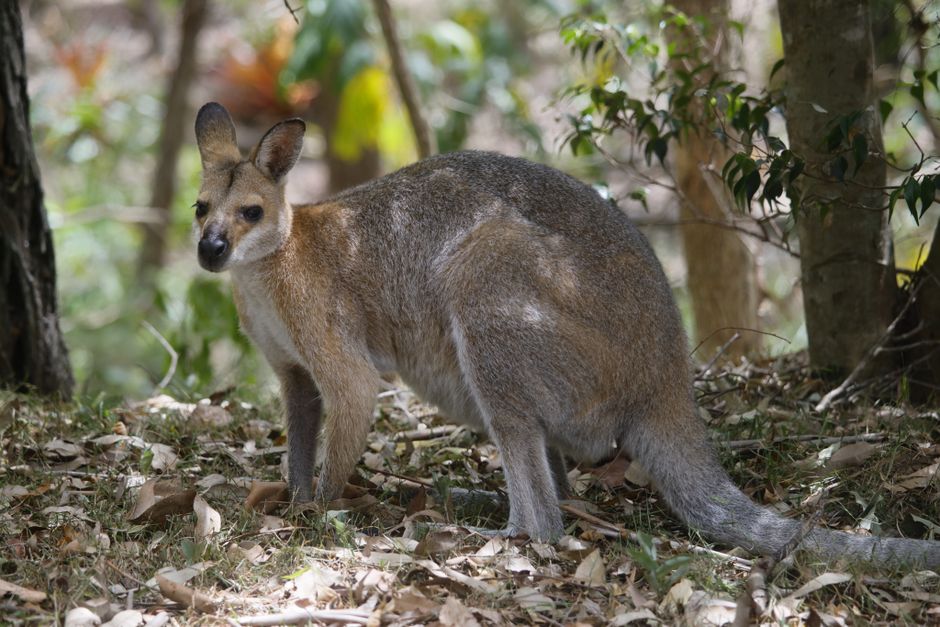
Wallabies are grazing and browsing marsupials that eat mostly grasses, herbs, leaves, and shrubs. Their exact diet depends on the species and where it lives. Some wallabies graze open grassland almost like sheep. Others browse forest understory, eating leaves, bark, and shoots. A few small species eat fungi and roots. What they share is a digestive system built to break down tough plant fiber through fermentation.
What Do Wallabies Eat Their Natural Diet Explained?
Wild wallabies eat a plant-based diet of grasses, leaves, herbs, shrubs, and in some species fungi and roots. They are not predators and do not hunt. Their teeth and gut are specialized for cropping and fermenting fibrous plant material.
What a wallaby actually eats on a given day depends heavily on its habitat. A swamp wallaby in dense forest eats very different plants than a red-necked wallaby grazing a coastal pasture. Diet is shaped by what grows nearby, what is seasonally available, and what the animal’s body can extract nutrients from.
Wallabies belong to the kangaroo family, Macropodidae. Like kangaroos, they are foregut fermenters. That single fact explains most of their feeding behavior.
How Does a Wallaby’s Digestive System Shape Its Diet?
Wallabies have a large, chambered stomach where bacteria and other microbes ferment plant fiber before it reaches the intestines. This is similar in principle to how cattle and sheep digest grass, though the anatomy differs.
Fermentation lets wallabies extract energy from cellulose, the tough structural material in plant cell walls. Humans cannot digest cellulose. Wallabies can, because their gut microbes break it down for them.
This system has real limits. Fermentation is slow. It works best on fibrous plant material the animal eats in large volumes. It handles some plant compounds poorly. Many plants produce natural toxins, and wallabies have evolved to either avoid those plants or tolerate certain levels.
One practical consequence: wallabies need to eat often and eat a lot of low-quality food. They also practice something called coprophagy, eating some of their own soft feces to recover nutrients and microbes the first pass missed. This is normal and important for them.
What Plants Do Different Wallaby Species Actually Eat?
Wallaby species split broadly into grazers, browsers, and mixed feeders. The split is not absolute. Most wallabies eat some combination of the three categories, weighted toward one.
- Grazers eat mostly grasses and low herbs. The red-necked wallaby and swamp wallaby lean this way in open habitat.
- Browsers eat more leaves, shrubs, and woody plant material. Forest-dwelling species browse more heavily.
- Mixed feeders shift between grass and browse depending on season and availability.
Smaller wallaby species, including several rock-wallabies, often eat more browse, seeds, and fungi than the large grazers. The rock-wallaby group is diverse and some species have narrower diets tied to specific plants in their range.
Fungi matter more than most people expect. Some wallabies, particularly smaller forest species, eat underground truffle-like fungi. These fungi form partnerships with tree roots, and the wallabies may help spread fungal spores through their droppings. The relationship is not fully understood for every species, but it is well documented in some.




Do Wallabies Eat the Same Food All Year?
No. Wallaby diet changes with the seasons because plant availability changes. In dry periods, grasses dry out and lose nutritional value. Wallabies then shift toward browse, roots, and whatever green material remains.
This flexibility is part of why wallabies survive in varied environments, from wet forests to dry woodlands. It also explains why wallaby feeding patterns can look inconsistent to observers. The animal is not being picky for no reason. It is following the nutrients.
Seasonal shifts matter for another reason. When natural food becomes scarce, wallabies may move into gardens, farmland, and golf courses to find green plants. This is a food shortage problem, not a preference for lawns.
What Do Wallabies Eat That Might Surprise You?
Wallabies eat some things that do not fit the “grass and leaves” picture.
- Bark and stems from shrubs and young trees, especially when other food is scarce.
- Seeds, which provide concentrated energy compared with leaves.
- Fungi, including underground truffle-like species, in some forest wallabies.
- Roots and tubers, dug up in some habitats.
- Their own soft feces, to recover nutrients and microbes.
One clarification worth making: wallabies do not eat meat. There is no evidence they hunt or scavenge animal tissue as part of their normal diet. Claims that wallabies eat small animals are not supported.
Another point that gets confused: wallabies and kangaroos overlap in diet but are not identical. Wallabies tend to be smaller and browse more. Kangaroos, especially the large species, graze more heavily. The two groups compete for food where their ranges overlap.
How Is a Wallaby’s Diet Different From a Kangaroo’s?
Wallabies generally eat more browse, meaning leaves and shrubs, while large kangaroos eat more grass. This is a tendency, not a strict rule, and it varies by species and habitat.
The difference comes partly from body size and partly from habitat. Smaller animals lose heat faster relative to their size and often live in denser vegetation where browse is more available than open grass. Large kangaroos do better in open country where grass dominates.
Both groups are foregut fermenters and both rely on microbes to break down fiber. The digestive strategy is shared. The menu differs.
What Should You Know About Feeding Wallabies?
Wild wallabies should not be fed by people. This is the clear position from wildlife authorities in Australia, where wallabies are native.
Human food causes real problems. Bread, fruit, and processed foods do not match a wallaby’s nutritional needs. They can cause digestive upset and, over time, serious health issues. Hand-fed wallabies also lose their fear of people, which leads to road injuries and conflicts.
If you live where wallabies are common and they are eating your garden, the practical approach is to protect plants physically or choose plants they tend to avoid. Feeding them makes the problem worse, not better.
If you find an injured or orphaned wallaby, contact a licensed wildlife rescue group. Do not attempt to feed it yourself. Orphaned joeys have very specific nutritional requirements, and no general feeding guidelines exist for the public to follow safely.
Are There Foods That Are Dangerous to Wallabies?
Yes. Some foods that seem harmless are genuinely risky.
Processed human food is the main problem. Bread, crackers, and sugary foods provide energy without the fiber and nutrients a wallaby needs. Over time this can disrupt the gut microbes the animal depends on.
Some plants are toxic to wallabies, though which ones depends on the species and region. In Australia, several common garden and pasture plants are known to cause problems in macropods. If you are unsure whether a plant is safe, assume it is not and keep wallabies away from it.
The evidence on specific plant toxicity for every wallaby species is incomplete. Veterinarians who treat macropods have practical knowledge here, but the published research does not cover every species and every plant. When in doubt, do not feed.
Why Does Wallaby Diet Matter Beyond the Animal Itself?
Wallaby grazing shapes the plants around them. Where wallabies are abundant, they can reduce grass cover, browse shrubs, and affect which plants survive. This is normal ecology, but it becomes a problem when populations are artificially high because people feed them.
Wallabies also spread seeds and fungal spores through their droppings. In some forest systems, this may help plants and fungi disperse. The full picture is still being studied.
In parts of New Zealand and the United Kingdom, wallabies were introduced and are now considered pests. There, their grazing damages native vegetation and farmland. Diet is central to that problem. Understanding what they eat is part of managing them.
Frequently Asked Questions
What do wallabies eat in the wild?
Wild wallabies eat grasses, leaves, herbs, shrubs, seeds, and in some species fungi and roots. The exact mix depends on the species and what plants are available in its habitat.
Do wallabies eat meat?
No. Wallabies are plant eaters and there is no evidence they hunt or scavenge animal tissue as part of their normal diet. Claims that they eat small animals are not supported.
Can you feed wild wallabies bread or fruit?
No. Wildlife authorities in Australia advise against feeding wild wallabies, because bread, fruit, and processed foods do not meet their nutritional needs and can cause health problems. Hand-feeding also makes them lose their fear of people, which raises their risk of injury.
How is a wallaby’s diet different from a kangaroo’s?
Wallabies tend to eat more leaves and shrubs, while large kangaroos eat more grass. Both are foregut fermenters that rely on gut microbes to break down plant fiber.
