
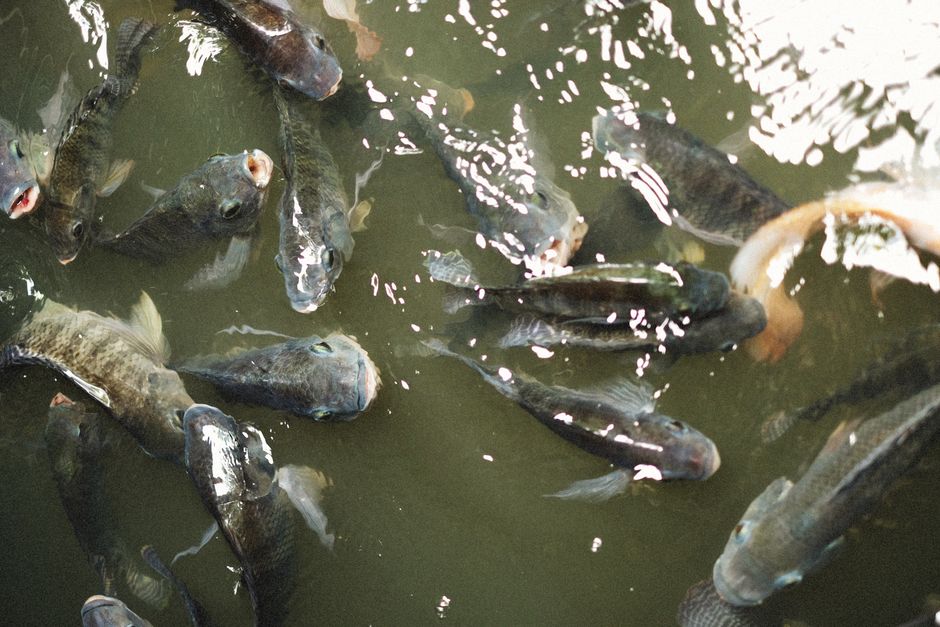
Tilapia eat mostly plants. In the wild, they graze on algae, phytoplankton, and aquatic plants, and they will also eat small insects, larvae, and zooplankton when they can catch them. Farmed tilapia eat a formulated feed made from soybean meal, corn, wheat, and fishmeal, which is why the fillet on your plate tastes mild and why the fish has a different diet from its wild relatives.
That short answer covers the basics. The full picture is more interesting, because tilapia are among the most adaptable feeders in freshwater. What they eat changes with age, species, season, and whether they grew up in a river or a farming tank.
What Do Tilapia Eat in the Wild?
Wild tilapia are opportunistic omnivores that lean heavily toward plant material. They scrape algae off rocks, filter phytoplankton from open water, and graze on soft aquatic vegetation. When the chance comes, they eat insect larvae, small crustaceans, and zooplankton.
They are not picky. That flexibility is a big reason tilapia have spread so successfully into warm rivers, lakes, and canals far outside their native range in Africa and the Middle East.
Feeding habits differ by species and by where the fish lives:
- Nile tilapia is the most farmed species worldwide. It filters plankton and grazes on algae and plant matter.
- Blue tilapia leans more toward plant material and can filter very fine food particles from the water.
- Mozambique tilapia eats algae, plants, and detritus, the mix of decaying organic material on the bottom.
Wild tilapia also eat fish waste and organic debris. That sounds unappealing, but it is normal feeding behavior for many bottom-dwelling and grazing fish. It does not mean the fish is dirty. It means the fish is efficient.
Why Are Tilapia Called Filter Feeders?
Tilapia have a built-in filtering system in their throat. Specialized structures called gill rakers trap tiny food particles, including single-celled algae and plankton, as water passes through. This lets them feed on food sources that are too small for many other fish to bother with.
This filtering ability explains a lot about tilapia behavior. In lakes with heavy algae growth, tilapia can thrive where other species struggle. In farm ponds, they can help control algae simply by eating it.
It also explains why tilapia are so easy to farm. A fish that can turn algae and plant waste into protein is a valuable fish in places where expensive feed is hard to get.
What Do Farmed Tilapia Eat?
Farmed tilapia eat a manufactured diet. Most commercial feed blends plant proteins with a smaller amount of fishmeal and fish oil. Common ingredients include soybean meal, corn gluten meal, wheat middlings, and cottonseed meal.
The exact recipe varies by region, fish age, and what local feed makers can source. Young tilapia need more protein to grow. Older fish need less. Feed is usually formulated to match those changing needs.
Farming tilapia on mostly plant-based feed is one reason the fish has a lower environmental footprint than some other farmed species. It does not need to eat other fish to grow well. That said, most commercial tilapia feed still contains some fishmeal, though the amount has dropped over the years as plant-based formulas improved.
There is a persistent claim online that farmed tilapia are fed manure or sewage. This is not standard commercial practice in the United States, and it is not how tilapia sold in US grocery stores are raised. In some small-scale farms in other parts of the world, pond fertilization with animal waste has been used to grow algae that fish then eat. That is different from feeding the fish waste directly, and it is not the norm in regulated commercial operations.
Do Tilapia Eat Their Own Young?
Yes, tilapia will eat tilapia fry and eggs if they get the chance. This is common among fish species and is one reason tilapia reproduce so prolifically.
Female tilapia have a workaround. They carry fertilized eggs and newly hatched fry in their mouths to protect them. This behavior is called mouthbrooding. The mother does not eat during this period, which is a real cost to her, but it gives her offspring a much better chance of surviving.
Once the young fish are large enough to swim away, they are on their own. Some will be eaten by larger tilapia, including their own parents. In a farm pond, this natural predation actually helps control overpopulation.
How Does Diet Affect the Tilapia You Buy?
Diet affects the nutritional profile of the fillet. Farmed tilapia fed plant-based diets tend to have a different fatty acid profile than wild fish, with lower levels of omega-3 fats and higher levels of omega-6 fats.
This difference is real, but it is often overstated in headlines. Tilapia is a lean fish with low saturated fat and a good amount of protein. It is not a rich source of omega-3s the way salmon is. If omega-3s are your goal, tilapia is not the best choice. If you want a mild, affordable, lean protein, tilapia works fine.
Feed can also influence color and flavor. Tilapia raised on certain algae or feed additives may develop a slightly different taste. Most commercial tilapia is fed a controlled diet to keep the flavor consistent and mild.
What Do Tilapia Eat Compared to Other Farmed Fish?
The table below compares the general feeding patterns of tilapia with other commonly farmed fish. This is a broad comparison, and actual diets vary by farm and region.
| Fish | Main diet | Needs fishmeal? |
|---|---|---|
| Tilapia | Mostly plant material, algae, plankton | Low, and decreasing |
| Catfish | Omnivore, eats plants, insects, small fish | Moderate |
| Salmon | Carnivore, eats other fish and crustaceans | High |
| Trout | Carnivore, eats insects and small fish | High |
The key difference is that tilapia can grow well on plants. Salmon and trout cannot. That is why tilapia farming uses far less wild-caught fish as feed than salmon farming does.
Can You Feed Tilapia at Home?
If you keep tilapia in a backyard pond or tank, they will eat most commercial fish feeds. Many people also feed them vegetable scraps, algae wafers, and plant-based pellets.
What you should not do is assume tilapia can live on table scraps alone. They need a balanced diet to grow and stay healthy, just like any other animal. A quality commercial feed made for tilapia or omnivorous fish is the simplest way to meet their needs.
If you are raising tilapia for food, feed conversion matters. Tilapia are efficient at turning feed into body weight, but they still need enough protein and energy to grow at a reasonable rate. Underfeeding slows growth. Overfeeding wastes money and fouls the water.
Water temperature also matters. Tilapia are warm-water fish. They eat actively when water is warm and slow down or stop eating when it gets cold. Below roughly 55°F, they become sluggish and may stop feeding altogether. This is a general temperature sensitivity that is well documented in aquaculture, though exact thresholds vary by species and acclimation.
Do Tilapia Eat Mosquito Larvae?
Yes. Tilapia eat mosquito larvae when they encounter them. This has led to interest in using tilapia as a biological control for mosquitoes in some warm regions.
The idea is appealing. A fish that eats mosquito larvae could reduce mosquito numbers and possibly mosquito-borne disease. Some studies have looked at this, and results are mixed. Tilapia do eat larvae, but whether they reduce mosquito populations enough to matter for public health depends on many local factors, including water body size, other food sources, and mosquito species.
Releasing tilapia into natural waters for mosquito control is not a simple solution. Tilapia are invasive in many places and can harm native fish and plants. In the US, moving live tilapia into public waters is regulated or prohibited in many states for exactly this reason.
What Do Baby Tilapia Eat?
Baby tilapia eat tiny plankton, algae, and fine food particles. For the first days after hatching, fry live off a yolk sac and do not feed. Once the yolk is absorbed, they start eating whatever small food they can find in the water.
In farming, hatcheries feed fry finely ground feed or live food like rotifers and brine shrimp. As the fish grow, the feed particle size increases to match their mouths.
In the wild, fry are vulnerable. They eat what they can catch and are eaten by many predators, including larger fish. Their diet shifts as they grow, moving from tiny plankton toward the algae and plant matter that adult tilapia favor.
Frequently Asked Questions
What do tilapia eat naturally?
Wild tilapia eat algae, phytoplankton, aquatic plants, insect larvae, and zooplankton. They are opportunistic omnivores that lean toward plant material.
Are tilapia bottom feeders?
Tilapia feed at many depths, including the bottom, but they are not strict bottom feeders. They graze on surfaces and filter food from open water too.
Do tilapia eat other fish?
Tilapia will eat small fish and their own fry if they can catch them, but their diet is mostly plant-based. They are not predatory fish in the way bass or pike are.
What do farmed tilapia eat?
Farmed tilapia eat a manufactured feed made mostly from soybean meal, corn, wheat, and other plant ingredients, with a smaller amount of fishmeal. The exact mix varies by farm and region.
