
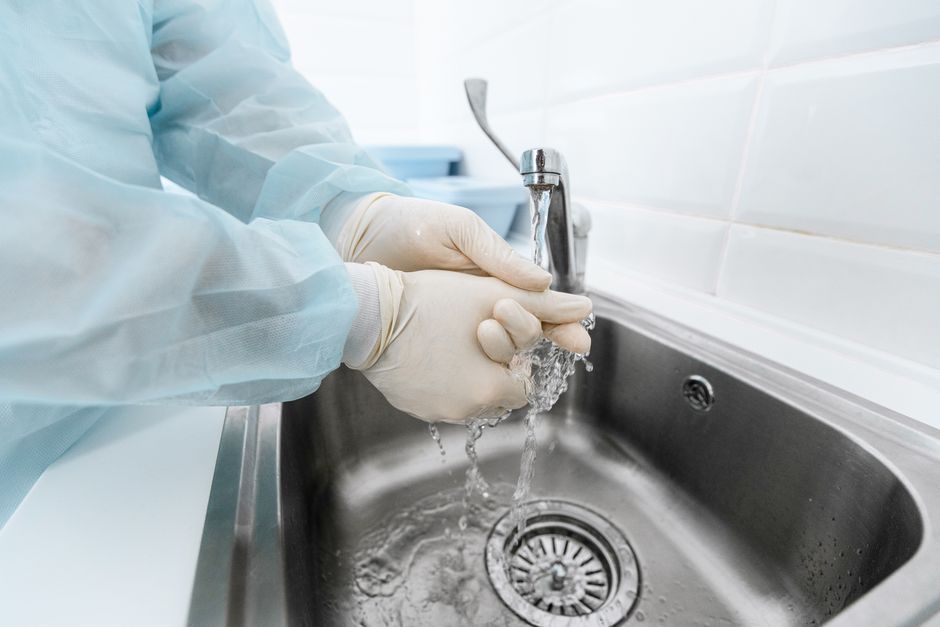
Standard precautions are the basic level of infection control that healthcare workers use with every patient, every time. They apply whether or not a person looks sick or has a known infection. The core idea is simple: treat all blood, body fluids, secretions, and non-intact skin as potentially infectious, and use barriers and hand hygiene to prevent spread.
These precautions were not designed for a specific disease. They are the baseline that applies in hospitals, clinics, dental offices, labs, and home health settings. Understanding what they include — and what they do not — helps patients know what to expect and helps workers apply them correctly.
What Do Standard Precautions Mean In Healthcare?
Standard precautions mean that every patient is treated as if their blood and body fluids could carry an infectious agent. Workers do not wait for a diagnosis to decide whether to wear gloves or wash their hands. The precautions are applied universally because many infections are contagious before symptoms appear, and some carriers never show symptoms at all.
The concept grew from a shift in the 1980s, when the arrival of HIV and hepatitis B made it clear that relying on a patient’s diagnosis to trigger precautions was unreliable. Earlier guidance focused on isolating patients known to have certain infections. Standard precautions replaced that with a single baseline applied to everyone.
This is the key clarification many people miss: standard precautions are not about identifying who is dangerous. They are about removing the need to make that judgment at all. A worker who assumes a patient is low-risk is exactly the worker most likely to skip a barrier and get exposed.
What Do Standard Precautions Actually Include?
Standard precautions combine several practices. The main ones are hand hygiene, the use of personal protective equipment, safe handling of sharps and waste, and cleaning of surfaces and equipment. Each part addresses a different way infections move from one person to another.
Hand hygiene is the single most important measure. Healthcare workers clean their hands before touching a patient, before a clean procedure, after exposure to body fluids, after touching a patient, and after touching surfaces near the patient. Alcohol-based hand rub is used when hands are not visibly soiled. Soap and water are used when hands are visibly dirty or after certain exposures where alcohol does not reliably kill the organism.
Personal protective equipment includes gloves, gowns, masks, eye protection, and face shields. Gloves are worn when touching blood, body fluids, mucous membranes, or broken skin. A gown protects clothing and skin during procedures that may splash. Masks and eye protection are used when splashes or sprays of body fluids are likely.
Sharps safety covers needles, scalpels, and other instruments that can break the skin. Workers do not recap needles by hand, and used sharps go directly into puncture-resistant containers. This reduces needlestick injuries, which carry real risk of transmitting bloodborne viruses.
Environmental control means cleaning and disinfecting surfaces and equipment between patients, and handling laundry and waste according to set procedures. Contaminated items are kept away from the face and clothing during handling.
How Are Standard Precautions Different From Transmission-Based Precautions?
Standard precautions apply to everyone. Transmission-based precautions are added on top when a patient has a known or suspected infection that spreads in ways standard precautions do not fully block. There are three categories: contact, droplet, and airborne.
Contact precautions are used for infections spread by direct or indirect touch, such as some antibiotic-resistant bacteria and certain gastrointestinal infections. They typically add gowns and gloves for all contact and may involve a dedicated room.
Droplet precautions are used for infections spread by larger respiratory droplets, such as influenza. They add a mask when working close to the patient and often eye protection.
Airborne precautions are used for infections that spread through tiny particles that stay suspended in the air, such as tuberculosis and measles. They require special respiratory protection and rooms with controlled airflow.
The difference matters. Standard precautions are the floor everyone stands on. Transmission-based precautions are extra layers added for specific threats. When those extra layers are removed, standard precautions continue.
Who Do Standard Precautions Protect?
They protect two groups at once. First, they protect healthcare workers from exposure to bloodborne viruses and other infections through needlesticks, splashes, and contact with broken skin. Second, they protect patients from organisms carried on a worker’s hands, clothing, or equipment.
The patient-protection side is easy to overlook. Healthcare workers move between many patients, and hands and equipment are the most common way organisms travel from one person to another in a care setting. Consistent hand hygiene and equipment cleaning interrupt that path.
Standard precautions also protect visitors and anyone else in the care environment. Because the practices are applied to all patients rather than only those with a known infection, they do not require anyone to disclose a diagnosis to receive safer care.
Do Standard Precautions Apply Outside Hospitals?
Yes. The same principles apply in outpatient clinics, dental practices, laboratories, dialysis centers, long-term care facilities, schools with health services, and home care. The specific equipment changes, but the logic does not.
In a dental office, standard precautions guide the use of gloves, masks, and eye protection, plus sterilization of instruments between patients. In a home care visit, they guide hand hygiene and the safe handling of any sharps used for the patient. In a laboratory, they guide the handling of specimens and the use of barriers when splashes are possible.
Wherever there is contact with blood or body fluids, the baseline precautions are relevant. A patient receiving care in a small clinic should be able to expect the same basic protections as in a large hospital.
What Should Patients Notice or Ask About?
Patients do not need to police their care, but they can notice certain basics. A worker cleaning their hands before contact, wearing gloves for procedures that involve body fluids, and using clean equipment are all visible signs that standard precautions are in place.
It is reasonable to ask a question if something seems off. A simple request — asking whether hands were cleaned or whether equipment is clean — is not rude. Many care settings encourage patients to speak up, and some provide written guidance on when to do so.
One honest limitation: standard precautions reduce risk but do not eliminate it. No set of practices makes transmission impossible. Their value comes from being applied consistently, which is why adherence — not just the existence of a policy — is what actually protects people.
Why Does Consistency Matter More Than Perfect Technique?
A precaution that is skipped even occasionally leaves gaps. Infection control works like a chain of small actions rather than a single barrier. Hand hygiene before contact, clean gloves, clean equipment, and safe sharps handling each close a different opening.
Consistency is hard because the actions are repetitive and often invisible. A worker under time pressure may skip a step that seems minor. That is why healthcare settings build standard precautions into routines, supply placement, and staff training rather than relying on memory alone.
The evidence base here is strong in principle: hand hygiene and barrier use are well established as ways to reduce transmission in care settings. The challenge is practical — getting the practices performed reliably across thousands of interactions each day.
Frequently Asked Questions
Do standard precautions apply to every patient?
Yes. Standard precautions are applied to all patients regardless of diagnosis or appearance. That universality is the defining feature of the approach.
Are gloves required for all patient contact?
No. Gloves are worn when contact with blood, body fluids, mucous membranes, or broken skin is expected. Routine contact such as touching intact skin does not require gloves, but hand hygiene still applies.
What is the difference between standard and transmission-based precautions?
Standard precautions apply to everyone as a baseline. Transmission-based precautions are added for specific known or suspected infections that spread by contact, droplets, or airborne particles.
Can patients ask healthcare workers to follow standard precautions?
Yes. Patients can reasonably ask whether hands were cleaned or equipment is clean. Many care settings encourage patients to speak up about basic infection control.
