
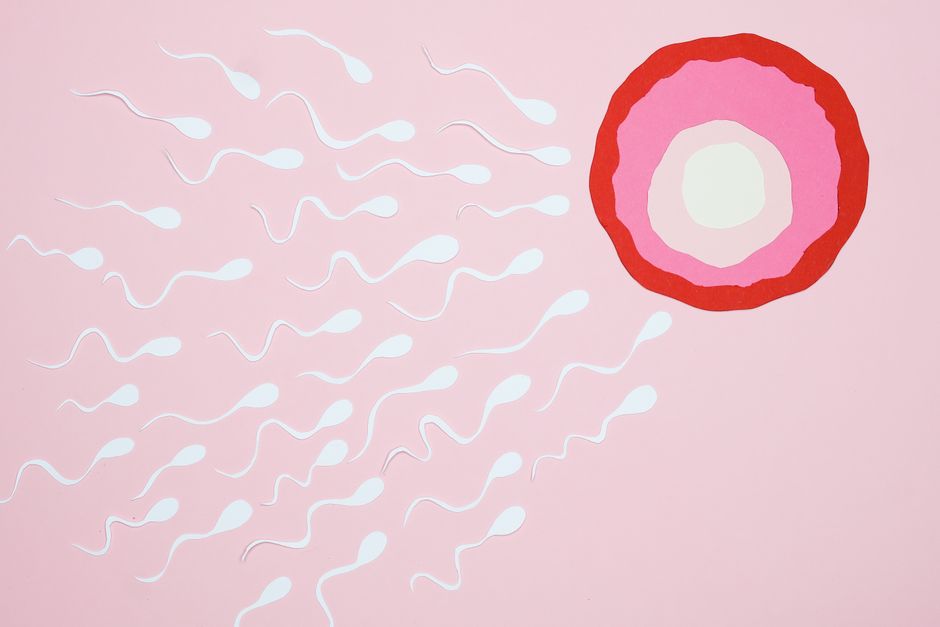
Sperm are microscopic cells, and most people have never actually seen one. Under a microscope, a healthy sperm looks like a tiny tadpole: an oval head, a short middle section, and a long, whip-like tail. The entire cell is about 50 micrometers long from head to tail tip — roughly half the width of a human hair.
That size is why sperm are invisible to the naked eye. You cannot see them in semen, on skin, or anywhere else without magnification. A standard laboratory microscope at around 400x magnification is what clinicians use to examine them. At that power, the head and tail become clearly distinct, and the way the tail moves is visible in real time.
The structure matters because each part has a specific job. Shape and movement are two of the main things a semen analysis checks, and both are linked to how well sperm can travel and potentially fertilize an egg.
What Do Sperm Look Like Size Shape Structure?
A sperm cell has three main parts: a head, a midpiece, and a tail. Each has a distinct structure and function.
The head is oval and flattened, measuring roughly 4 to 5 micrometers long and about 2.5 to 3.5 micrometers wide. It contains the nucleus, which holds the tightly packed genetic material — half the DNA needed to form an embryo. The front tip of the head is capped by a structure called the acrosome, a enzyme-filled compartment that helps the sperm penetrate the outer layers of an egg. The head is the largest part of the cell relative to its volume.
The midpiece is a short section connecting the head to the tail, usually around 7 to 8 micrometers long. It is packed with mitochondria — the cell’s energy producers. Sperm are unusual among human cells because their mitochondria are arranged in a spiral around the midpiece rather than spread through the cell. These mitochondria generate the energy the tail needs to move.
The tail, also called the flagellum, is the longest part, typically around 45 micrometers. It moves in a whip-like motion that propels the sperm forward. A single tail beat pushes the cell through fluid at a speed of roughly 1 to 4 millimeters per minute — slow by human standards, but remarkable for a cell that size.
When a laboratory assesses sperm shape, it uses strict criteria for what counts as “normal.” The head should be smooth and oval, the midpiece straight and slender, and the tail uniform in width and uncoiled. Any deviation — a double head, a short tail, a bent midpiece — is classified as a morphological abnormality. This does not mean the sperm cannot function, but it may affect its ability to reach and penetrate an egg.
How Big Is a Sperm Compared to Other Cells?
Sperm are among the smallest human cells, but they are not the smallest. That distinction belongs to red blood cells, which are about 7 to 8 micrometers in diameter. A sperm head is roughly half that width.
The egg, by contrast, is one of the largest human cells — about 100 micrometers across. That means the egg is roughly 20 times wider than the sperm head. The size difference is striking: the sperm is built for travel and delivery, while the egg is built for storage and nourishment.
Here is a rough comparison of cell sizes for context:
- Red blood cell: about 7 to 8 micrometers in diameter
- Sperm head: about 4 to 5 micrometers long
- Whole sperm (head to tail): about 50 micrometers
- Egg (oocyte): about 100 micrometers in diameter
These figures come from standard histology and reproductive biology references. Individual cells vary, and laboratory measurements are approximate, but the relative scale is consistent.
What Does Normal Sperm Shape Look Like Under a Microscope?
A normal sperm under a microscope has a smooth, oval head with a well-defined acrosome covering about 40 to 70 percent of the head tip. The midpiece is straight and no wider than the head. The tail is uniform, unbroken, and longer than the head and midpiece combined.
Laboratories use strict criteria — often called Kruger criteria or Tygerberg strict criteria — to classify sperm morphology. Under these standards, a sperm must meet precise measurements to be called normal. The head length should be 4 to 5 micrometers, the width 2.5 to 3.5 micrometers, and the length-to-width ratio about 1.5 to 1.75.
This is where a common misunderstanding arises. Many people assume that a high percentage of abnormal shapes means infertility. In reality, strict morphology thresholds are set low. The World Health Organization’s reference manual considers a normal morphology of 4 percent or higher as within the normal range for a semen sample. That means up to 96 percent of sperm in a normal sample can show some shape variation.
That number surprises people. It does not mean most sperm are defective. It means strict criteria are designed to identify the ideal shape, and biological variation is expected. The shape of individual sperm does not determine fertility on its own — count, movement, and other factors matter just as much.
How Do Sperm Move?
Sperm move by beating their tails in a rhythmic, wave-like pattern. The motion is powered by energy from the mitochondria in the midpiece. The tail bends and straightens in a coordinated cycle, pushing the cell forward through fluid.
In a fresh semen sample, movement is described in grades. Grade A sperm move rapidly in a straight line. Grade B sperm move slowly or in a curved path. Grade C sperm move in place without progressing. Grade D sperm are immobile. Laboratories assess the percentage of progressively motile sperm — those moving forward — as a key measure of semen quality.
The environment matters. Sperm are sensitive to temperature, pH, and the thickness of the fluid around them. In the laboratory, semen is usually examined within an hour of collection because movement and viability decline over time. In the female reproductive tract, sperm can remain motile for several days under favorable conditions, though the exact duration varies and is not precisely established for every individual case.
One detail that often goes unmentioned: sperm do not swim in a straight line the entire way to the egg. They navigate through cervical mucus, the uterus, and the fallopian tubes, changing direction in response to chemical signals and physical cues. The journey is not a simple race — it is a guided process, and only a small fraction of sperm ever reach the egg.
What Can Affect Sperm Shape and Size?
Sperm shape and size are influenced by genetics, age, health status, and environmental exposures. Some variation is normal and expected. Other factors are linked to changes in semen quality, though the evidence varies in strength.
Known factors that can affect sperm morphology include:
- Genetics: Inherited traits influence sperm shape and count.
- Age: Sperm quality tends to decline gradually with age, though the effect is modest and variable.
- Heat exposure: The testes sit outside the body because sperm production requires a temperature slightly below core body temperature. Prolonged heat exposure — from hot tubs, tight clothing, or occupational heat — may affect sperm production, though the evidence on morphology specifically is mixed.
- Smoking and alcohol: Both are associated with lower semen quality in observational studies, though causality is difficult to establish.
- Infections and medical conditions: Some infections, hormonal disorders, and structural problems in the reproductive tract can affect sperm shape and production.
- Medications and treatments: Certain drugs, including some chemotherapy agents and hormonal treatments, can affect sperm production. Anyone concerned about this should speak with a clinician.
The evidence on lifestyle factors is not uniform. Some studies show associations between diet, exercise, and sperm quality; others find weaker links. The honest position is that sperm quality is influenced by many factors, and no single lifestyle change has been proven to reliably improve morphology in all men.
When Should Sperm Shape Be Checked?
Sperm shape is typically assessed as part of a semen analysis, a standard fertility test. A clinician may recommend one if a couple has been trying to conceive for a year without success, or sooner if there are known risk factors such as a history of testicular surgery, cancer treatment, or reproductive tract infection.
A semen analysis measures several things: volume, sperm count, movement (motility), shape (morphology), and other parameters. No single measure tells the whole story. A low morphology score alone does not mean a man cannot father a child, and a normal score does not guarantee it. Fertility is a couple-level outcome, and both partners’ health matters.
Results should be interpreted by a clinician who can consider the full picture. Laboratory methods vary, and reference ranges are based on population data, not individual predictions. Anyone with concerns about sperm shape or fertility should seek personalized medical advice rather than relying on general figures.
Frequently Asked Questions
Can you see sperm without a microscope?
No. Sperm are about 50 micrometers long, which is far too small to see with the naked eye. A microscope at roughly 400x magnification is needed to see their shape and movement clearly.
What does a normal sperm look like?
A normal sperm has a smooth oval head, a short straight midpiece, and a long uniform tail. Under strict laboratory criteria, only a small percentage of sperm in a sample need to meet this ideal shape to be considered within the normal range.
Does abnormal sperm shape mean infertility?
Not necessarily. Strict morphology criteria classify many sperm as abnormal even in fertile men, and the WHO considers 4 percent or higher normal morphology to be within the normal range. Shape is one of several factors assessed in a semen analysis.
How fast do sperm move?
Healthy sperm move at roughly 1 to 4 millimeters per minute in fluid. Movement is graded in a semen analysis, and progressively motile sperm — those moving forward — are a key measure of semen quality.
