
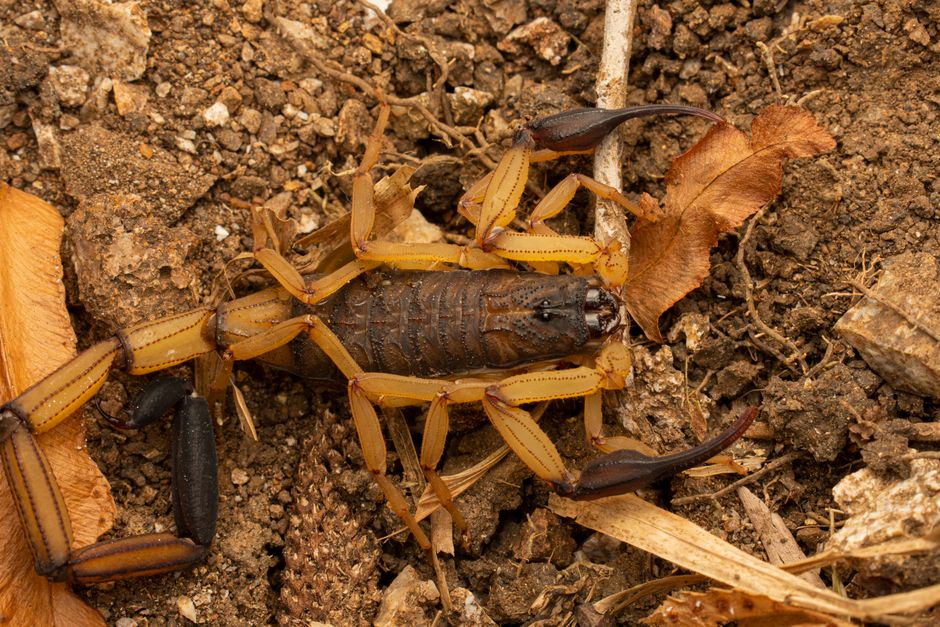
Scorpions are predators that eat insects, spiders, small lizards, and even other scorpions. They use their venom to paralyze or kill prey, then crush it with their pincers and release digestive enzymes onto the body fluids and soft tissues. They slurp up this liquefied meal, leaving behind only the hard outer shell. Inside their body, a specialized digestive system breaks down the nutrients and stores energy for weeks or months without another meal.
What Do Scorpions Eat in the Wild?
Scorpions are opportunistic hunters. Their diet depends on what is available in their environment, but they typically eat:
- Crickets, grasshoppers, and other insects
- Spiders and centipedes
- Small lizards and snakes
- Mice and other tiny mammals
- Other scorpions (cannibalism is common)
They rarely eat dead animals unless starving. Scorpions prefer live prey because the movement triggers their hunting instinct. Some species are specialists, but most will eat anything they can overpower.
How Do Scorpions Hunt and Capture Their Food?
Scorpions are nocturnal hunters. They rely on vibrations and touch sensors on their legs and pincers to detect prey in the dark. They can sense tiny movements in the sand or soil from several inches away.
When a scorpion locates prey, it grabs it with its pincers (pedipalps). The pincers are strong enough to hold struggling insects and small vertebrates. Then it arches its tail over its body and stings the prey with the venomous telson at the tip. The venom typically contains neurotoxins that quickly immobilize or kill the animal. Larger scorpions may need multiple stings on larger prey.
Once the prey stops moving, the scorpion begins to feed. It does not chew or swallow whole. Instead, it uses its chelicerae — small mouthparts near the mouth — to tear and crush the prey into a pulp while releasing digestive fluids from its gut.
How Do Scorpions Digest Their Food?
Scorpion digestion is a two‑stage process. Part of it happens outside the body, and the rest happens inside.
Extraoral Digestion
After crushing the prey with its chelicerae, the scorpion releases enzymes from its midgut into the wound. These enzymes break down proteins, fats, and other tissues into a thick liquid. The scorpion then sucks this liquid into its mouth. The leftover solid parts — mainly the exoskeleton and hard bits — are discarded. This is called extraoral digestion (digestion that starts outside the mouth).
Internal Digestion
The liquid meal moves through the esophagus into a structure called the sucking stomach, which pumps it into the midgut. The midgut is lined with cells that secrete more enzymes and absorb nutrients. A large organ called the hepatopancreas (digestive gland) attaches to the midgut. This gland produces digestive enzymes, stores nutrients, and also recycles waste.
From the midgut, nutrients pass into the hemolymph (scorpion blood) and are distributed throughout the body. Undigested waste moves into the hindgut and is expelled as a dry pellet. Scorpions conserve water very efficiently, so their waste is nearly solid.





How Long Does Digestion Take for a Scorpion?
Digestion speed depends on temperature, prey size, and the species. For a scorpion eating a cricket at room temperature, digestion from meal to waste elimination can take several days to a week. At cooler temperatures the process slows dramatically.
One consequence of slow digestion is that scorpions can survive on very few meals. After a large meal, a scorpion may not eat again for weeks or even months. Some desert species can go without food for up to a year. They store energy in the hepatopancreas and slowly use it between meals.
Do Scorpions Eat Other Scorpions?
Yes, cannibalism is common among scorpions. Males may eat smaller females after mating, and females sometimes eat males. Young scorpions also eat each other if food is scarce. Larger species regularly prey on smaller ones when they meet.
Cannibalism is not just a desperate act — it can be a regular part of some scorpion species’ diet, especially when other prey is limited.
What Do Baby Scorpions Eat?
Baby scorpions (scorplings) are born live after an internal gestation period that can last months. They climb onto their mother’s back and stay there for the first one to two weeks. During this time, they do not eat. They absorb nutrients from yolk reserves left from the egg.
After their first molt, the young scorpions leave the mother’s back and begin hunting on their own. They eat tiny insects such as springtails, fruit flies, and pinhead crickets. They are capable predators from birth — they just need appropriately sized prey. As they grow, they take larger food.
Frequently Asked Questions
What is a scorpion’s favorite food?
Crickets are a common favorite because they are easy to catch and widely available in most habitats. But scorpions are not picky; they eat whatever insects, spiders, or small animals they can overpower.
Can scorpions eat dead food?
Scorpions strongly prefer live prey, but they may scavenge on recently dead insects if they are starving. They will not eat rotting meat or carrion that is old.
How often do scorpions eat?
In the wild, scorpions may eat only once every few weeks. In captivity with regular feeding, they can eat every 1–2 weeks. After a large meal they may not eat again for over a month.
Do scorpions need water?
Scorpions get most of their water from food. They also drink from water droplets on leaves or rocks. In dry environments they can survive months without drinking water because they conserve moisture exceptionally well.
