
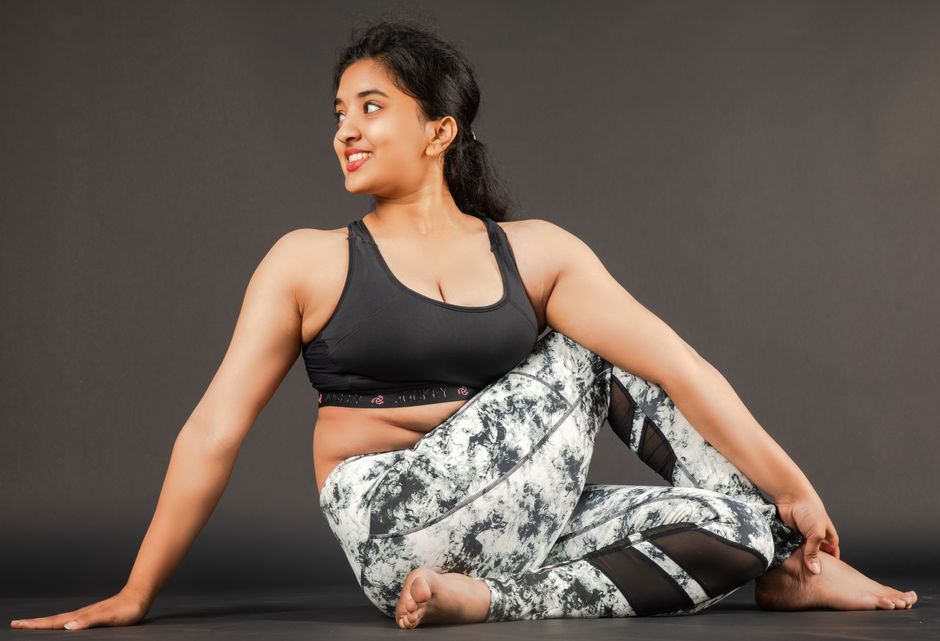
Russian twists primarily work your oblique muscles along the sides of your torso and require your entire core to stabilize your spine during rotation. They are an effective rotational exercise for building strength in the muscles that help you twist and turn, but they are not a shortcut to losing belly fat or revealing a six-pack. The exercise works best as one part of a balanced core training routine, not as a standalone solution.
What Muscles Do Russian Twists Actually Work?
Russian twists target two main muscle groups: the external and internal obliques. These muscles sit on the sides of your abdomen and are responsible for rotating your torso and bending sideways. When you twist your upper body from side to side while holding a weight or just using your body weight, the obliques contract to control the movement.
Your rectus abdominis — the “six-pack” muscle down the front of your belly — also works during Russian twists, but less than during exercises like crunches or leg raises. The deeper transverse abdominis, which wraps around your core like a corset, engages to keep your spine stable. Your hip flexors and lower back muscles also fire to maintain an upright seated position.
If you lift your feet off the floor during the exercise, your hip flexors work harder to keep your legs up, and your lower back may take on additional load. Keeping your feet on the ground reduces this demand and lowers the risk of back strain.
Are Russian Twists More Effective Than Other Core Exercises?
Russian twists are not clearly more effective than other core exercises for overall abdominal strength. Research on muscle activation — measured by electromyography (EMG) — shows that Russian twists produce moderate activity in the obliques, but exercises like side planks, woodchoppers, and bicycle crunches often produce higher activation levels in those same muscles.
The American Council on Exercise has published studies comparing common core exercises. In these studies, exercises that involve both rotation and stabilization — such as the bicycle crunch — typically beat Russian twists for rectus abdominis and oblique engagement. For pure oblique work, the side plank and variations of the cable woodchop score higher.
That does not mean Russian twists are useless. They are valuable for rotational sports like tennis, golf, or baseball, where twisting under control is a specific skill. For general core fitness, a mix of anti-rotation (like paloff press), flexion (like curl-ups), and rotation exercises is better than any single movement.
What Does the Evidence Say About Russian Twists for Core Strength?
Several small studies have measured muscle activity during Russian twists. One study published in the Journal of Strength and Conditioning Research found that Russian twists activated the obliques to about 60–70% of their maximum voluntary contraction when performed with a weight plate. That is a moderate activation — useful but not maximal.
Other studies show that adding a slow, controlled tempo increases activation. A fast, sloppy twist with momentum actually reduces muscle work because the movement relies on inertia rather than muscle contraction. The key is controlled rotation — about 2 seconds per side — and bracing your core throughout.
No high-quality evidence shows that Russian twists alone significantly improve core endurance, reduce back pain, or change body composition. They are a tool, not a complete program. If your goal is a stronger core for daily life or sports, combine Russian twists with exercises like dead bugs, bird dogs, and planks for a more comprehensive approach.





What Are the Risks and Who Should Avoid Russian Twists?
Russian twists carry two main risks: lower back strain and neck tension. The seated position with a rounded lower back can compress the spinal discs, especially when you add weight. Rotating while sitting also stresses the intervertebral discs and facet joints in the lumbar spine. People with a history of disc problems, sciatica, or chronic low back pain are often better off skipping this exercise.
Neck strain happens when you drop your head forward or pull on your neck with your hands to generate force. Always keep your head in line with your spine and your chin slightly tucked. If you feel sharp pain in your back or neck during the movement, stop immediately.
Beginners should start without any weight, feet on the floor, and focus on form. The moment you cannot keep your spine straight and your core braced throughout the entire set, you are losing the benefit and raising the risk. A common mistake is using momentum to sling the weight side to side instead of controlling the rotation with your muscles.
Pregnant women are generally advised to avoid deep twisting exercises, especially in the second and third trimesters, because the hormone relaxin increases joint laxity and the growing uterus shifts your center of gravity. If you are pregnant, consult your healthcare provider before doing Russian twists or any rotational core work.
What Are the Best Alternatives to Russian Twists?
If Russian twists do not work for your body or goals, several alternatives target the same muscles with less risk or more activation.
- Side planks — Excellent for oblique endurance and stability without spinal rotation. Hold for 20–60 seconds per side.
- Pallof press — A cable or band exercise that trains your core to resist rotation. Stand sideways to an anchor point, press the band straight out, and resist the pull. Builds deep oblique and transverse abdominis strength.
- Woodchoppers — Using a cable machine or dumbbell, chop diagonally from high to low or low to high. This mimics real-world twisting patterns more closely than Russian twists and allows better load control.
- Dead bugs — Lie on your back with arms and legs in the air. Slowly extend one arm and the opposite leg while keeping your back flat. This trains core stability without compression or rotation.
- Bicycle crunches — A floor exercise that produces higher rectus abdominis and oblique activation than Russian twists in most studies. Keep your lower back pressed into the floor.
The best routine uses a variety of movement patterns — anti-extension, anti-rotation, rotation, and lateral flexion — rather than relying on one exercise. If you enjoy Russian twists and they do not cause pain, they can be part of that mix. But they are not essential.
Frequently Asked Questions
Do Russian twists help get rid of love handles?
No. Spot reduction — losing fat from one specific area by exercising that area — is a myth. Russian twists strengthen your obliques but do not selectively burn fat around your waist. Fat loss requires a calorie deficit and comes from your entire body, not just the muscles you work.
How many Russian twists should I do per day?
There is no official recommendation. A reasonable starting point is 2–3 sets of 10–15 repetitions per side, performed slowly and with control. Increase volume gradually only if you can maintain perfect form without back pain.
Can Russian twists cause back pain?
Yes, especially if you have pre-existing lower back issues, use poor form, lift your feet off the ground, or add heavy weight. The seated rotation compresses and twists the lumbar spine, which can irritate discs and facet joints. People with back problems should substitute a safer rotational exercise like the cable woodchopper.
Are Russian twists safe for beginners?
They can be safe if performed correctly. Beginners should keep both feet on the floor, use no weight, and stop immediately if they feel any back or neck pain. It is often better to start with dead bugs and side planks before adding rotational exercises under load.
