
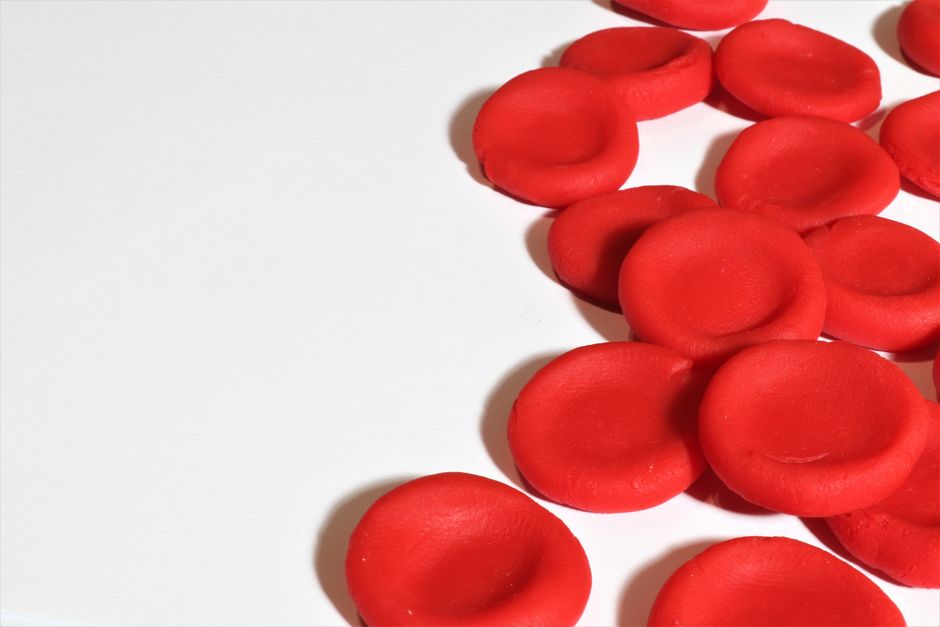
Red blood cells contain hemoglobin, the iron-containing protein that carries oxygen from your lungs to every tissue in your body. They also contain water, salts, and enzymes, but no nucleus and no mitochondria in their mature form. That stripped-down design is exactly what makes them efficient oxygen carriers.
Most people picture red blood cells as simple red discs. In reality, they are highly specialized cells that gave up almost everything a typical cell needs in order to do one job extremely well. Understanding what is inside them explains a lot about how your body moves oxygen, manages carbon dioxide, and why certain blood conditions cause the symptoms they do.
What Do Red Blood Cells Contain Hemoglobin And More?
Hemoglobin makes up the majority of the protein inside a red blood cell. Each red blood cell holds roughly 270 million hemoglobin molecules, and each of those molecules can carry four oxygen molecules. That adds up to about a billion oxygen molecules per cell.
Hemoglobin is built from four protein chains called globin. Each chain holds a heme group, and at the center of each heme sits an iron atom. Oxygen binds to that iron. This is why iron deficiency causes fatigue — without enough iron, your body cannot build enough functional hemoglobin, even if everything else is in place.
Beyond hemoglobin, a red blood cell contains:
- Water, which makes up most of the cell’s volume
- Electrolytes and salts, including potassium and chloride
- Enzymes that protect the cell from oxidative damage and help it manage energy
- Carbonic anhydrase, an enzyme involved in moving carbon dioxide
- Structural proteins that maintain the cell’s flexible membrane
What is not inside a mature red blood cell matters just as much. There is no nucleus, so it cannot divide or repair DNA. There are no mitochondria, so it does not burn oxygen the way other cells do. That last point is a detail many people miss: because red blood cells do not use the oxygen they carry, they deliver all of it to your tissues rather than consuming a share themselves.
Why Do Red Blood Cells Have No Nucleus?
Red blood cells lose their nucleus during development in the bone marrow. The process is deliberate and tightly controlled. A developing red blood cell, called an erythroblast, expels its nucleus before entering the bloodstream.
Removing the nucleus frees up space for more hemoglobin. It also gives the cell its characteristic biconcave shape — a disc that is dented on both sides. That shape increases surface area for gas exchange and lets the cell bend and fold to squeeze through capillaries narrower than the cell itself.
Without a nucleus, a red blood cell cannot make new proteins or repair itself. It also cannot divide. This is why red blood cells have a limited lifespan and why your bone marrow must constantly produce replacements. The trade-off is real: the cell gives up longevity and self-repair in exchange for maximum oxygen-carrying capacity.
How Long Do Red Blood Cells Live and What Happens When They Die?
Red blood cells circulate for about 120 days. As they age, their membranes become less flexible and they lose the ability to maintain their shape.
Old or damaged red blood cells are removed from circulation mainly by macrophages in the spleen, and to a lesser extent in the liver and bone marrow. The spleen acts as a quality filter, screening cells as they pass through and removing those that are too stiff or damaged to function well.
When a red blood cell is broken down, its components are recycled. The iron from hemoglobin is recovered and reused. The globin protein chains are broken down into amino acids. The heme group is converted into bilirubin, which is processed by the liver and eventually excreted. This is why conditions that cause rapid red blood cell destruction can lead to jaundice — the buildup of bilirubin.
Your bone marrow replaces red blood cells continuously. The hormone erythropoietin, produced mainly by the kidneys, signals the bone marrow to increase production when oxygen levels in the blood drop. This feedback loop keeps red blood cell counts relatively stable in healthy people.
What Does Hemoglobin Actually Do Besides Carry Oxygen?
Hemoglobin carries oxygen, but it also plays a central role in moving carbon dioxide and regulating blood pH. These functions are less familiar but well established in physiology.
Carbon dioxide is transported in three forms in the blood. A small amount dissolves directly in plasma. Some binds to hemoglobin itself. The largest share is converted into bicarbonate through a reaction catalyzed by carbonic anhydrase inside red blood cells. This system is a major part of how your body keeps blood pH within its narrow normal range.
Hemoglobin also changes shape as it binds and releases oxygen. When oxygen binds to one of the four heme sites, it makes it easier for the remaining sites to bind oxygen too. This cooperative binding lets hemoglobin load oxygen efficiently in the lungs and release it readily in tissues where oxygen is low.
Temperature, pH, and carbon dioxide levels all influence how tightly hemoglobin holds oxygen. In actively working muscles, where carbon dioxide is higher and pH is slightly lower, hemoglobin releases oxygen more readily. This is an elegant system that delivers oxygen where demand is highest.
What Is Normal Hemoglobin and Why Does It Matter?
Normal hemoglobin levels differ by sex and age. For adult men, a common reference range is about 13.5 to 17.5 grams per deciliter. For adult women, it is roughly 12.0 to 15.5 grams per deciliter. These ranges vary slightly between laboratories.
Hemoglobin below the reference range is the defining feature of anemia. Anemia is not a disease itself — it is a sign of an underlying problem. Causes include iron deficiency, vitamin B12 or folate deficiency, chronic kidney disease, blood loss, and inherited conditions affecting hemoglobin structure or production.
Low hemoglobin means less oxygen-carrying capacity. Symptoms can include fatigue, shortness of breath with exertion, pale skin, and dizziness. How severe symptoms are depends on how low the level is, how quickly it dropped, and the person’s overall health. A slow decline is often tolerated better than a sudden drop.
Hemoglobin above the reference range is less common. It can occur with dehydration, chronic low oxygen levels such as from lung disease or high altitude, and some blood disorders. A high hemoglobin reading is usually investigated rather than assumed harmless.
What Is the Role of Iron in Red Blood Cells?
Iron is the atom oxygen binds to inside hemoglobin. Without adequate iron, your body cannot produce enough functional hemoglobin, and red blood cells that are made may be smaller and paler than normal.
Iron deficiency is one of the most common nutritional deficiencies worldwide. It develops when iron intake falls short of needs, when absorption is poor, or when iron is lost faster than it is replaced. Blood loss is a major cause, including heavy menstrual bleeding and gastrointestinal bleeding.
Dietary iron comes in two forms. Heme iron, found in meat, poultry, and fish, is absorbed more efficiently. Non-heme iron, found in plant foods like beans, lentils, and spinach, is absorbed less efficiently but still contributes meaningfully to intake. Vitamin C eaten with plant iron sources can improve absorption.
Iron supplements are widely used to treat iron deficiency, but they should be guided by testing rather than taken routinely without a reason. Iron can be harmful in excess, and not all anemia is caused by low iron. Some clinicians recommend confirming the diagnosis with blood tests before starting supplements.
How Do Red Blood Cells Know Where to Deliver Oxygen?
Red blood cells do not navigate. They are carried passively by blood flow, and oxygen delivery is governed by local chemistry rather than any decision-making by the cell.
When tissues are active, they produce more carbon dioxide and their local pH drops slightly. Both changes reduce hemoglobin’s affinity for oxygen, causing it to release oxygen more readily in that area. Warmer tissue temperature has a similar effect. This means oxygen tends to come off hemoglobin precisely where cells are working hardest.
In the lungs, the opposite happens. Oxygen levels are high, carbon dioxide is low, and hemoglobin binds oxygen efficiently. The result is a continuous cycle: load in the lungs, release in tissues, return to the lungs.
Frequently Asked Questions
What do red blood cells contain besides hemoglobin?
They contain water, electrolytes, enzymes, structural proteins, and carbonic anhydrase. Mature red blood cells do not contain a nucleus or mitochondria.
Do red blood cells have DNA?
No. Mature red blood cells have no nucleus, so they carry no DNA. They lose the nucleus during development in the bone marrow.
What is a normal hemoglobin level?
A common reference range is about 13.5 to 17.5 grams per deciliter for adult men and 12.0 to 15.5 grams per deciliter for adult women. Ranges vary slightly by laboratory.
How long do red blood cells live?
About 120 days in circulation. Aged or damaged cells are removed mainly by the spleen and replaced by new ones from the bone marrow.
