
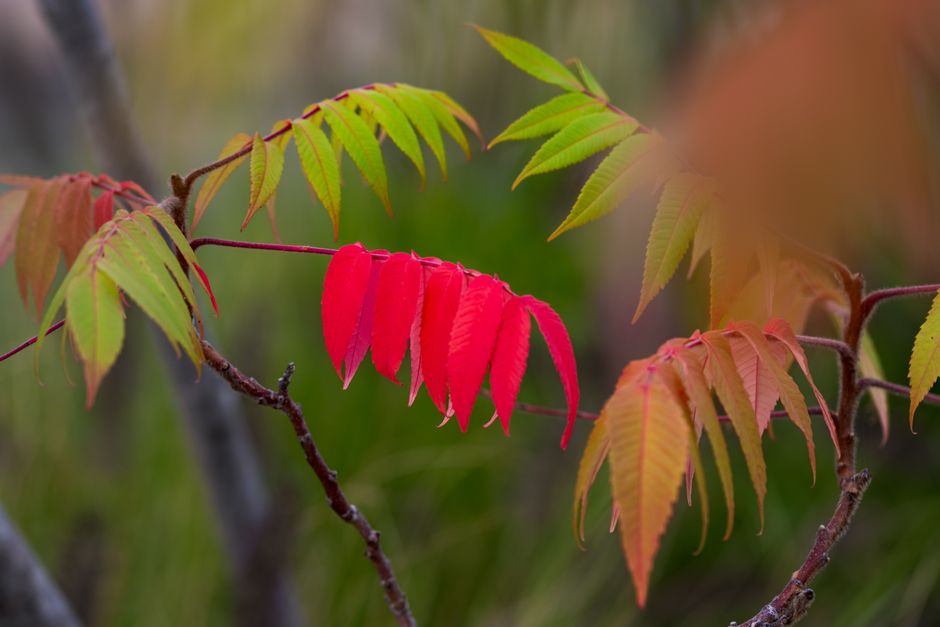
Poison sumac leaves grow in pairs along a central stem, with a single leaf at the very tip. Each leaf is smooth-edged, pointed at the end, and ranges from 2 to 4 inches long. The color changes with the seasons: bright orange or red in spring, deep green in summer, and vivid red or orange in autumn. The most reliable way to identify poison sumac is not the leaf shape alone, but the combination of paired leaflets, smooth edges, and the plant’s preferred habitat — wet, swampy ground.
What Do Poison Sumac Leaves Look Like?
Poison sumac leaves are arranged in a distinctive pattern called pinnate compound leaves. This means leaflets grow opposite each other along a central stem, like a feather. A mature plant typically has 7 to 13 leaflets per stem, always in an odd number because a single leaflet caps the end.
Each leaflet is oval or lance-shaped with a pointed tip. The edges are completely smooth — no teeth, no lobes, no serrations. This smooth edge is a key detail because many harmless look-alikes have jagged or toothed edges.
The leaf surface is glossy on top and slightly paler underneath. In summer, the leaves are a rich green. In spring and fall, they turn shades of orange, yellow, or red. The leaflets are attached to the stem by short stalks, and the entire compound leaf can reach 12 to 24 inches long on mature plants.
How Is Poison Sumac Different From Other Sumacs?
There are several non-poisonous sumac species that look similar at a glance, but clear differences exist. Staghorn sumac, smooth sumac, and winged sumac are common in North America and are not poisonous.
The most obvious difference is the fruit. Poison sumac produces small, pale gray or cream-colored berries that hang in loose clusters. Non-poisonous sumacs produce dense, upright clusters of fuzzy red berries that look like cones.
Leaf edges also differ. Non-poisonous sumacs have serrated or toothed leaf edges. Poison sumac leaves are always smooth-edged. The habitat is another clue: poison sumac grows almost exclusively in wet areas like bogs, swamps, and floodplains. Non-poisonous sumacs prefer dry, open areas like roadsides and old fields.
If you see a sumac-like plant in a swamp with smooth-edged leaves and gray berries, treat it as poison sumac.
Where Does Poison Sumac Grow?
Poison sumac is native to the eastern and southeastern United States. Its range extends from southern Ontario and Quebec down through the eastern states, west to Texas and Oklahoma. It is most common in the Southeast and along the Atlantic coastal plain.
The plant is almost always found in wetlands. Look for it in peat bogs, swamp edges, floodplains, and along slow-moving streams. It can also grow in ditches and wet, poorly drained woodlands.
If you are hiking in dry, upland terrain, you are very unlikely to encounter poison sumac. The plant cannot survive in dry soil. This habitat preference is one of the most reliable identification tools available.





What Does Poison Sumac Look Like in Each Season?
Poison sumac is a deciduous shrub or small tree, meaning it loses its leaves in winter. Its appearance changes noticeably throughout the year.
Spring: New leaves emerge with a reddish or orange tint before maturing to green. The plant also produces small, greenish-yellow flowers in loose clusters.
Summer: Leaves are full, glossy green, and the plant is at its most camouflaged state. The gray-white berries become visible by late summer.
Fall: Leaves turn brilliant shades of red, orange, and yellow. This is when the plant is most noticeable — and most tempting to touch for its beauty.
Winter: Leaves drop entirely, leaving bare gray-brown branches. The pale berries often persist into winter, which can help with identification. Without leaves, the plant looks like many other bare shrubs, so avoid handling unknown woody plants in wet areas during winter.
The bark is gray and smooth with darker spots. Young stems may have a reddish tint. These features are less distinctive than the leaves and berries, but they add to the overall picture.
Why Is It Dangerous to Touch Poison Sumac?
Poison sumac contains urushiol, the same oily resin found in poison ivy and poison oak. Urushiol is present in every part of the plant: leaves, stems, roots, and berries. It does not wash off easily and can remain active on surfaces for months or even years.
Contact with urushiol triggers an allergic reaction in most people. The reaction is a form of allergic contact dermatitis. Symptoms include intense itching, redness, swelling, and blisters. The rash typically appears 12 to 48 hours after contact, though it can take longer in some people.
About 85 percent of people are allergic to urushiol. The severity of the reaction varies widely. Some people develop only mild redness. Others develop severe, widespread blistering that requires medical treatment.
Urushiol can also become airborne if the plant is burned. Inhaling the smoke can cause severe respiratory distress. Never burn any plant you cannot positively identify.
How Do You Treat Poison Sumac Exposure?
If you know you touched poison sumac, act quickly. Rinse the area with rubbing alcohol, then wash with cold water and soap. Rubbing alcohol helps break down urushiol before it fully binds to skin. Do not use warm water — it opens pores and can spread the oil.
Wash all clothing, tools, and gear that may have touched the plant. Urushiol stays active on fabric and surfaces. Pets can carry it on their fur and transfer it to people.
If a rash develops, over-the-counter treatments can help. Calamine lotion, hydrocortisone cream, and oral antihistamines reduce itching. Cool compresses and oatmeal baths also provide relief.
Medical attention is needed if the rash is severe, covers a large area of the body, or affects the face or genitals. Difficulty breathing after inhaling smoke from burning plants is a medical emergency — call 911 immediately.
How Can You Prevent Poison Sumac Exposure?
The best prevention is identification and avoidance. Learn to recognize the plant before you go into wetland areas. When hiking, stay on established trails and avoid brushing against unknown vegetation.
Wear protective clothing if you will be in areas where poison sumac grows. Long sleeves, long pants, and closed-toe shoes reduce exposed skin. Gloves are essential if you must handle vegetation in swampy areas.
After any outdoor activity in wetland habitats, wash exposed skin with soap and cold water as soon as possible. Clean under fingernails, where urushiol can hide. Use a commercial product designed to remove urushiol if you have a known sensitivity.
Do not rely on the old saying “leaves of three, let it be.” Poison sumac does not follow that rule. It has 7 to 13 leaflets per stem. Learn the actual appearance of the plant rather than relying on simplified rhymes.
What Plants Are Often Mistaken for Poison Sumac?
Several harmless plants are commonly confused with poison sumac. The boxelder tree has compound leaves with paired leaflets, but its leaflets have toothed edges and it grows in dry areas. Ash trees also have compound leaves, but their leaflets are arranged oppositely and have serrated edges.
Black walnut trees have compound leaves with many leaflets, but the leaflets are finely toothed and the tree produces large green nuts. Elderberry shrubs have compound leaves, but they grow in clusters and produce dark purple berries.
The safest approach is to learn the three key features together: smooth-edged leaflets in pairs, gray-white berries in loose clusters, and wet, swampy habitat. A plant must match all three to be poison sumac. If you are unsure, do not touch it.
Frequently Asked Questions
Can poison sumac leaves have jagged edges?
No. Poison sumac leaves always have smooth edges with no teeth or serrations. If a leaf has jagged edges, it is a different plant.
What color are poison sumac leaves in summer?
Poison sumac leaves are glossy green in summer. They turn red, orange, or yellow in the fall.
How many leaves does poison sumac have on each stem?
Each stem has 7 to 13 leaflets arranged in pairs with a single leaflet at the tip. The number is always odd.
Does poison sumac grow in dry areas?
No. Poison sumac grows almost exclusively in wet, swampy ground. If you find a similar plant in dry soil, it is likely a non-poisonous sumac species.
