
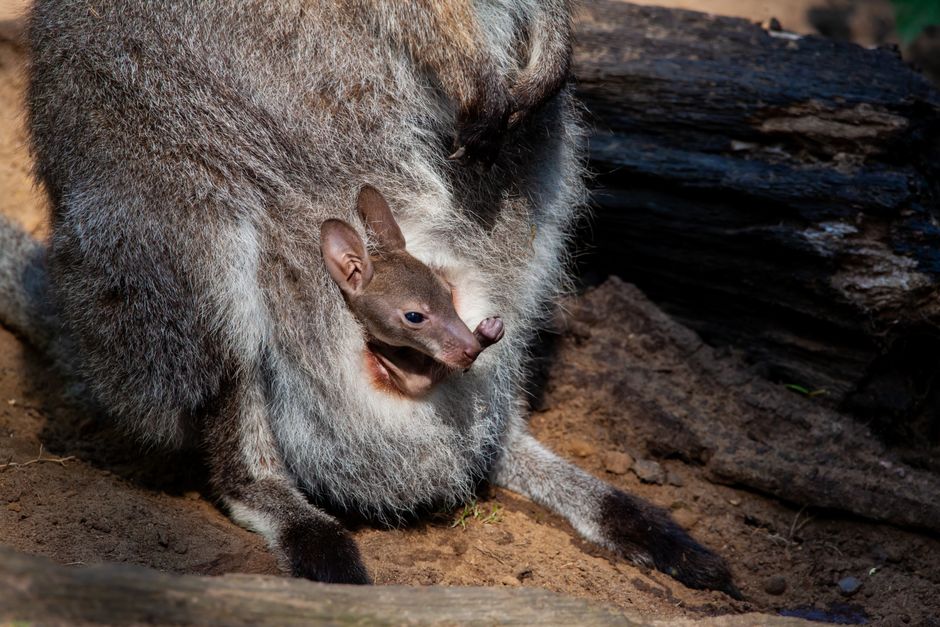
Numbats eat almost nothing but termites. This small Australian marsupial is one of the most specialized eaters in the animal kingdom, and its entire body — from its snout to its claws to its teeth — is built around finding and eating termites. A single numbat can eat thousands of termites in a day.
That focus on one food source is unusual even among termite-eating mammals. Most insect-eaters, like anteaters or aardvarks, will take ants, grubs, and other insects when termites are hard to find. The numbat does not. It is a termite specialist in the strictest sense, and that specialization shapes nearly everything about how it lives.
What Do Numbats Eat A Marsupials Specialized Diet?
Termites make up the overwhelming majority of the numbat’s diet. The animal is a mammal, not a marsupial, but in this context the key point is its diet: it feeds almost exclusively on termites, and it does so with a level of dependence that few mammals match.
Numbats are sometimes confused with anteaters because both eat social insects. But the numbat’s relationship with termites is tighter and more exclusive. Where an anteater may eat ants and termites in roughly equal measure, the numbat is a termite eater first and almost nothing else.
This is why the numbat is often described as a dietary specialist. Specialists are animals that rely on a narrow range of foods. Generalists, by contrast, eat many different things. The numbat sits at the extreme specialist end of that spectrum.
How Many Termites Does a Numbat Eat Each Day?
A numbat needs to eat a large number of termites every day to meet its energy needs. Estimates from wildlife research suggest a single numbat may consume several thousand termites daily, though the exact number varies with the size of the animal, the season, and how many termites are available.
That figure sounds enormous, and it is. Termites are small and low in calories, so a numbat has to eat a lot of them to get enough energy. This is true of many insect-eating mammals. The smaller and less calorie-dense the prey, the more of it an animal must eat.
Because termites are the numbat’s main fuel source, the animal cannot afford long gaps between meals. It spends much of its active time foraging. Numbats are active during the day, which is unusual for a small marsupial, and this daytime activity appears to line up with when termites are active and easier to find.
Why Is the Numbat So Dependent on Termites?
The numbat’s body has evolved around a termite diet in ways that make it poorly suited to eating much else. Its teeth are small and peg-like, not built for chewing plants or tearing meat. Its stomach is simple compared with the complex, multi-chambered stomachs of plant-eating animals. Its claws are strong and curved for digging into soil and rotting wood where termites live.
Its tongue is long and thin, adapted for licking termites out of narrow tunnels. Its snout is pointed, which helps it probe into small spaces. Even its sense of smell is tuned to detect termites underground.
This level of specialization is a double-edged sword. It makes the numbat very good at one thing: finding and eating termites. But it also means the animal cannot easily switch to other foods if termites become scarce. A generalist can fall back on different foods when one source runs low. A specialist like the numbat has far fewer options.
This is a common pattern in nature. Animals that specialize often thrive when their food is abundant and struggle when it is not. The numbat’s reliance on termites is one reason it is considered vulnerable to changes in its environment.





Where Do Numbats Find Their Termites?
Numbats live in forests and woodlands in parts of Australia, where they search for termites in fallen logs, under leaf litter, and in the soil. They use their sharp sense of smell to locate termite galleries, then dig them out with their front claws.
Unlike some termite-eating animals that break open large mounds, the numbat tends to target termites in smaller, more scattered locations. It moves through its territory, sniffing and digging as it goes. This is slow, deliberate work. The numbat does not chase prey. It digs it out.
The availability of termites depends on moisture, temperature, and the health of the soil and dead wood in the area. When these conditions change, the numbat’s food supply can shrink. This makes the animal sensitive to drought, land clearing, and other disturbances that affect termite populations.
How Does the Numbat’s Diet Compare to Other Termite Eaters?
Several mammals eat termites, but few are as committed to them as the numbat. The table below compares the numbat with a few other termite-eating animals.
| Animal | Main Diet | Degree of Specialization |
|---|---|---|
| Numbat | Almost entirely termites | Extreme specialist |
| Anteater | Ants and termites | Moderate specialist |
| Aardvark | Ants and termites | Moderate specialist |
| Echidna | Ants, termites, other invertebrates | Broad insect-eater |
The numbat stands out because it does not routinely eat ants or other insects in large amounts. Some insect-eaters will take whatever small prey they find. The numbat does not. Its dependence on termites is close to total.
This difference matters for conservation. An animal that can eat many things has more flexibility when its environment changes. An animal that eats one thing has far less room to adapt.
Does the Numbat Eat Anything Besides Termites?
Numbats occasionally eat small amounts of other insects, and they may take in tiny quantities of other invertebrates. But these are not significant parts of the diet. Termites remain the overwhelming food source.
There is no evidence that numbats eat plant material, fruit, seeds, or larger prey in any meaningful way. Reports of numbats eating other foods are rare and not considered typical. The animal’s teeth and digestive system are not suited to a mixed diet.
This near-total reliance on one food is what makes the numbat a true dietary specialist. It is not simply that the numbat prefers termites. It is that the numbat is built to eat termites and little else.
Why Does the Numbat’s Diet Matter for Its Survival?
An animal that depends on one food source is only as secure as that food source. If termites decline in an area, the numbat has no easy backup. This is one of the main reasons the numbat is considered a vulnerable species.
Land clearing removes the dead wood and leaf litter where termites live. Drought reduces termite activity. Changes to fire patterns can affect the soil and vegetation that termites depend on. Each of these pressures can ripple up to the numbat.
Conservation efforts for the numbat therefore focus not just on the animal itself but on its habitat and the termites within it. Protecting the numbat means protecting the conditions that keep termites abundant. This is a direct consequence of the animal’s specialized diet.
It is a clear example of how specialization can be both a strength and a weakness. The numbat is extremely efficient at eating termites. But that same efficiency leaves it with little margin when its food supply is threatened.
Frequently Asked Questions
What do numbats eat?
Numbats eat almost entirely termites. They are among the most specialized termite-eating mammals in the world.
Do numbats eat ants?
Numbats may eat small numbers of other insects, but ants are not a significant part of their diet. Their feeding is focused on termites.
How many termites does a numbat eat a day?
Estimates suggest a numbat may eat several thousand termites in a day. The exact number varies with the animal’s size, the season, and termite availability.
Why are numbats so dependent on termites?
Their teeth, claws, tongue, and digestive system are all adapted for eating termites and little else. This makes it hard for them to switch to other foods.
