
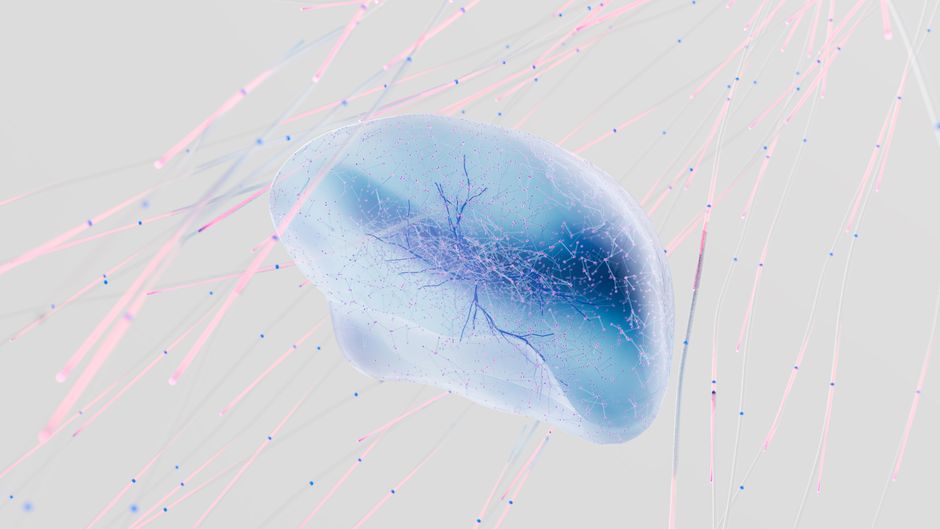
Nerve cells carry electrical and chemical signals through your body. They let you move, feel, think, see, and breathe. A neuron takes in information from the world or from other cells, processes it, and passes a signal onward. That basic job, repeated across billions of cells, is what makes every thought and movement possible.
Neurons are the main signaling cells of the nervous system. They receive input, decide whether the signal is strong enough to pass on, and send it to the next cell. Understanding what they actually do helps you understand how the brain and body work, and what happens when something goes wrong.
What Do Nerve Cells Do? Neuron Functions Explained
Neurons receive, process, and transmit information. That is their core function. Everything else flows from it.
A neuron has three main parts. The dendrites are branching structures that collect signals from other neurons or from the environment. The cell body contains the nucleus and keeps the cell alive. The axon is a long fiber that carries the outgoing signal away from the cell body toward the next cell.
Most neurons are not physically connected. They communicate across tiny gaps called synapses. When a signal reaches the end of an axon, it triggers the release of chemicals called neurotransmitters. These chemicals cross the gap and bind to receptors on the next neuron. That neuron then decides whether to pass the signal on.
Some neurons are wrapped in myelin, a fatty sheath that insulates the axon. Myelin speeds up signal travel. In the brain and spinal cord, myelin is made by cells called oligodendrocytes. In the rest of the body, it is made by Schwann cells. Loss of myelin is the core problem in conditions like multiple sclerosis.
One point that surprises many people: neurons do not fire in a simple on-off way. They receive many inputs at once, some excitatory and some inhibitory. Whether they fire depends on the sum of those inputs. This is how the nervous system makes decisions at the cellular level.
How Does a Neuron Send a Signal?
Neurons send signals using electrical changes across their membranes, followed by chemical release at synapses.
At rest, a neuron maintains a small electrical difference across its membrane, with the inside slightly negative compared with the outside. This is called the resting potential. When enough stimulation arrives, ion channels open and charged particles move across the membrane. If the change is large enough, it triggers an action potential.
An action potential is a brief, all-or-nothing electrical pulse. It travels down the axon to the synapse. Once it arrives, it causes neurotransmitters to be released into the gap.
The signal does not jump between cells. It is converted from electrical to chemical at the synapse, then back to electrical in the next neuron. This chemical step is what allows signals to be regulated, amplified, or blocked. Many medications work by changing what happens at this step.
What Types of Neurons Exist and What Do They Do?
Neurons fall into three broad functional types based on the direction of the signals they carry.
- Sensory neurons carry information from your senses and body tissues toward the brain and spinal cord. They let you feel touch, temperature, and pain, and they carry signals for vision, hearing, and smell.
- Motor neurons carry commands from the brain and spinal cord to muscles and glands. They are what make movement possible.
- Interneurons connect neurons within the brain and spinal cord. They process and integrate information. Most neurons in your central nervous system are interneurons.
Neurons also vary in shape. Some have short axons and communicate locally. Others have axons that stretch a meter or more, like the motor neurons that run from your spinal cord to muscles in your foot.
How Do Neurons Connect and Form Networks?
Neurons form networks through synapses, and those connections are not fixed. They change with experience.
A single neuron can receive thousands of synaptic inputs and can send signals to many others. The strength of these connections can increase or decrease over time. This ability to change is called synaptic plasticity, and it is thought to be central to learning and memory.
Plasticity is not unlimited. It is strongest during early development, when the brain forms far more connections than it keeps. Connections that are used are strengthened, and unused ones are pruned. This pruning continues into adolescence and is a normal part of brain development.
In adults, plasticity still occurs but is more constrained. Learning a new skill, recovering from injury, and forming memories all involve changes in synaptic strength. The exact mechanisms are still being studied, and the field is active and evolving.
Can Neurons Regenerate?
Most neurons in the adult brain do not regenerate after injury. This is a key limitation of the nervous system.
For most of medical history, the belief was that adults produce no new neurons at all. That view has shifted. Research over the past few decades has found evidence of neurogenesis, the birth of new neurons, in a few specific regions of the adult brain, including the hippocampus. The extent of this in adult humans and its functional importance are still debated among researchers.
What is clearer is that mature neurons generally do not divide. Once damaged, many cannot be replaced. This is why spinal cord injuries and neurodegenerative diseases can cause lasting deficits.
Peripheral nerves, outside the brain and spinal cord, have more capacity to regrow after injury. Regrowth can happen, but it is often slow and incomplete. Recovery varies widely depending on the type and severity of injury.
What Happens When Neurons Are Damaged?
When neurons are damaged or die, the functions they support can be lost. The effects depend on which neurons are affected and where.
Different conditions affect neurons in different ways. In multiple sclerosis, the immune system attacks myelin, which disrupts signal transmission. In Parkinson’s disease, neurons that produce the neurotransmitter dopamine are lost in a specific brain region, which affects movement. In Alzheimer’s disease, widespread neuron loss and disrupted connections lead to memory and thinking problems. In stroke, blood flow to part of the brain is cut off, and neurons in that area can die within minutes to hours.
Symptoms reflect the function of the affected neurons. Damage to motor neurons affects movement. Damage to sensory neurons affects sensation. Damage to interneurons can affect processing and coordination.
Some neuronal damage is reversible, and some is not. Recovery depends on the cause, the extent of injury, and how quickly it is treated. For stroke, rapid treatment is critical because time lost is brain tissue lost. For other conditions, management focuses on slowing progression and supporting remaining function.
How Do Neurons Communicate With the Rest of the Body?
Neurons connect the brain and spinal cord to organs, muscles, and glands through the peripheral nervous system.
The somatic nervous system controls voluntary movement and carries sensory information from the skin and muscles. The autonomic nervous system controls involuntary functions like heart rate, digestion, and breathing. It has two main branches: the sympathetic branch, which prepares the body for action, and the parasympathetic branch, which supports rest and digestion.
Neurons also communicate with the endocrine system. Some neurons release hormones directly into the bloodstream. For example, neurons in the hypothalamus control the release of hormones from the pituitary gland, which in turn regulates other glands throughout the body.
The gut has its own extensive network of neurons, sometimes called the enteric nervous system. It can function somewhat independently, which is why digestion continues even when communication with the brain is disrupted.
How Do Neurons Differ From Other Cells?
Neurons share basic features with other cells but have specializations that set them apart.
Like all cells, neurons have a nucleus, mitochondria, and other organelles. What makes them different is their shape and their electrical properties. Neurons have long projections that let them communicate across distances. They maintain electrical gradients across their membranes. And they release chemical messengers at synapses.
Neurons also have very high energy demands. The brain uses a large share of the body’s energy, and neurons require a constant supply of oxygen and glucose. This is why the brain is so sensitive to interruptions in blood flow.
Most neurons do not divide once mature. This is different from many other cells in the body, which are replaced regularly. The long lifespan of neurons means damage accumulates over time, which is one reason age is a risk factor for neurodegenerative disease.
Frequently Asked Questions
How many neurons are in the human brain?
Estimates put the number at around 86 billion neurons in the adult human brain. This figure comes from careful counting studies and is widely cited, though it is an estimate rather than an exact count.
Do neurons regenerate?
Most neurons in the adult brain do not regenerate after damage. Some new neurons are produced in a few specific brain regions, but the extent and importance of this in adult humans remain debated.
What is the difference between a neuron and a nerve?
A neuron is a single cell. A nerve is a bundle of many neuron fibers wrapped together, often with blood vessels and connective tissue. Nerves are structures made of many neurons.
What happens at a synapse?
At a synapse, an electrical signal triggers the release of neurotransmitters from one neuron. These chemicals cross a tiny gap and bind to receptors on the next neuron, which may then fire its own signal.
